
Last updated November 3, 2026
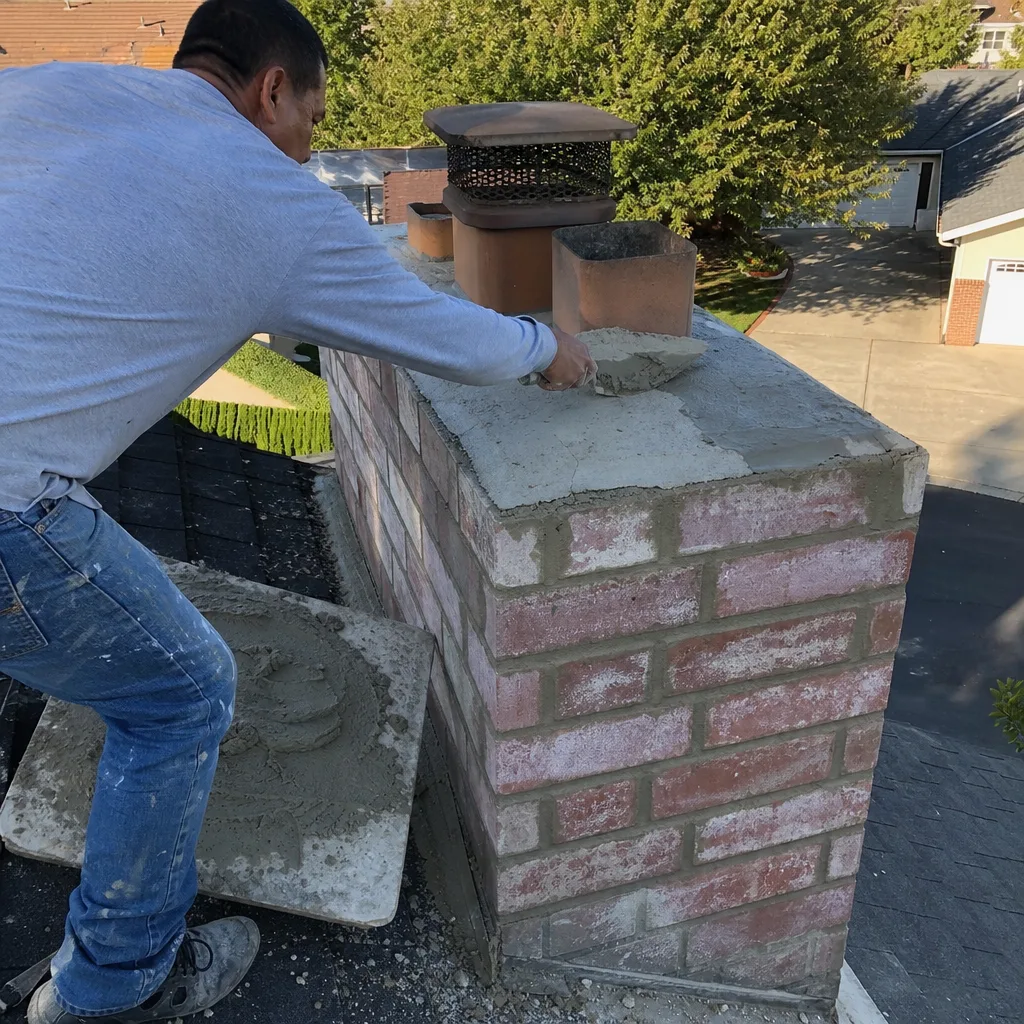
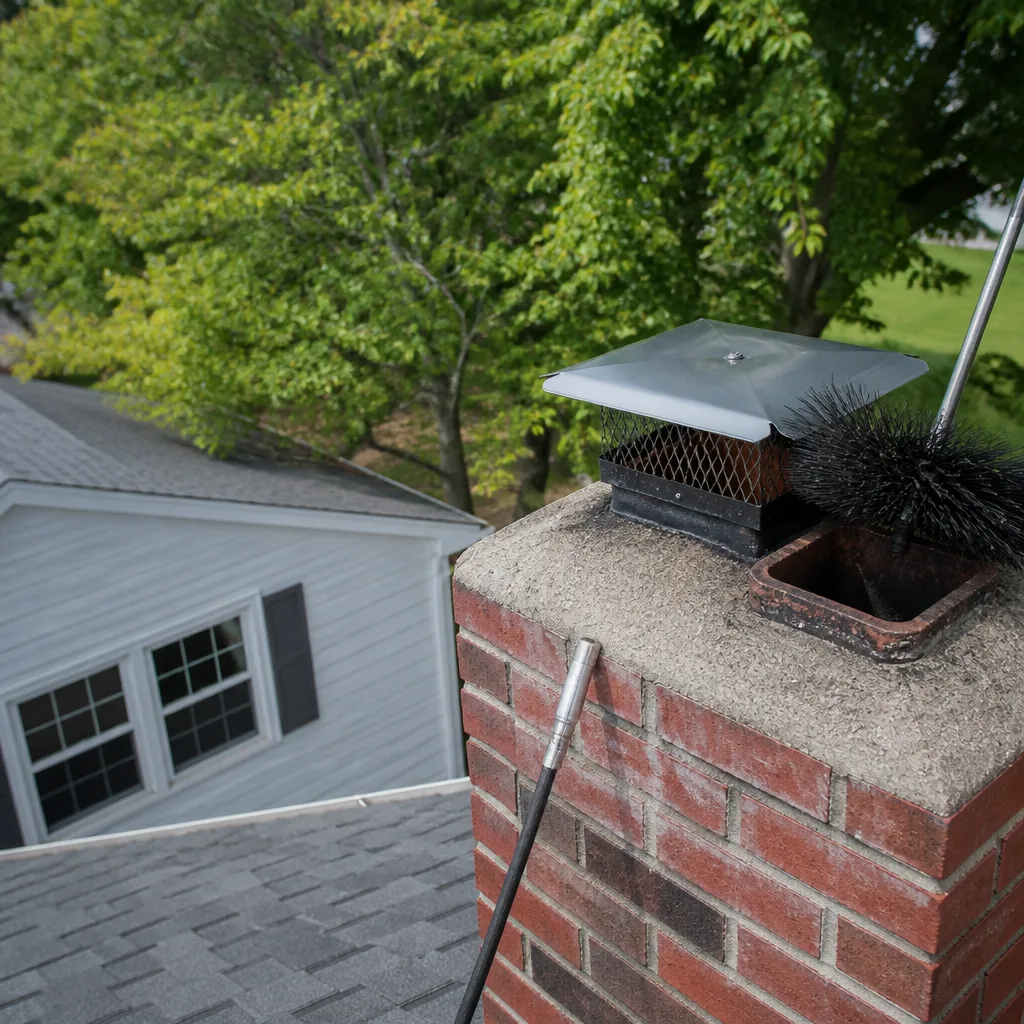 Sweep & inspection
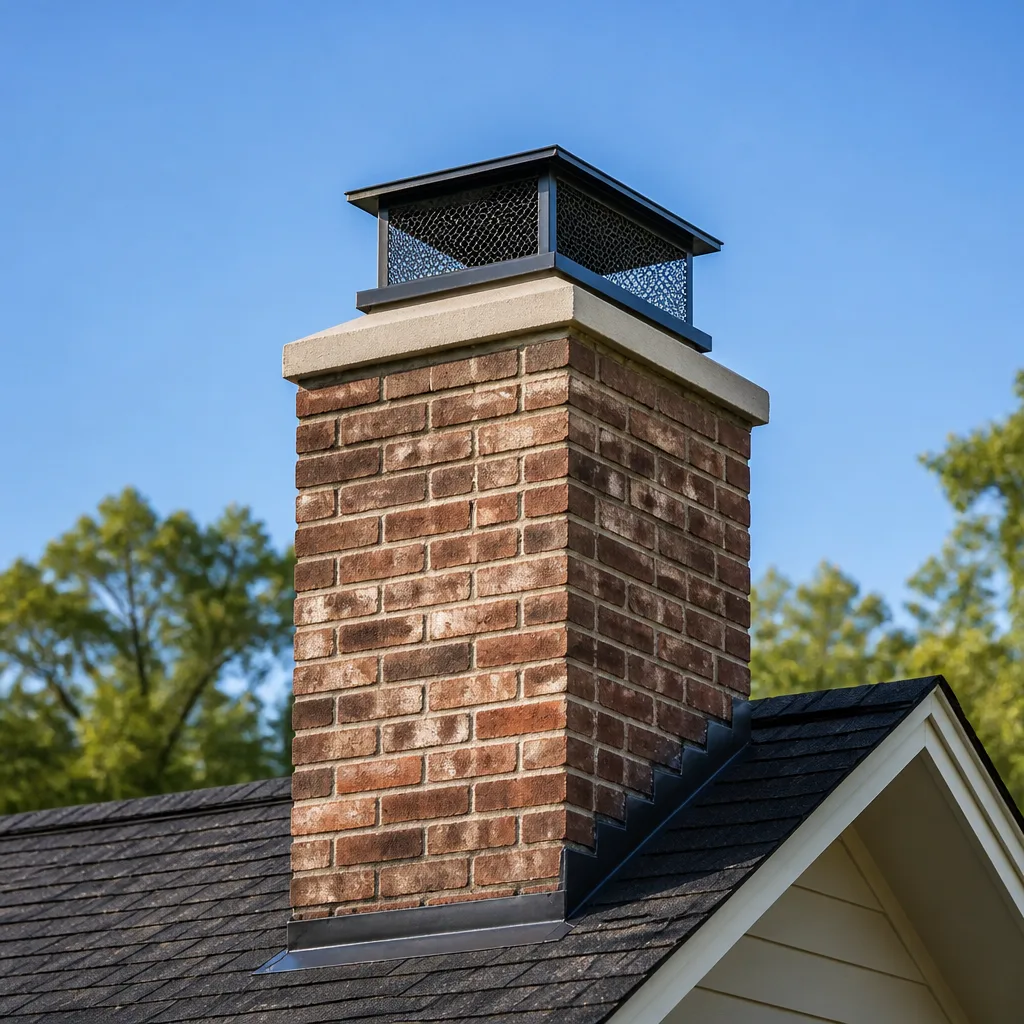 Caps & crowns
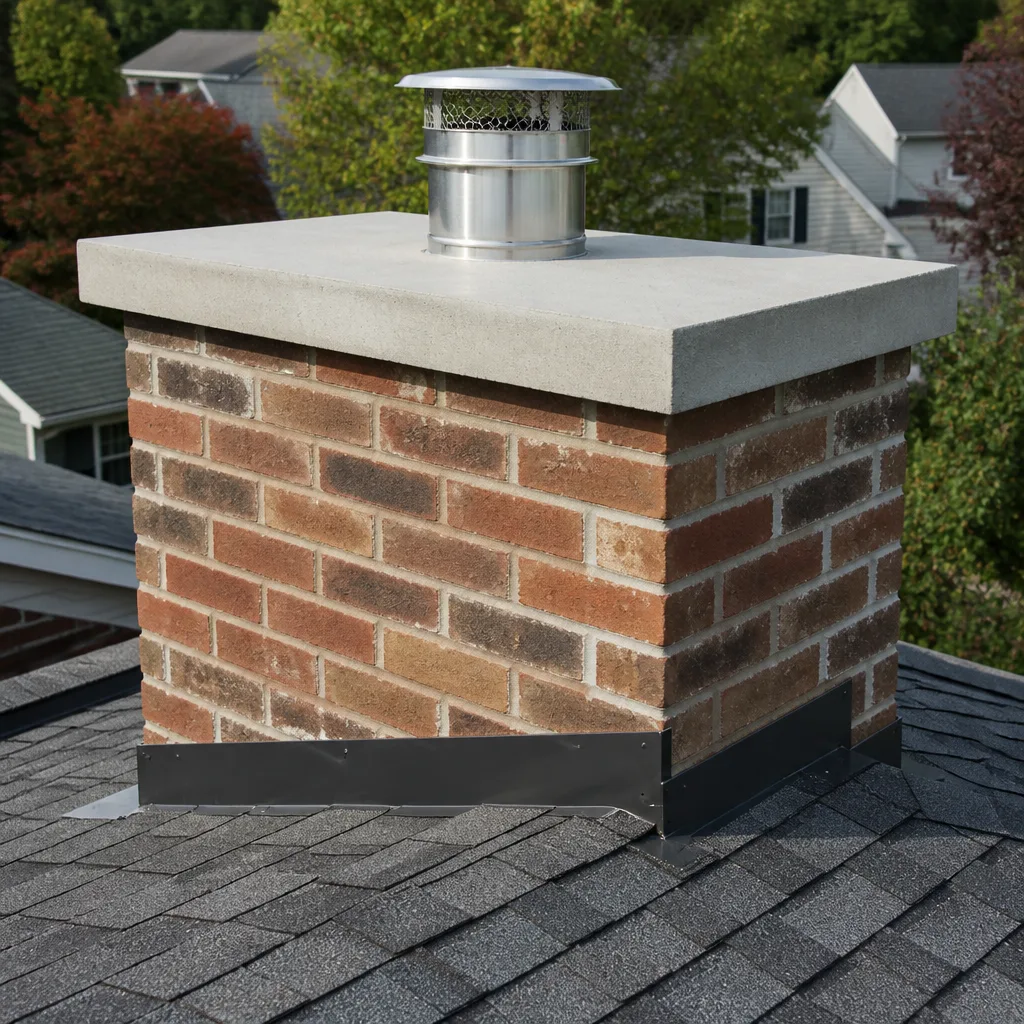 Flue relining
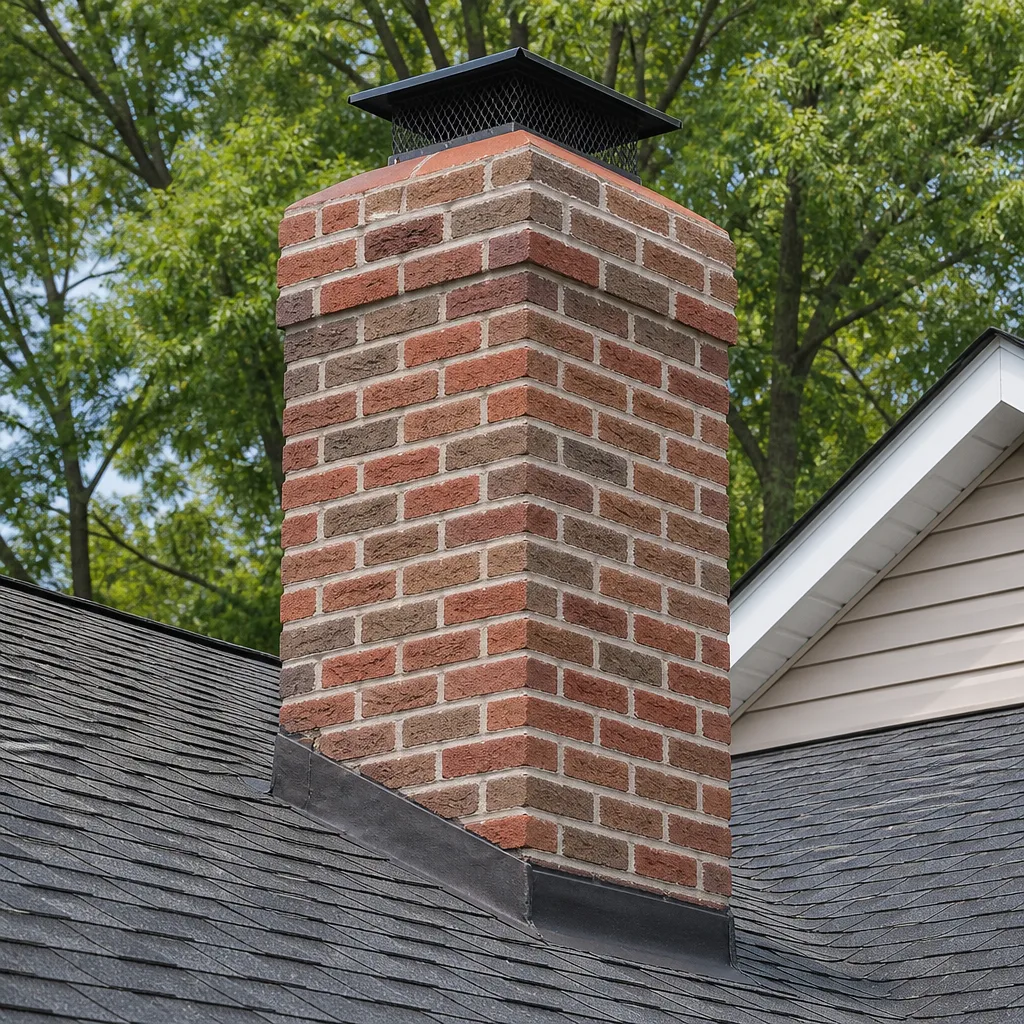 Masonry repair
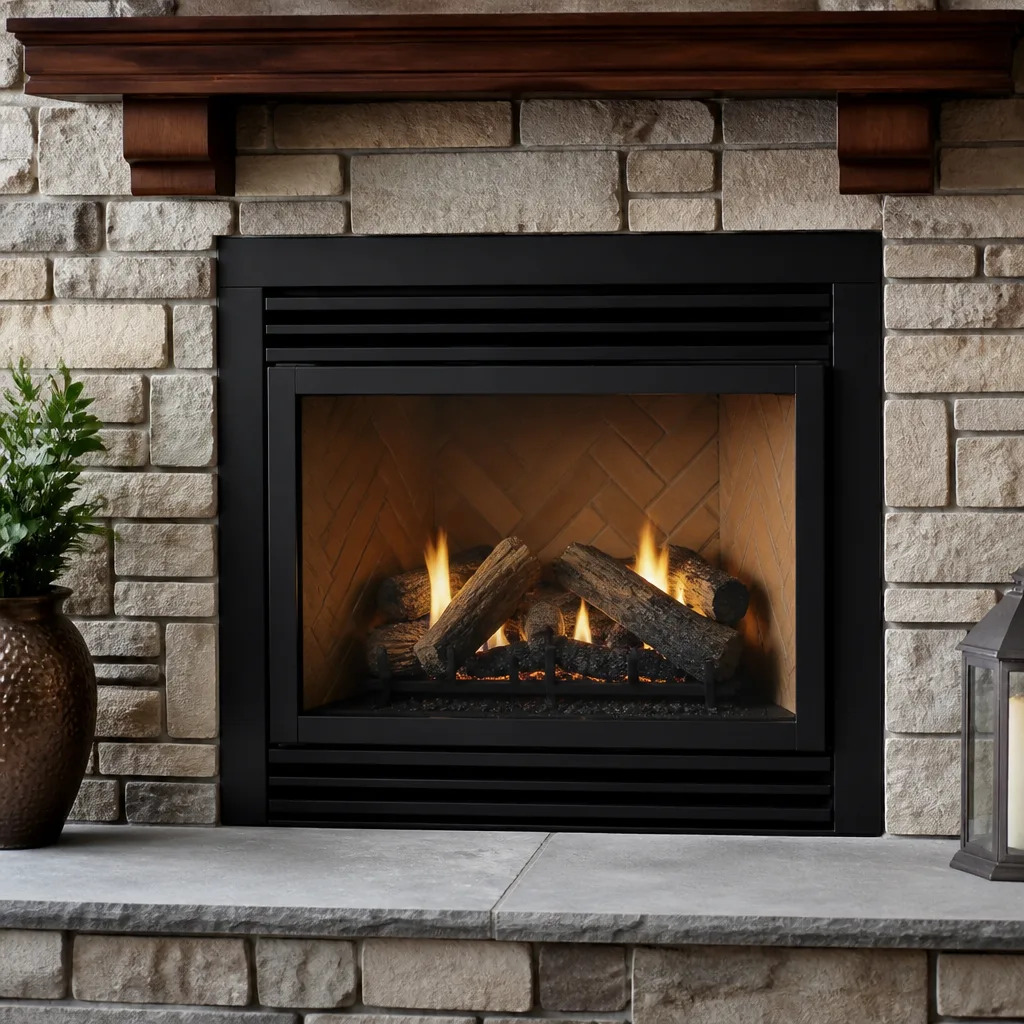 Gas fireplace service
Level 1 sweep and inspection to the NFPA 211 annual standard - flue, crown, cap, and flashing checked and photographed
Chimney sweep logs do not sweep chimneys. They loosen some creosote - which then falls where a brush and vacuum still have to collect it.
Choosing the Right Chimney Cleaning Brand: A Buyer’s Guide for Bay Terraces
Here’s a counterintuitive fact most Bay Terraces homeowners discover too late: the brand names printed on chimney cleaning products matter less than the supply chain behind them. A stainless steel chimney cap from a supply house and one from a home improvement warehouse can look nearly identical at installation. The difference shows up eighteen months later when coastal salt air has worked through the inferior gauge metal and you’re paying for a second replacement. This guide explains how to evaluate the materials your contractor uses, what questions to ask before hiring, and why the distinction between trade-grade and commodity-grade products directly affects what you’ll spend over the life of your chimney. For more detail, see our Complete Chimney Sweep Guide for Bay Terraces Homeowners.
Quick Answer
The right chimney cleaning brand isn’t one you’ll find on a retail shelf. Professional chimney specialists in Bay Terraces source from supply-house lines like Copperfield, DuraFlex, and HeatShield because these products are engineered for the marine climate of coastal San Diego and carry manufacturer warranties that big-box alternatives don’t match. Ask your contractor whose products they stock, where they source them, and why.
Styles & brands we work with
- Sweep & inspection
- Caps & crowns
- Flue relining
- Masonry repair
- Gas fireplace service
Table of Contents
- Why Brand Names Matter More Than Homeowners Expect
- The Product Categories Where Brand and Grade Matter Most
- 304 vs. 316 Stainless Steel: What Bay Terraces Salt Air Does to Chimney Caps
- Creosote Treatment Chemistry: Enzymatic vs. Chloride-Based Removers
- Material Continuity and Warranty Backing: Why Supply-House Brands Win
- Questions to Ask Any Chimney Contractor About Their Materials
- The Full-Service Advantage: Why One Specialist Beats Three Contractors
- The Real Cost of Commodity Products in a Coastal Climate
Why Brand Names Matter More Than Homeowners Expect
Most homeowners assume a chimney sweep is a chimney sweep and a brush is a brush, as we explore in our DIY vs Professional Chimney Cleaning guide. That assumption costs money. The products a contractor chooses reveal how they think about the work. A generalist who picks up a poly brush from a retail aisle is buying a tool that wears out in a season or two. A specialist who stocks professional-grade equipment is making a different calculation, one based on what performs across dozens or hundreds of jobs in the Bay Terraces area.
Here’s what actually separates trade-grade chimney products from commodity substitutes:
- Engineering tolerances. Professional brushes from supply-house lines are sized and shaped for specific flue dimensions. Retail brushes are one-size-fits-most, which means less contact with flue walls and a less complete sweep.
- Material composition. Caps, liners, and connectors from professional lines use metal alloys tested for the specific conditions they’ll face. In Bay Terraces, that includes marine air, which accelerates corrosion in lower-grade stainless steel.
- Manufacturer accountability. When a contractor installs a Copperfield cap or a DuraFlex liner, the manufacturer stands behind it. If the product fails prematurely, there’s a warranty path. With no-name retail products, the warranty is often little more than a piece of paper.
- Availability of replacement parts. Supply-house brands maintain parts catalogs. Ten years from now, if a component needs replacement, it can be sourced. Retail products are discontinued and redesigned constantly, leaving homeowners with orphaned hardware.
In our experience working on chimneys across Bay Terraces, the homes that need the least corrective work are the ones where previous contractors used products specified by people who understand chimney physics. The homes that need repeated repairs are the ones where someone saved fifty dollars on a cap or a connector and paid for it three years later.
The Product Categories Where Brand and Grade Matter Most
Not every chimney product carries equal risk. Some components are purely cosmetic. Others are structural. Here are the categories where material grade and brand selection directly affect safety and longevity:
Liner Systems
Your chimney liner is the barrier between combustion gases and the masonry or framing of your home. In Bay Terraces, many older homes have unlined masonry chimneys or liners that have degraded from decades of temperature cycling and salt air exposure. When a liner needs replacement or resurfacing, the material matters enormously. Chimney Repair in Bay Terraces often involves liner work, and the right product choice here is non-negotiable.
Professional-grade liner systems, like those from DuraFlex and HeatShield, are manufactured to withstand the thermal shock of repeated heating and cooling cycles. They’re also tested for compatibility with different fuel types, whether you’re burning wood, gas, or pellets. A commodity liner might look similar on a spec sheet, but the difference in longevity can be measured in decades.
Cap Alloy Grade
Chimney caps take more weather abuse than any other component. They sit at the highest point of your roofline, fully exposed to rain, UV, and in Bay Terraces, salt-laden marine air. The alloy grade of the cap determines whether it rusts through in five years or lasts for thirty. This is covered in depth below, but the short version is this: 316 stainless steel is the minimum standard for coastal environments, and many retail caps don’t use it.
Crown Sealants
The chimney crown is the concrete or mortar slab that seals the top of the chimney stack. Crown sealants prevent water intrusion, and water is the enemy of every chimney system in San Diego County. Professional-grade sealants used by Chimney Sweep Bay Terraces home are flexible enough to expand and contract with temperature swings without cracking. Cheaper sealants harden over time, then crack, then let water in, then you’re looking at spalling brick and expensive masonry repair.
Creosote Removers
Not all creosote treatments work the same way, and using the wrong chemistry for your creosote stage can be a waste of money or even make the problem worse. Our Complete Guide to Chimney Cleaning in Bay Terraces covers the chemistry in more depth, but the key point is that professional-grade creosote removers from supply-house brands are formulated for specific creosote types, while retail products often take a generic approach that underperforms on the heavy, tar-like creosote common in wood-burning fireplaces.
304 vs. 316 Stainless Steel: What Bay Terraces Salt Air Does to Chimney Caps
Here’s a question almost nobody asks until it’s too late: What grade of stainless steel is your chimney cap made from? In Bay Terraces, the answer matters more than in most of the country, because marine air changes the corrosion equation.
304 stainless steel is the most common stainless alloy in consumer products. It contains about 18% chromium and 8% nickel, which makes it corrosion-resistant in most inland environments. But Bay Terraces sits close enough to the Pacific that salt particles ride inland on morning marine layers and afternoon breezes. Salt aerosol accelerates corrosion in ways that humidity alone doesn’t.
316 stainless steel adds molybdenum, typically around 2-3%, which dramatically improves resistance to chlorides, the active corrosive agent in salt. The difference in real-world performance is stark:
- 304 stainless cap in Bay Terraces: You’ll typically see pitting and discoloration within two to four years, especially on surfaces facing the prevailing ocean breeze. Full structural failure is common by years eight to twelve.
- 316 stainless cap in Bay Terraces: You might see light cosmetic dulling after five years. The cap remains structurally sound for twenty-five to thirty years or longer.
The frustrating part is that both caps look identical on day one. Same shine, same weight feel, same basic shape. A homeowner has no way to visually distinguish 304 from 316 after installation. You have to ask before the work is done.
This is where brand selection becomes a proxy for quality. Professional supply-house brands like Copperfield specify their alloy grades clearly and manufacture their coastal-market products in 316 stainless as a matter of course. Retail caps often don’t disclose the alloy at all, which tells you what you need to know.
If you’re having a cap replaced in Bay Terraces, ask the contractor directly: “Is this cap 316 stainless?” If they can’t answer, or if they tell you 304 is “just as good” for this area, you’re talking to someone who hasn’t worked enough coastal chimneys to see what happens to 304 after a few marine seasons.
Creosote Treatment Chemistry: Enzymatic vs. Chloride-Based Removers
Creosote isn’t a single substance. It’s a family of deposits that form at different temperatures and stages of combustion. The type of creosote in your chimney determines what kind of treatment will actually work, and using the wrong one is like putting diesel in a gasoline engine.
Here’s what homeowners in Bay Terraces need to understand about creosote chemistry:
Stage 1 Creosote: Flaky Soot
This is the light, dusty, flaky deposit that forms from incomplete combustion at moderate temperatures. It’s the easiest to remove. A proper mechanical sweeping handles most of it. Chemical treatments are rarely necessary. If a contractor tells you that you need an expensive chemical treatment for stage 1 creosote, ask for a camera inspection to verify.
Stage 2 Creosote: Granular Tar
Stage 2 creosote has a granular, crunchy texture, like coarse brown sugar. It forms when flue temperatures cycle between hot and cool, condensing volatiles onto flue walls. This is where chemical treatment becomes genuinely useful. Enzymatic removers work by breaking down the hydrocarbon bonds in the creosote, making it easier to brush away during the next sweep. Enzymatic treatments are slower but thorough, and they don’t introduce corrosive chemicals into the flue.
Stage 3 Creosote: Glazed Tar
Stage 3 is the dangerous stuff. It’s a hard, shiny, tar-like coating that forms when creosote is repeatedly heated and condensed. It’s highly combustible and difficult to remove mechanically. Chloride-based removers are sometimes used for stage 3 creosote because they dehydrate the tar and make it brittle enough to flake off. But chloride products are aggressive, and they’re not appropriate for every flue type. This is a decision that should be made by someone who understands flue materials and creosote chemistry, not guessed at.
The practical takeaway for Bay Terraces homeowners: the brand of creosote remover matters less than whether the right chemistry is matched to the right creosote stage. Professional chimney specialists stock multiple product types and diagnose before they treat. A generalist with one product on the truck treats every chimney the same way, which is to say, wrong for some portion of them.
Material Continuity and Warranty Backing: Why Supply-House Brands Win
There’s a concept in chimney work called material continuity. It means that all the components in a system come from manufacturers who design their products to work together and stand behind them with real warranties. It’s the difference between a chimney system and a collection of parts.
A chimney specialist who stocks professional-grade products is making multiple commitments:
- Commitment to warranty traceability. If a HeatShield liner system fails prematurely, the manufacturer has a defined warranty process, and the installing contractor has a relationship with the manufacturer to resolve it. The homeowner isn’t left holding a receipt from a store that no longer carries the product.
- Commitment to replacement parts. Supply-house brands maintain parts availability for years, often decades. Need a replacement cap screen for a Copperfield cap installed in 2015? You can get one. Need a replacement screen for a retail cap from the same year? Good luck.
- Commitment to testing and certification. Professional-grade products are tested to industry standards. DuraFlex liners, for example, are tested for specific fuel types and temperature ratings. When a contractor installs a tested product, both the contractor and the homeowner know what the product can and can’t handle.
- Commitment to training. Manufacturers of professional chimney products provide training to the contractors who install them. That means the person installing your liner has been taught by the people who made it, not just figuring it out from the packaging.
This is where the Chimney Sweep in Bay Terraces model differs from the generalist approach. A company that works with a curated roster of professional-grade brands, including DuraFlex, HeatShield, Gelco, Olympia Chimney, Famco, and Copperfield, is building a service around material quality. A generalist who sources opportunistically from retail suppliers is building a service around whatever is cheapest that week.
Questions to Ask Any Chimney Contractor About Their Materials
Most homeowners don’t know what to ask when a chimney contractor is standing in their living room. The contractor says “we use quality products” and the homeowner nods, not knowing what that means or doesn’t mean. Here’s how to have that conversation effectively:
The Direct Question: “Whose products do you stock?”
A specialist will answer with brand names. They’ll say Copperfield, or DuraFlex, or HeatShield, and they’ll tell you why they chose those lines. A generalist will say “we use whatever’s best for the job” or “whatever the supply store has.” Those are very different answers. The first tells you they’ve made a deliberate choice. The second tells you they haven’t.
The Follow-Up: “Why those brands?”
This is where you learn whether the contractor actually understands their materials. A specialist will talk about alloy grades, liner ratings, sealant flexibility, or the specific creosote chemistry a product addresses. A generalist will talk about price or availability. The depth of the answer tells you the depth of the expertise.
The Specific Question: “What grade of stainless is that cap?”
For Bay Terraces, this is the highest-value question you can ask about caps. The answer should be “316” without hesitation. If the contractor doesn’t know what you’re asking or tells you it doesn’t matter, that’s a signal to keep looking.
The Warranty Question: “What happens if this fails in three years?”
A contractor who works with supply-house brands can walk you through the warranty process. They have manufacturer relationships. They know how claims work. A contractor who sources from retail shelves will tell you to hang onto your receipt and see what the store says. That’s not a warranty, that’s a gamble.
The System Question: “Do you handle the whole chimney, or just the sweeping?”
This matters more than most people realize. If a sweep finds a cracked flue tile or a degraded liner, what happens next? A full-service specialist can handle the repair in the same service relationship. A sweeping-only company gives you a report and a referral to someone else, and now you’re coordinating two contractors and wondering whether the second one will understand what the first one found. Dryer Vent Cleaning in Bay Terraces is another service most chimney-only companies don’t offer, but it addresses a leading cause of residential fires.
The Full-Service Advantage: Why One Specialist Beats Three Contractors
Here’s a scenario we see regularly: A homeowner in Bay Terraces calls a chimney sweep for a routine cleaning. The sweep finds a hairline crack in a flue tile and a cap that’s corroding through. The homeowner now has three options:
- Find a chimney repair specialist. That’s a second contractor, a second appointment, a second diagnostic process, and a second bill. Meanwhile, the sweep’s findings are conveyed secondhand, and the repair specialist may want to do their own inspection to verify.
- Ignore the findings. This is the most common choice, and it’s also the most expensive long-term. Cracked flue tiles allow heat and gases to reach masonry and framing. Corroded caps let water in. These problems compound.
- Hire a full-service chimney specialist from the start. The sweep finds the issue, the same team repairs it, and there’s one diagnostic process, one point of accountability, and one service relationship.
Our company is built around option three. Chimney sweeping, chimney repair, and dryer vent cleaning are handled by the same specialist team. When we find a problem during a sweep in Bay Terraces, we can fix it. We diagnose what we find and fix it, no middlemen, no referrals. That’s not a marketing line. It’s the structural difference between a service model built around one trade and a service model built around whatever the customer happens to need that day.
The product brands make this possible. You can’t do quality liner repair without stocking quality liner products. You can’t do quality cap replacement without having 316 stainless caps on hand. The capability and the materials go together. From routine sweeps to structural liner repair, handled by one specialist team.
The Real Cost of Commodity Products in a Coastal Climate
Let’s talk about money, because homeowners in Bay Terraces are rightly skeptical when they’re quoted premium prices for products they could buy cheaper at a retail store. The question isn’t whether the premium product costs more upfront. It almost always does. The question is what the total cost of ownership looks like over ten years.
Here’s a realistic comparison for a chimney cap in Bay Terraces:
- Retail 304 stainless cap: $40-80 upfront. Expected lifespan in marine air: 6-10 years. Replacement cost includes the product, labor, and another rooftop trip. Over twenty years, you’ll buy this cap two to three times. Total cost: $150-400 plus the hassle of repeated failures.
- Supply-house 316 stainless cap from a line like Copperfield: $150-300 upfront. Expected lifespan in marine air: 25-30 years or more. Over twenty years, you’ll buy this cap once. Total cost: $150-300, with no failures to manage.
The same math applies to liner systems, crown sealants, and creosote treatments. The cheaper product is cheaper only if you ignore the lifetime cost. In a climate like Bay Terraces, where salt air and marine moisture accelerate material degradation, the lifetime cost gap is wider than in most of the country.
Your dryer vent is a fire risk most companies overlook, and we don’t. It’s part of the same calculation: addressing smaller components with the right materials now prevents larger failures later.
Common Mistakes to Avoid
- Assuming all stainless steel is the same. 304 and 316 look alike but perform very differently in Bay Terraces marine air. Always ask about alloy grade before a cap or liner installation.
- Choosing a contractor before checking their material sources. Ask whose products they stock and why. A contractor who can’t name their brands hasn’t made deliberate choices about quality.
- Treating creosote treatment as one-size-fits-all. Enzymatic and chloride-based removers work on different creosote stages. Using the wrong chemistry wastes money and may not solve the problem.
- Deferring chimney repairs found during a sweep. A cracked flue tile doesn’t get better on its own. It gets worse, and the repair cost compounds with each heating season.
- Ignoring the dryer vent. It’s not part of your fireplace system, but it’s a leading cause of residential fires, and most chimney companies don’t address it. A full-service specialist does.
- Assuming a cheap cap is a bargain. In coastal San Diego, it’s usually the most expensive option you can choose, once replacement cycles are factored in.
- Hiring a generalist for safety-critical work. A handyman can clean a gutter or fix a door hinge. Chimney systems involve fire safety, carbon monoxide risk, and structural integrity. This is specialist territory.
See the difference
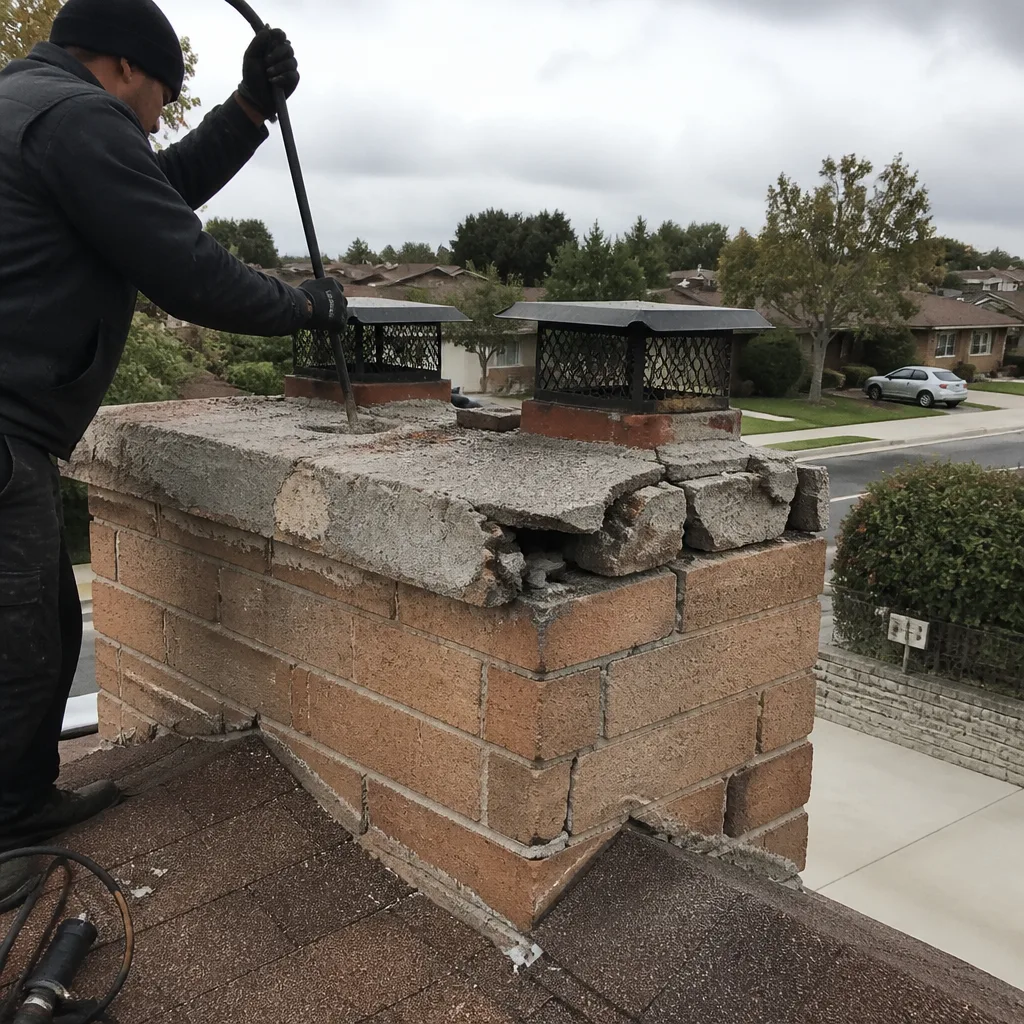 Before
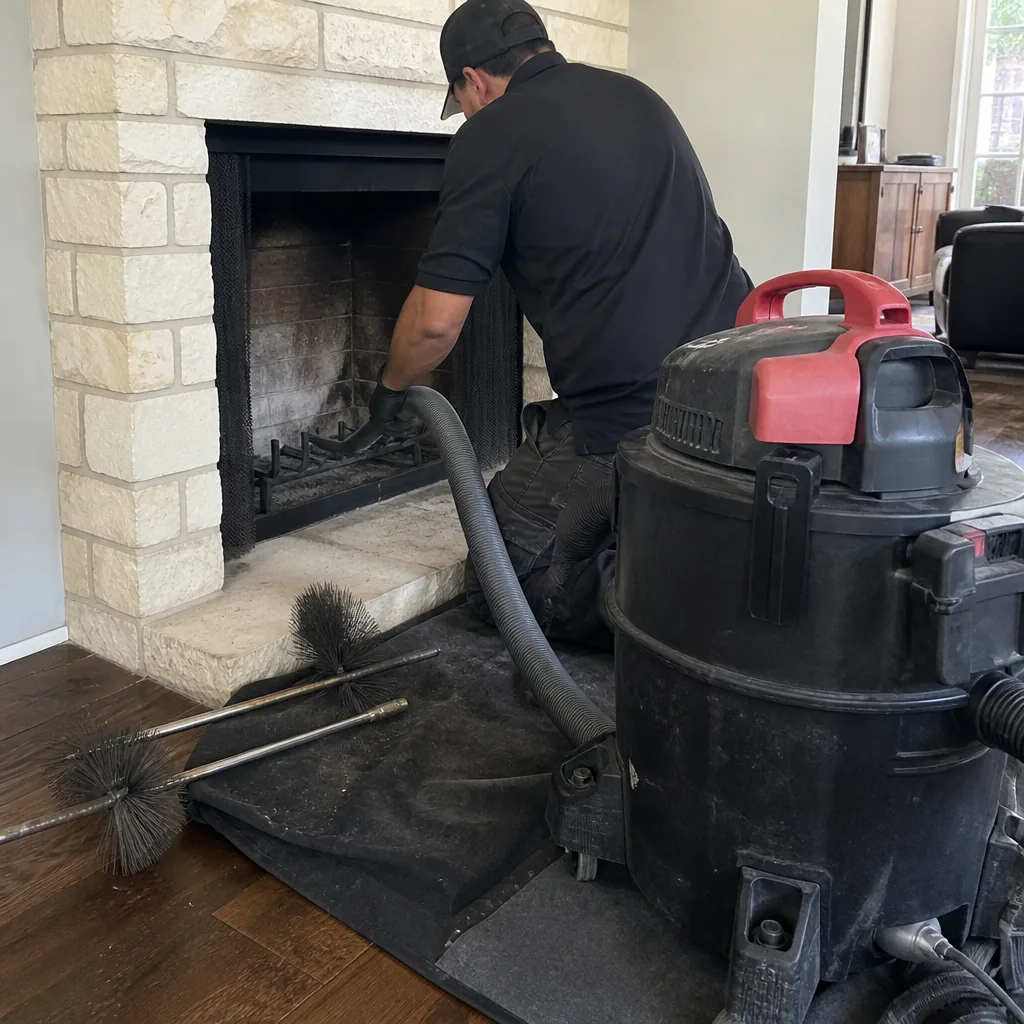 After
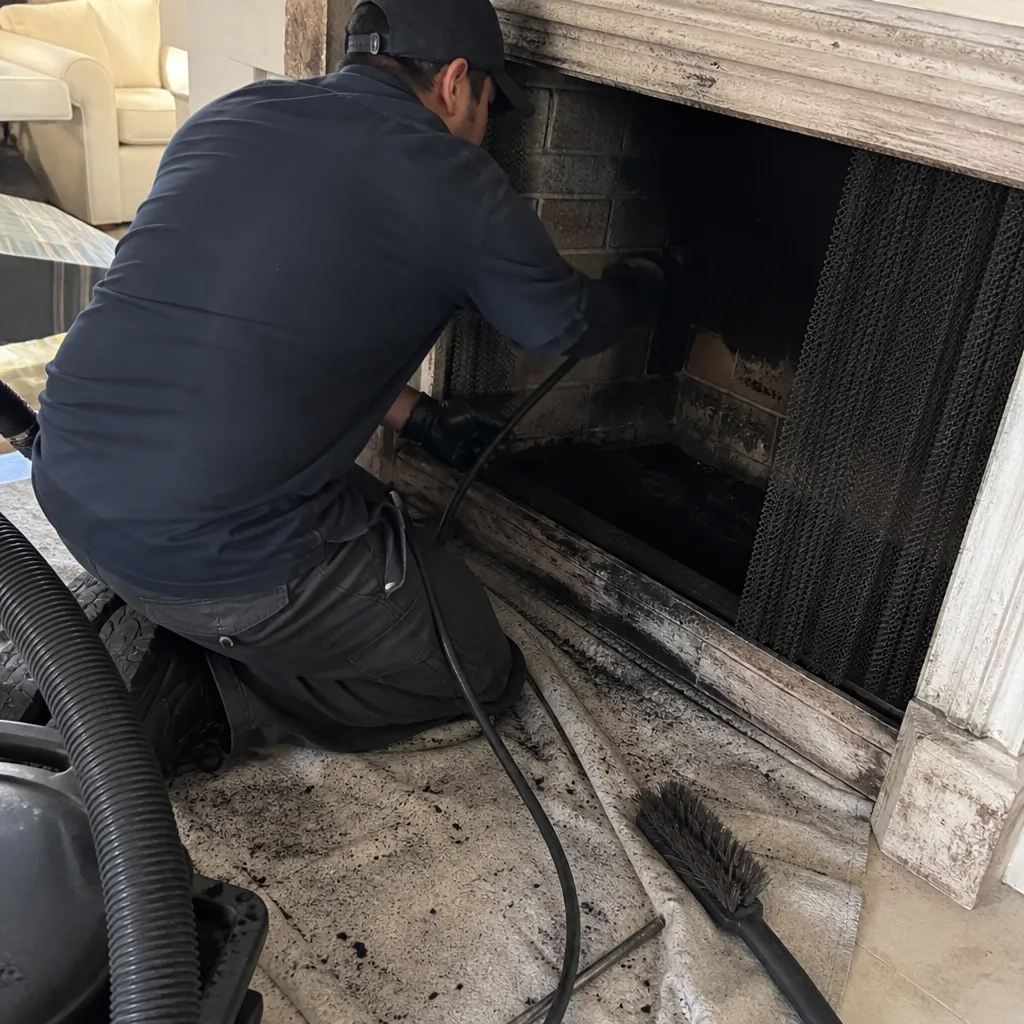 Before
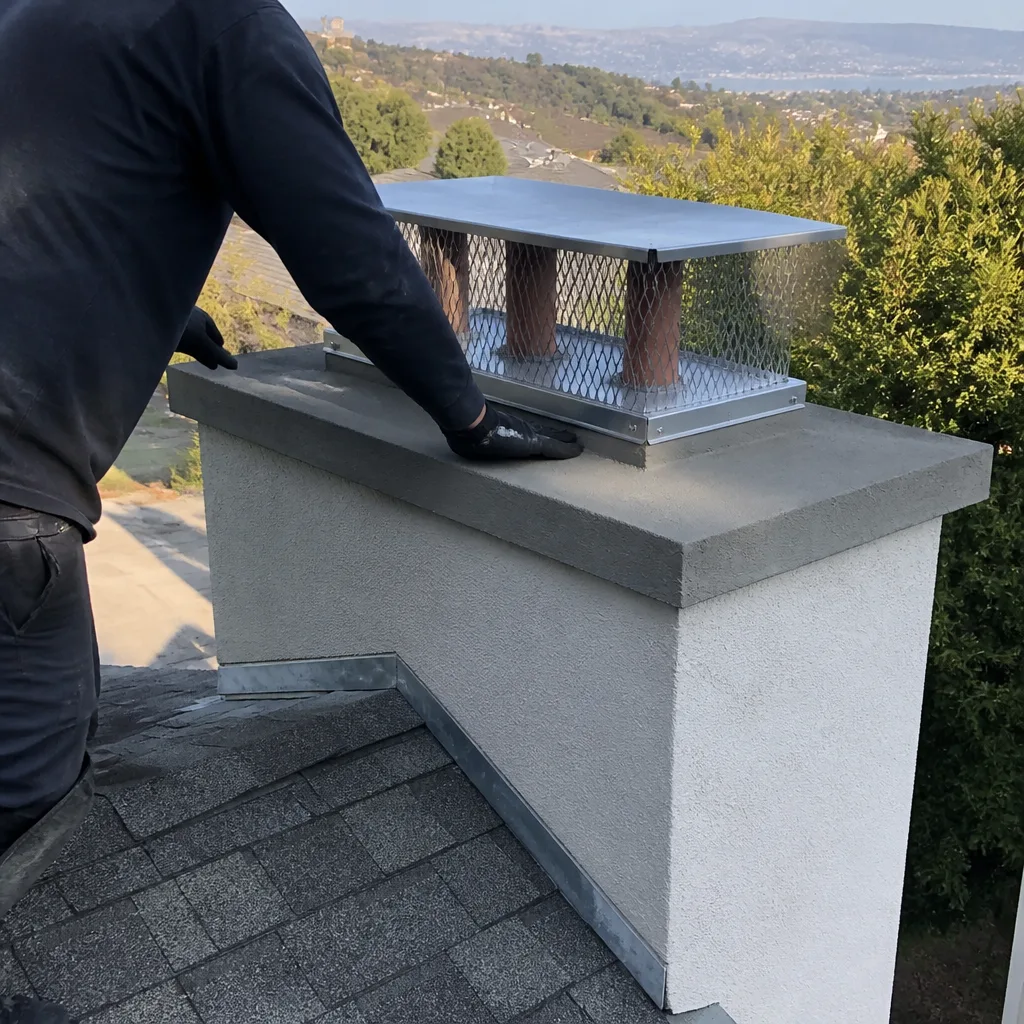 After
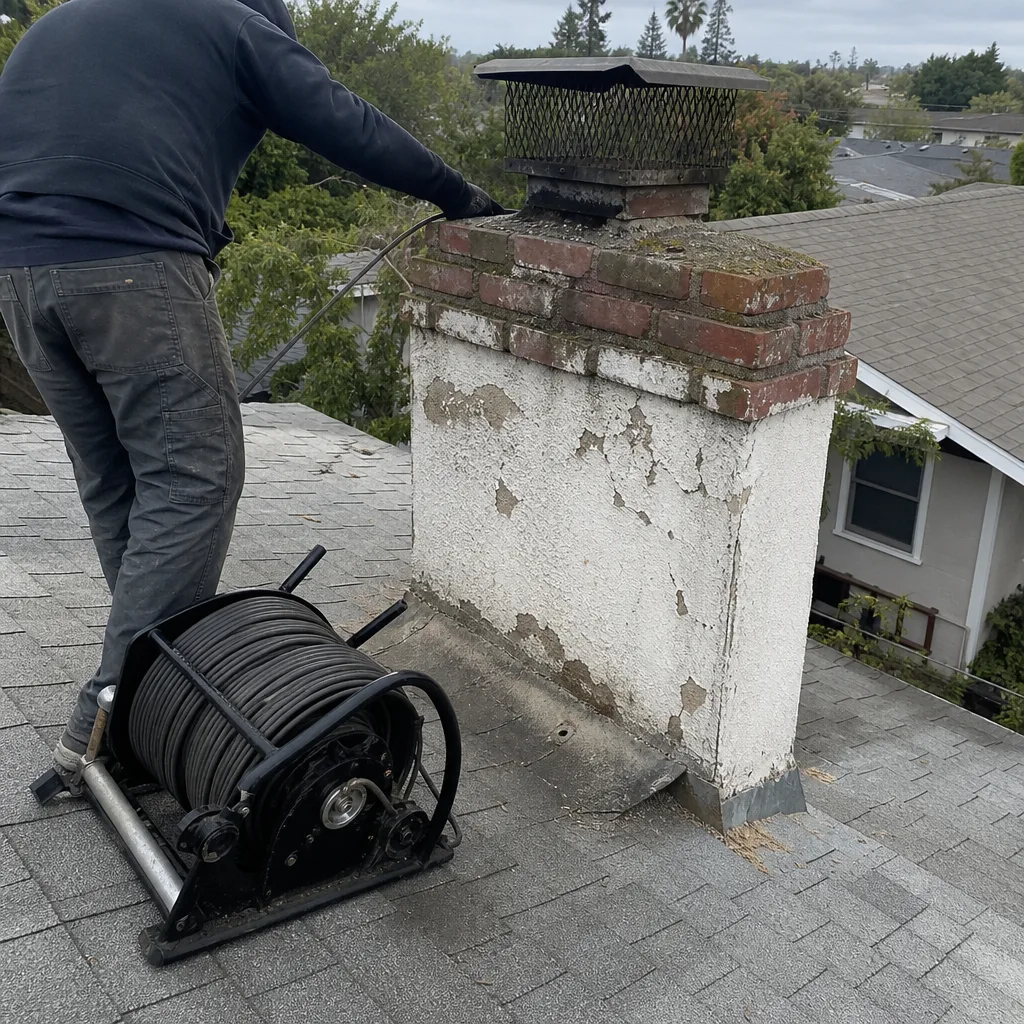 Before
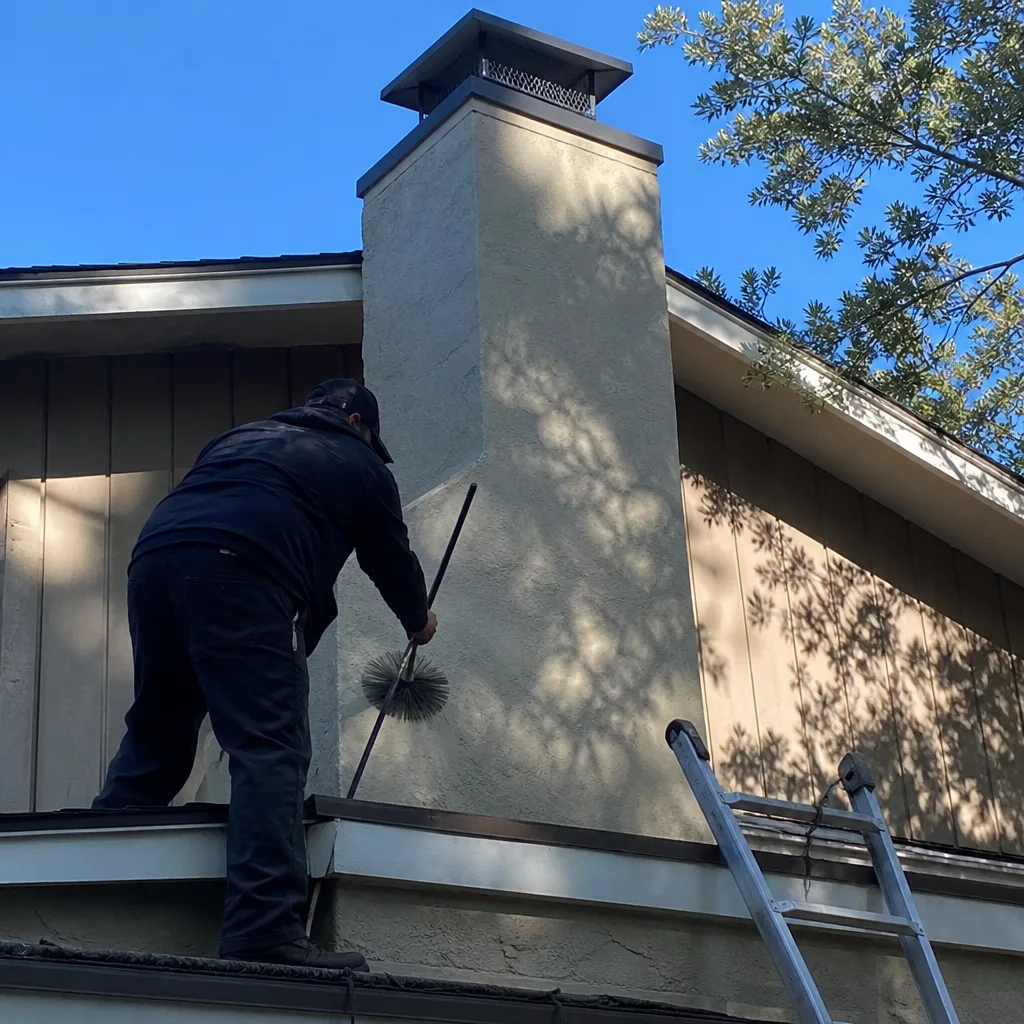 After
When to Call a Professional
You should call a chimney professional if you’ve noticed any of these conditions: smoke entering your living space instead of exiting the flue, a strong odor coming from the fireplace during humid weather, visible cracks in the chimney crown or masonry, rust staining on the cap or flashing, or any sign that your fireplace isn’t drawing properly. If you’ve moved into a Bay Terraces home and don’t know when the chimney was last inspected, that’s also a reason to schedule an inspection. And if your dryer has been taking longer than it should to dry clothes, or if the lint trap has been overflowing regularly, the dryer vent likely needs professional attention. Chimney Sweep Bay Terraces offers free estimates in Bay Terraces; call (833) 756-1092 or visit our more guides & resources page.
Frequently Asked Questions
Professional chimney cleaning brands like Copperfield, DuraFlex, and HeatShield are manufactured to supply-house specifications, which means tighter engineering tolerances, disclosed material grades, and manufacturer-backed warranties. Retail products are built to price points, which means corners are cut in ways that matter for longevity and safety. In Bay Terraces, where coastal corrosion accelerates material failure, the difference shows up within a few years.
Yes, if you want it to last. Marine air in Bay Terraces carries enough salt to corrode 304 stainless caps in under a decade. 316 stainless adds molybdenum for chloride resistance, which extends cap life to twenty-five years or more. The price difference is modest compared to the cost of replacing a 304 cap two or three times.
Enzymatic removers break down creosote hydrocarbon bonds and work best on stage 1 and stage 2 creosote, the flaky and granular forms. Chloride-based removers dehydrate creosote and are sometimes used for stage 3 glazed tar, but they’re more aggressive and not appropriate for every flue type. A professional should determine which chemistry matches the creosote stage in your chimney.
A full-service specialist can handle sweeping, repair, and dryer vent cleaning in one service relationship. If a sweep finds a damaged liner or corroded cap, the same team can fix it without referrals or second opinions. A general sweep can only clean and refer, leaving you to coordinate multiple contractors and translate findings between them.
Yes. Dryer vent cleaning is a standalone service we offer across Bay Terraces. It’s a leading cause of residential fires that most chimney companies skip entirely, but it belongs in the same safety conversation as your fireplace and chimney system.
The National Fire Protection Association recommends annual chimney inspections, and sweeping frequency depends on usage and fuel type. Wood-burning fireplaces used regularly during the winter typically need sweeping every one to two years. Gas fireplaces need less frequent sweeping but still benefit from annual inspections to check vents, connectors, and caps for corrosion and blockages. Your dryer vent should be cleaned at least once a year, more often if you have a large household or pets.
The Bottom Line
The brand names behind chimney products are a signal, not a slogan. When a contractor stocks Copperfield caps, DuraFlex liners, and HeatShield resurfacing materials, they’re telling you something specific about how they think about their work. They’ve chosen quality over convenience and long-term performance over short-term savings. In Bay Terraces, where marine air attacks cheap metal with predictable results, that choice matters more than in most places. Ask your contractor what they stock, why they stock it, and how they’ll stand behind it. The answers will tell you more than any marketing brochure ever will.
For professional chimney sweeping, repair, and dryer vent cleaning in Bay Terraces, call Chimney Sweep Bay Terraces at (833) 756-1092 for a free estimate.
Written by the team at Chimney Sweep Bay Terraces, serving Bay Terraces since 2011.