
Last updated November 2, 2026
 Sweep & inspection
 Caps & crowns
 Flue relining
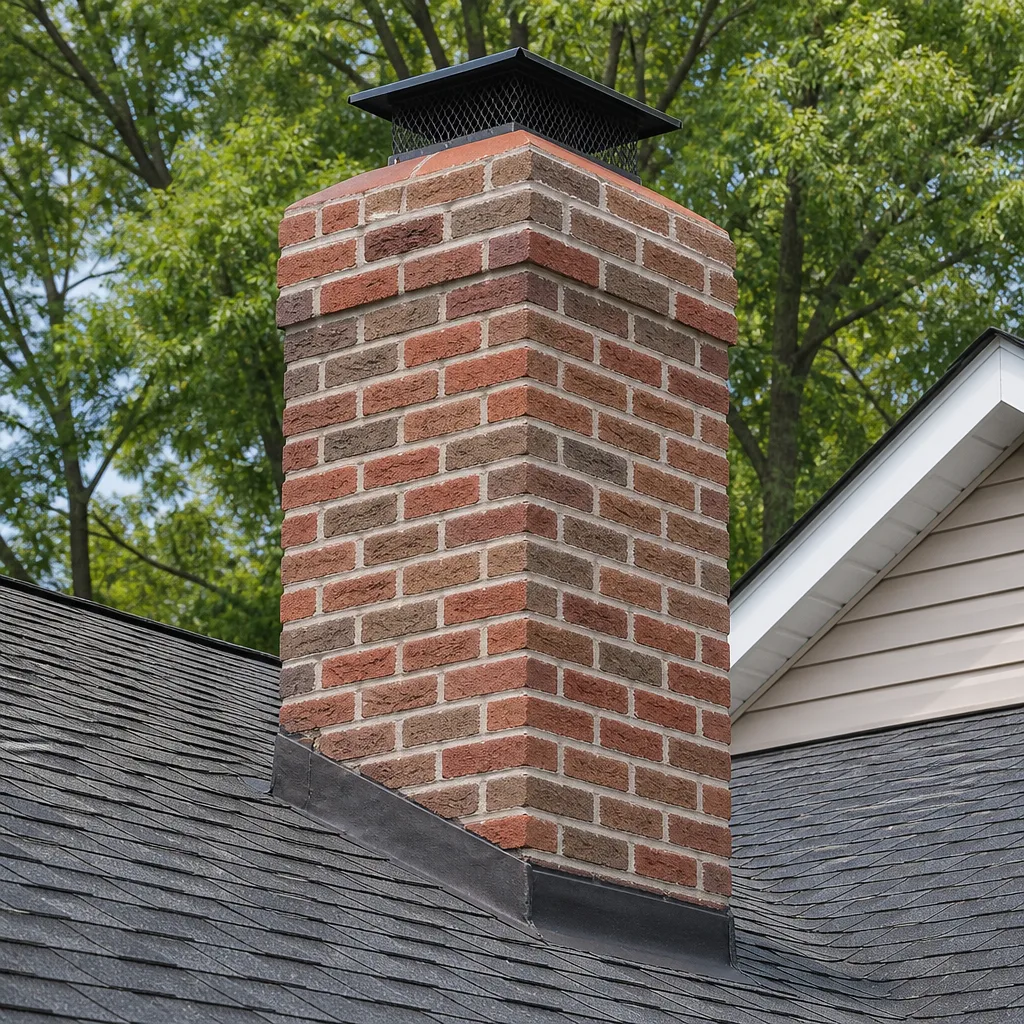 Masonry repair
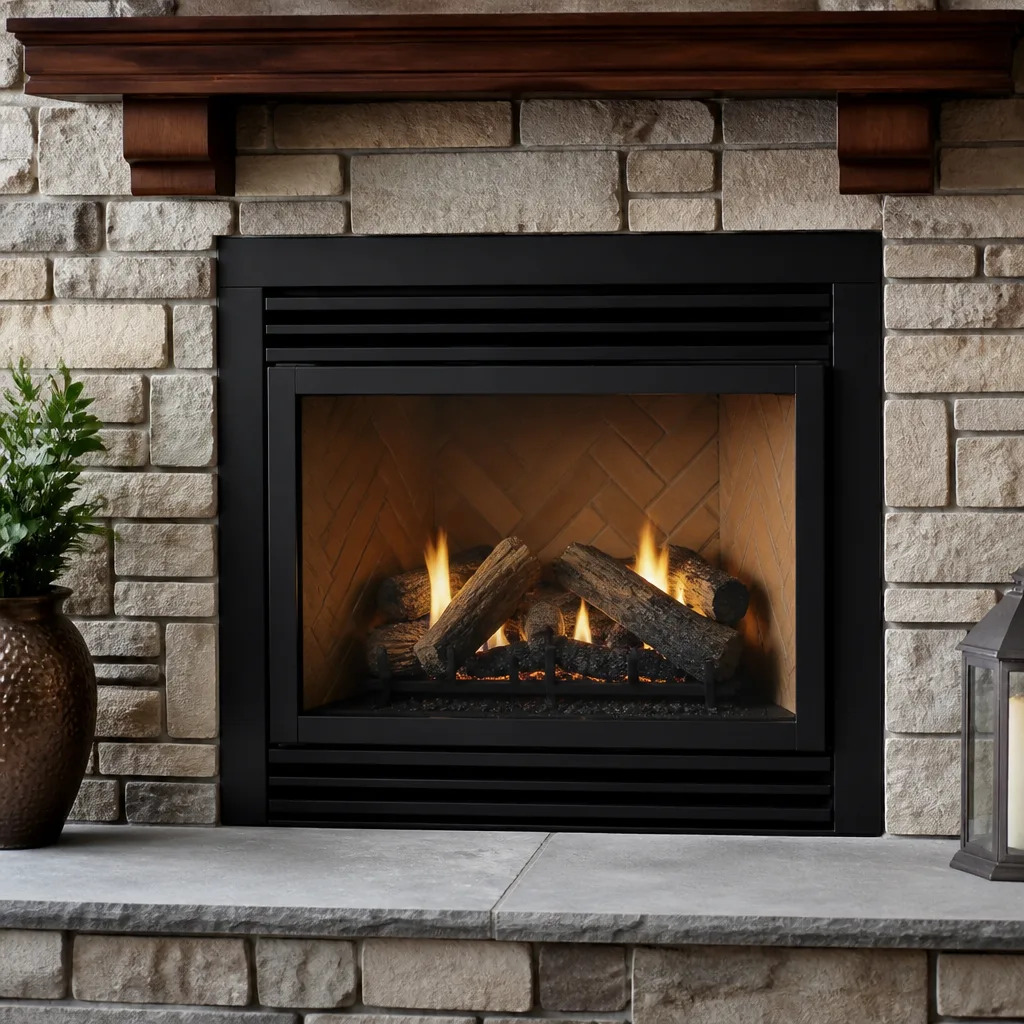 Gas fireplace service
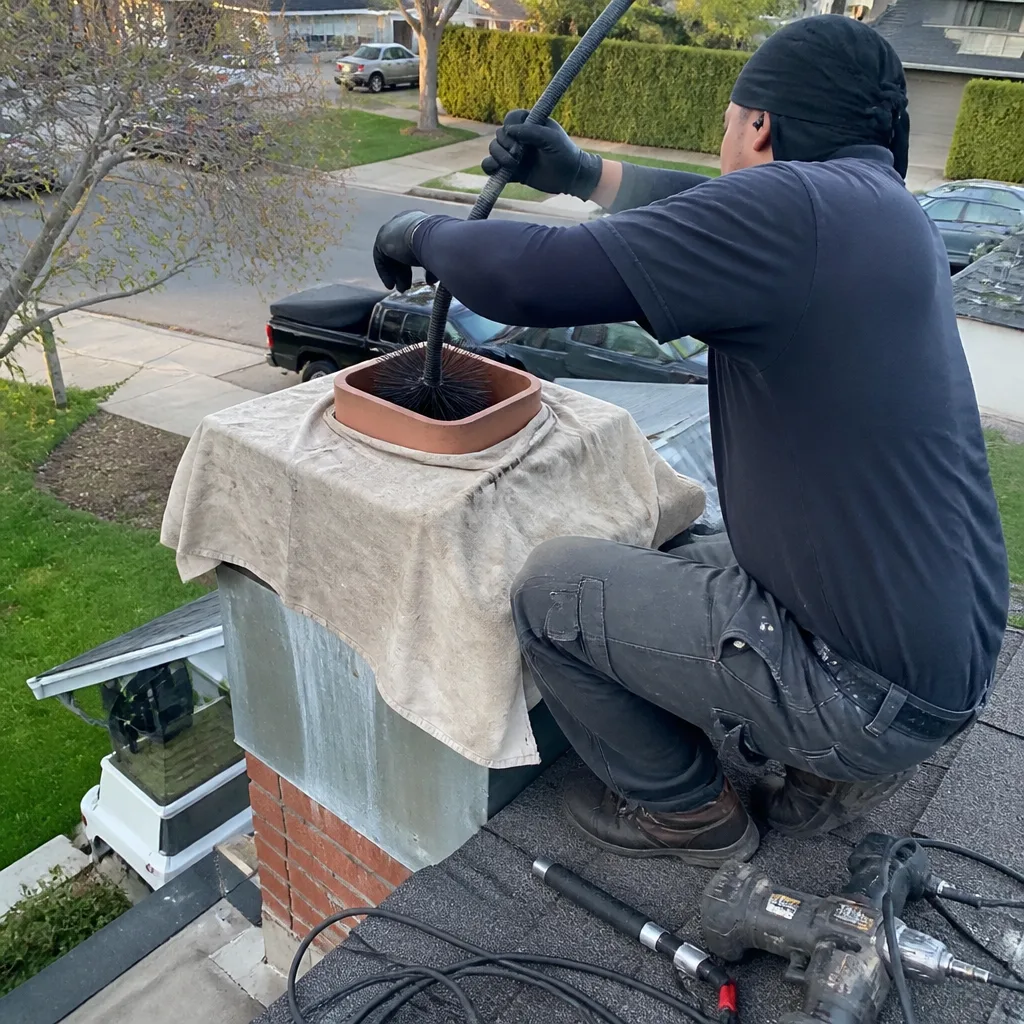
Level 1 sweep and inspection to the NFPA 211 annual standard - flue, crown, cap, and flashing checked and photographed
Chimney sweep logs do not sweep chimneys. They loosen some creosote - which then falls where a brush and vacuum still have to collect it.
DIY vs Professional Chimney Cleaning: The Bay Terraces Homeowner’s Decision Guide
You can buy a chimney brush kit on Amazon for $40, and for a straight, uncomplicated flue with stage one creosote, it’ll move soot around. But it won’t tell you that the tile liner behind the smoke has a hairline crack that’s been drafting combustion gases into your wall cavity. In Bay Terraces, where homes range from 1970s ranchers to newer two-story builds, chimney systems vary wildly in age, configuration, and condition. This guide draws a clear line between what a capable homeowner can legitimately handle and what requires equipment, training, and liability coverage that no hardware store kit provides, and points you to how to hire a chimney cleaning contractor in Bay Terraces when the job exceeds DIY limits. We’ll walk through the equipment gap, the hidden risks of cleaning blind, the honest cost comparison, and the specific scenarios where calling a specialist isn’t optional.
Styles & brands we work with
- Sweep & inspection
- Caps & crowns
- Flue relining
- Masonry repair
- Gas fireplace service
Quick Answer
Most Bay Terraces homeowners can safely handle exterior visual inspections, cap checks, firebox debris removal, and damper testing. What they cannot do without professional equipment is assess the liner’s structural integrity, document creosote stage correctly, or clean the smoke chamber and upper flue without missing what’s actually causing the hazard. The decision comes down to this: DIY is reasonable for surface maintenance between professional cleanings, but a professional sweep with camera inspection is the only way to verify the system is safe to operate.
Table of Contents
- What DIY Chimney Cleaning Can Actually Accomplish
- The Equipment Gap: Consumer Kits vs. Professional Setups
- Why Cleaning Without a Camera Inspection Is Cleaning Blind
- Liability and Insurance: What Happens If Something Goes Wrong
- The Honest Cost Comparison: DIY Kits vs. Professional Cleaning
- What Bay Terraces Chimneys Hide: Local Conditions That Matter
- Common Mistakes to Avoid
- When to Call a Professional
- Frequently Asked Questions
- The Bottom Line
What DIY Chimney Cleaning Can Actually Accomplish
There’s a legitimate middle ground between “hire a pro for everything” and “never touch your chimney.” A homeowner in Bay Terraces who’s comfortable on a ladder and understands basic fireplace anatomy can handle four specific tasks without professional help. None of these replace a professional sweep, but they extend the interval between cleanings and give you early warning when something’s changing.
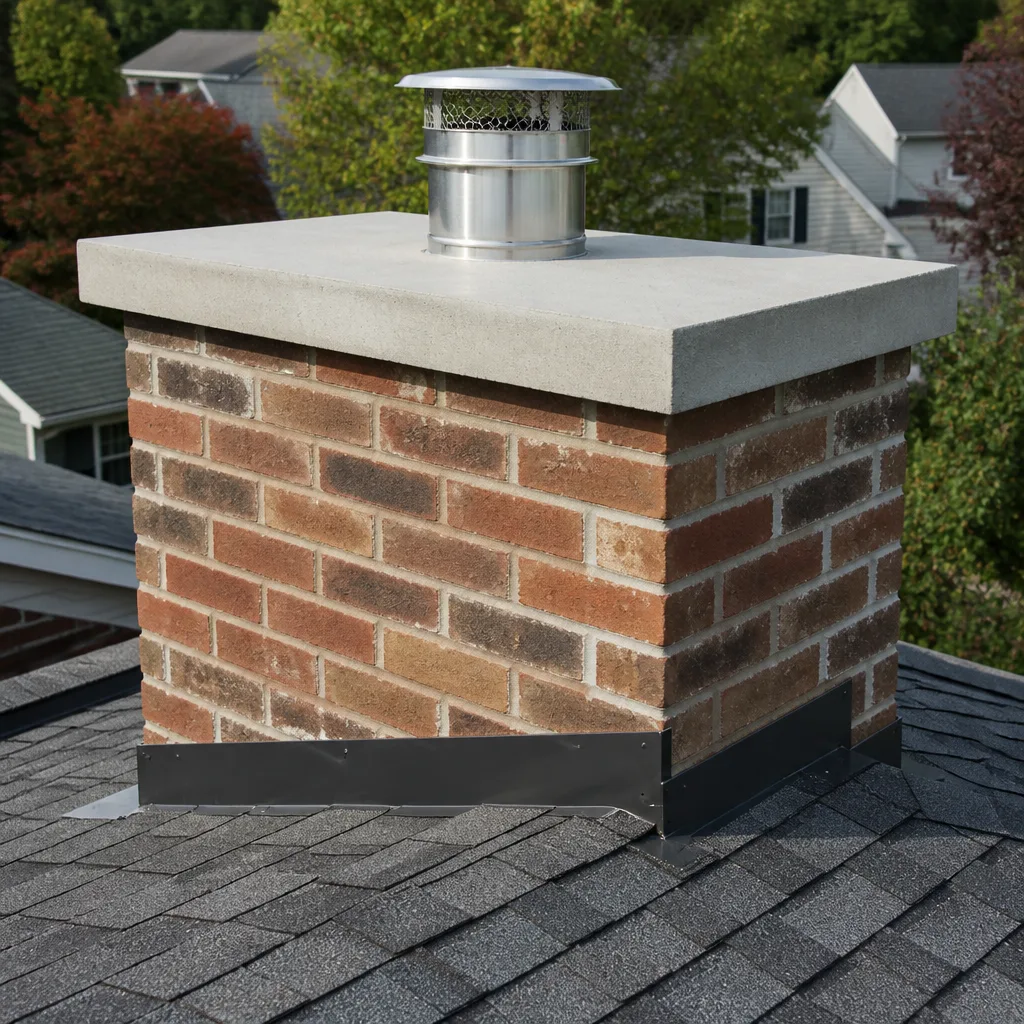
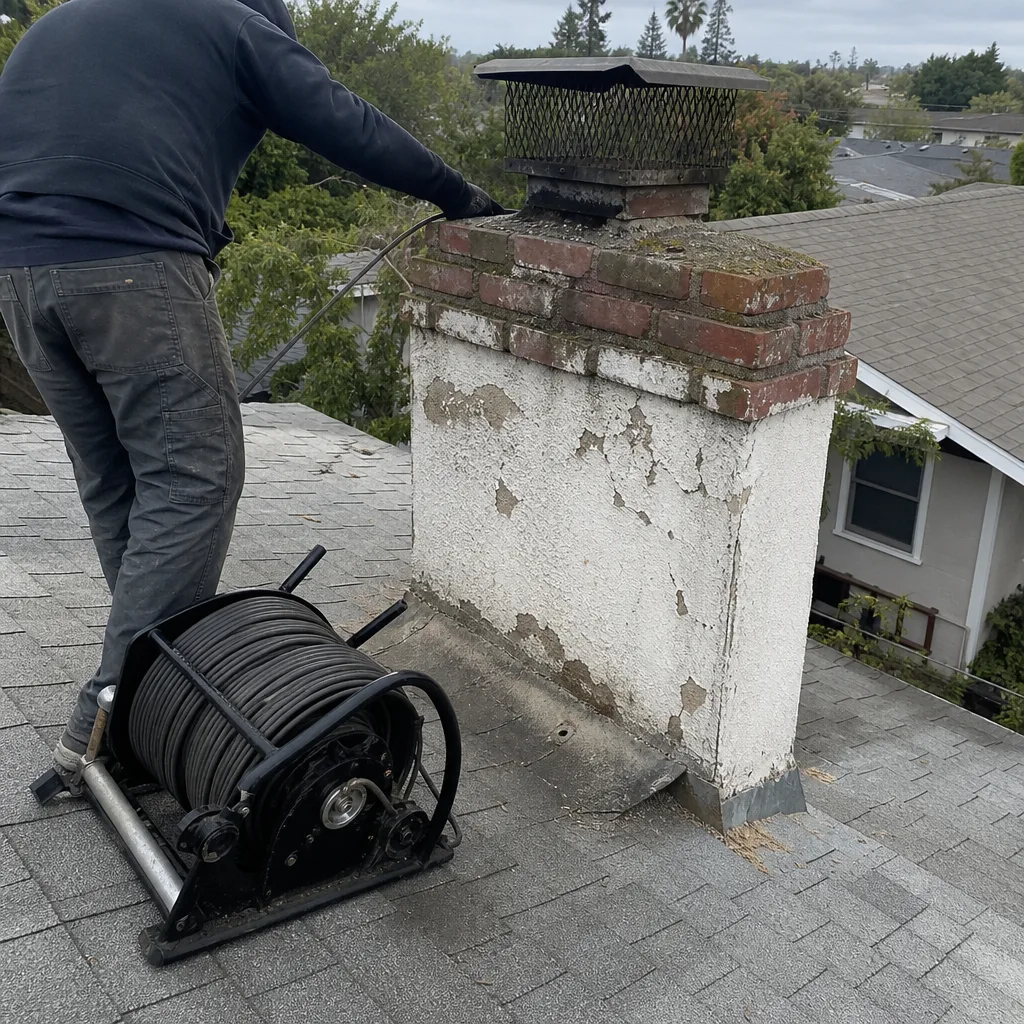
Exterior visual inspection. Walk around your house and look at the chimney from the ground. You’re checking for cracks in the masonry, missing mortar joints, a cap that’s tilted or gone, or any visible staining that wasn’t there last season. Bay Terraces gets morning marine layer moisture and afternoon sun, and that thermal cycling is rough on exposed masonry. If you see new cracks or crumbling mortar at the crown, that’s water intrusion waiting to happen. You can spot it from the ground with a pair of binoculars. You don’t need to be on the roof to notice a leaning cap or a flue tile that’s shifted out of alignment.
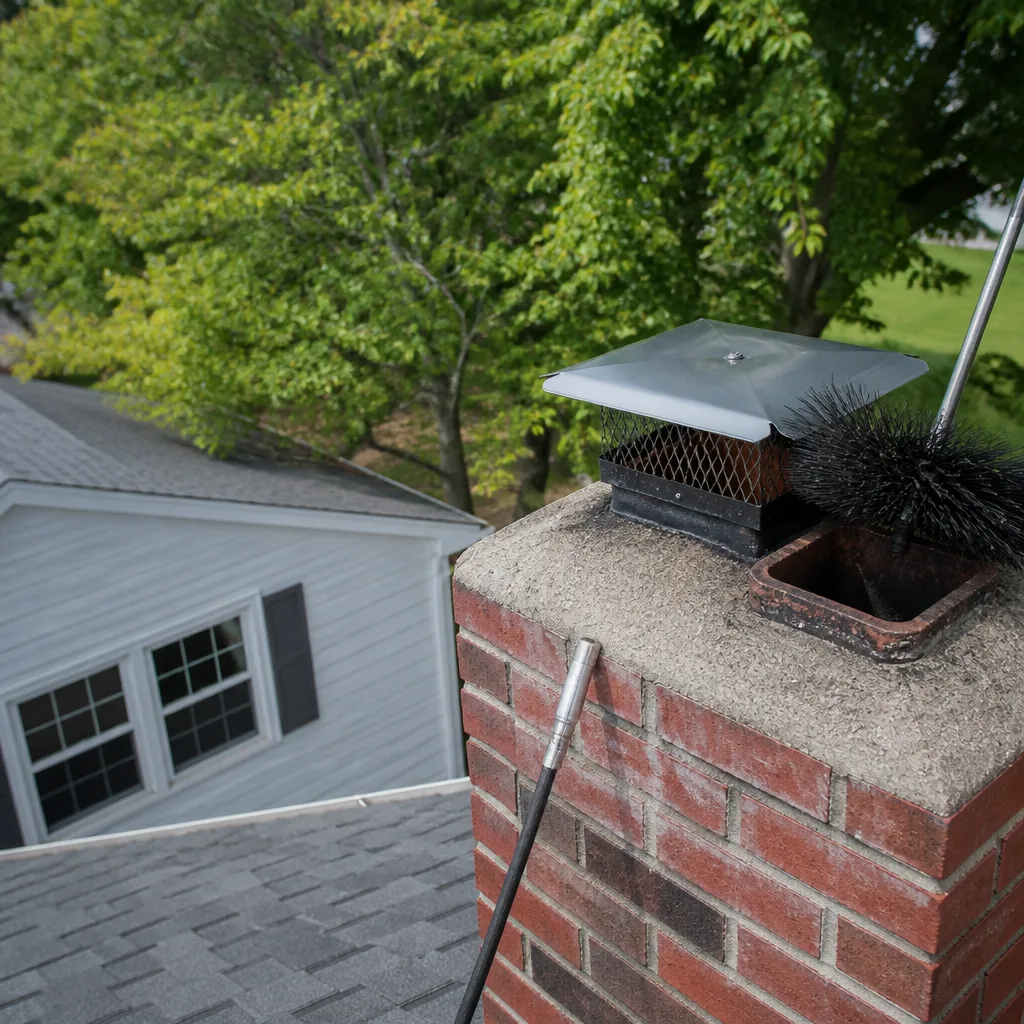
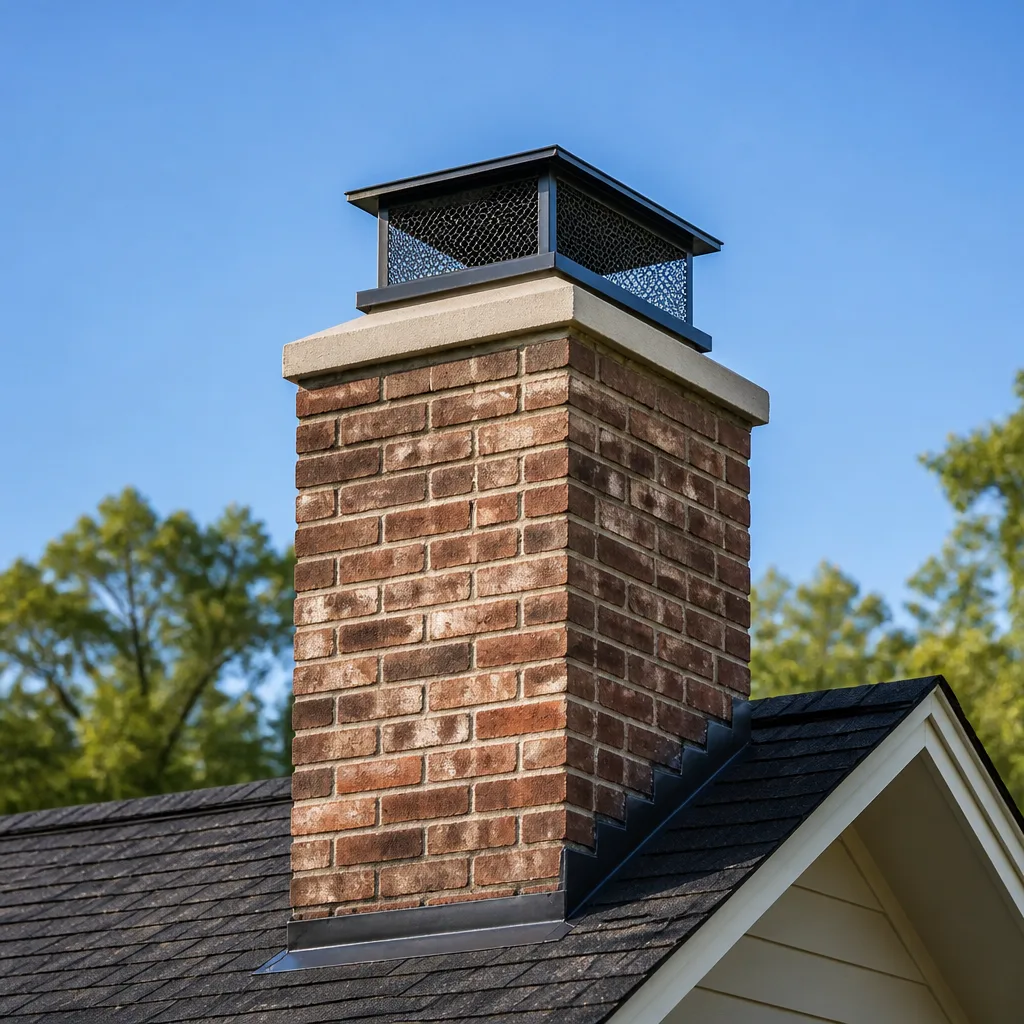
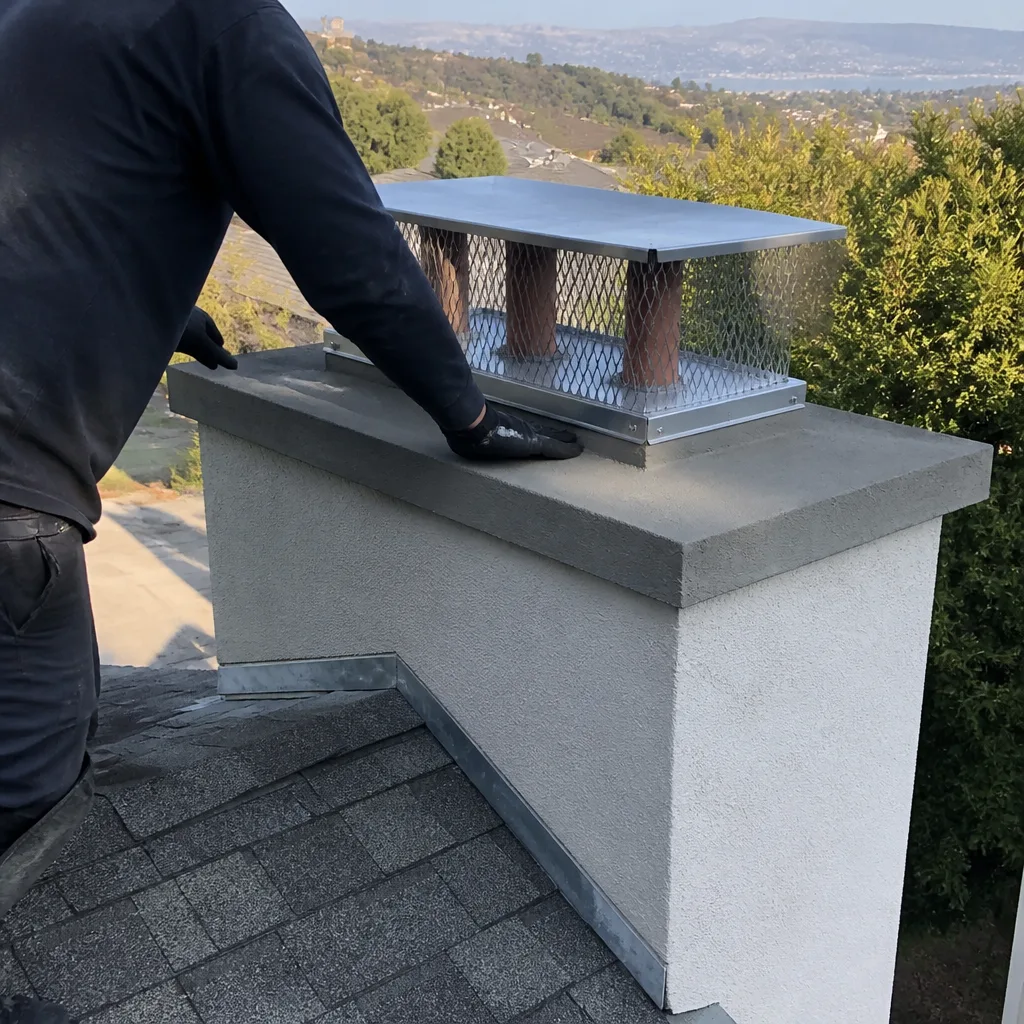
Cap and spark arrestor check. Most Bay Terraces homes have a chimney cap, and a surprising number of them are sitting loose. High winds off the bay can rattle a cap that wasn’t secured properly, and once it’s loose, it’s letting rain in and potentially letting embers out. From the ground, check that the cap is sitting square and the mesh isn’t clogged with creosote buildup. A clogged spark arrestor is a draft killer, and a draft killer is a carbon monoxide risk for gas fireplaces and a smoke-back problem for wood.
Firebox debris removal. This one’s straightforward. After the season ends, or when the firebox has cooled completely, remove the ash and any unburned debris. A shop vac with a HEPA filter does the job, or you can scoop it out the old-fashioned way. What you’re doing here is preventing acidic ash from sitting against the firebrick, which degrades it over time. You’re also clearing the path to visually inspect the firebrick itself for cracks, spalling, or missing sections.
Damper testing. Open and close the damper a few times. Does it seat fully? Does it open smoothly? A damper that won’t close all the way is a constant heat leak in winter, and a damper that’s seized open means creosote and moisture are moving up and down the flue even when the fireplace isn’t in use. If the damper fights you, that’s a mechanical issue a specialist should address, but identifying the problem yourself saves you a diagnostic call.
These four tasks cover surface-level maintenance. They’re what a responsible homeowner can do between professional cleanings. None of them involve touching the flue interior, the smoke chamber, or the liner, which is where the actual fire safety equation lives.
The Equipment Gap: Consumer Kits vs. Professional Setups
The brush you buy at a big-box store or on Amazon is a wire or poly brush on a fiberglass rod. It will knock loose loose soot and light stage-one creosote from the flue walls. That’s what it’s designed to do. What it won’t do is capture that debris before it escapes into the room, tell you what stage the creosote actually is, or reach the parts of the chimney where the worst buildup hides.
Here’s what a professional setup includes that a consumer kit doesn’t:
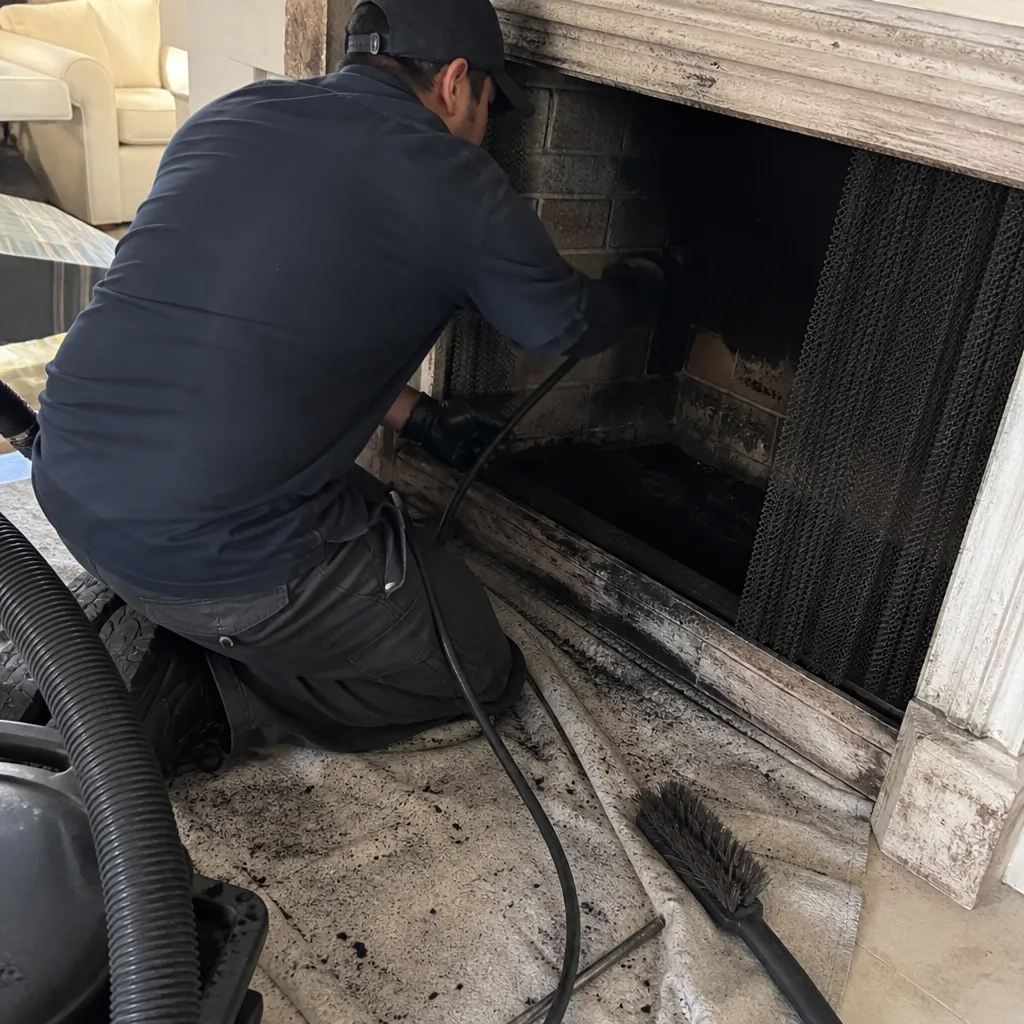
- HEPA containment. Professional sweeps in Bay Terraces use negative-pressure containment systems that create a seal at the fireplace opening and pull air through a HEPA filter. This keeps fine particulate out of your living room. A DIY brush job, by contrast, releases soot and creosote dust directly into the home’s air. That dust is respiratory irritant at best, and with creosote, it’s a known carcinogen. The brush kit doesn’t include a containment system, and most homeowners don’t realize they need one until the living room carpet is dusted in black film.
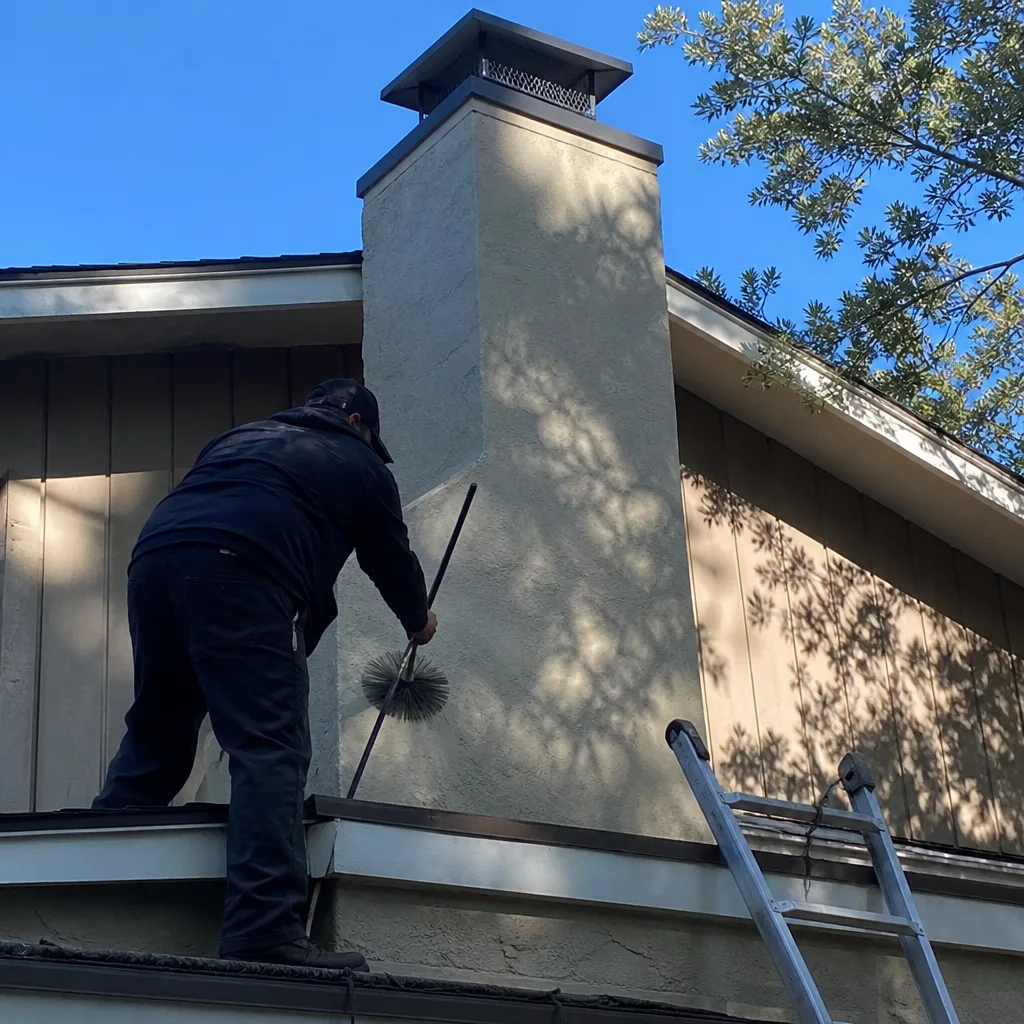
- Rotary cleaning systems. The rods and stiff brushes work on stage-one creosote, which is flaky and loose. Stage two creosote is harder, tar-like, and baked onto the flue walls. You’re not getting that off with a hand brush. Rotary systems use chains or cable whips on a flexible shaft driven by a drill, and they generate the friction needed to break down stage-two glaze without damaging the liner. When we encounter a flue that’s gone to stage two or three, a hand brush is about as effective as sweeping a driveway with a toothbrush.
- Video inspection cameras. This is the single biggest gap. After a professional cleaning, a camera runs through the flue and documents the condition of every tile liner joint, the smoke chamber, and the damper housing. The camera catches what brushes can’t: hairline cracks, spalled liner sections, gaps between tiles, and moisture staining. You don’t get this with a $40 kit, and you can’t clean what you can’t see.
- Chimney-specific vacuums. A standard shop vacuum is not designed for fine soot and creosote particulate. The filter loads up quickly, and what doesn’t load up gets blown back into the room as exhaust. Professional equipment uses high-capacity filtration designed specifically for the particulate size of creosote. It’s a material difference, not a marketing one.
The difference between consumer and professional is the difference between moving debris around beneath you and actually removing it from the system while seeing what condition the system is actually in.
Why Cleaning Without a Camera Inspection Is Cleaning Blind
Here’s the scenario we see repeatedly in Bay Terraces: a homeowner spends a Saturday afternoon running a brush up and down the flue, the firebox looks cleaner, and the chimney seems fine. But the brush never touched the smoke chamber, where creosote accumulation is typically heaviest. It never reached the upper flue sections where tile joints open and close with thermal expansion. And critically, the homeowner never saw what the flue interior actually looks like.
The smoke chamber sits directly above the damper, and it’s a notoriously difficult area to clean even with professional equipment. Creosote condenses there because the smoke slows and cools as it navigates the transition from firebox to flue. A hand brush run from the firebox goes straight up the flue and bypasses the chamber walls almost entirely. We’ve seen smoke chambers with a half-inch of glazed creosote sitting above a firebox the homeowner just “cleaned.” From the homeowner’s perspective, the chimney was clean. From a fire-safety perspective, the chimney was more dangerous than before, because the loose debris was removed and the compacted hazard was left behind.
Camera inspection also catches what no brush can. Hairline cracks in clay tile liners aren’t visible from either end of the chimney, but they show up on camera as thin dark lines or moisture tracks. A spalled section of liner, where the face of the tile has popped off from heat stress, is a structural failure waiting to happen. In Bay Terraces, where older chimneys were often built with unlined masonry or clay tile that’s now 30 to 50 years old, liner deterioration is the rule, not the exception. Without a camera, you’ll never know it’s there until you’re dealing with a chimney fire or carbon monoxide readings.
The point isn’t that DIY cleaning is worthless. It’s that DIY cleaning without diagnostic imaging is maintenance without information. The brush kit moves soot. The camera tells you whether the system is safe to fire. Those are two different jobs, and the second one is the one that keeps people alive.
Liability and Insurance: What Happens If Something Goes Wrong
This is the conversation nobody wants to have before the event. If you clean your own chimney and a chimney fire occurs the following season, your insurance adjuster is going to ask questions. Specifically, they’re going to ask who performed the last cleaning and whether the system was inspected by a qualified professional. If the answer is “I did it myself with a brush kit,” you’ve just made the claim harder to win.
Insurance policies for homeowners generally require that the homeowner take reasonable care to maintain the property. A chimney fire that follows a DIY cleaning raises the question of whether the cleaning was adequate. Without documentation, an adjuster has grounds to argue that the homeowner failed to properly maintain the system, which falls under the policy’s exclusion for neglect. This isn’t theoretical. We’ve talked to Bay Terraces homeowners who discovered after the fact that their policy had a specific chimney maintenance clause requiring professional inspection at regular intervals. If your policy has that clause and you can’t produce a receipt from a licensed sweep, you’re exposed.
The same applies to carbon monoxide events. If a gas or wood appliance vents into the home and the CO detector goes off, the subsequent investigation will trace the venting path. A professional sweep produces a written report with a camera inspection, documenting the condition of the liner and the damper. That documentation is evidence of care. A DIY cleaning produces no evidence at all. You cleaned it, but you can’t prove what condition the flue was in, what stage the creosote was at, or whether the liner was intact.
There’s also the matter of the cleaning itself. Creosote is a carcinogenic material. Professional liability coverage exists because sweeping chimneys carries health risks and property risks. If you inhale creosote dust during a DIY cleaning and develop respiratory issues, you’re on your own. If a professional crew has a containment failure, their insurance covers your home and their workers. These are practical realities, not scare tactics. The liability gap is part of the cost equation, and it’s a part most DIY cost comparisons never mention.
The Honest Cost Comparison: DIY Kits vs. Professional Cleaning
Let’s put numbers on this without pretending a brush kit and a professional sweep are the same product. A basic chimney brush kit runs $35 to $60. A better kit with multiple brush sizes and fiberglass rods runs $80 to $120. If you want a drill attachment for a rotary-style clean, you’re adding another $40 to $80. Then there’s the shop vac filter upgrade if you don’t already have a HEPA cartridge, which is another $30 to $50. A homeowner who does this properly, with the right brushes and basic dust control, is realistically in for $150 to $250 in first-year kit costs.
A professional chimney sweep in Bay Terraces, including a full cleaning and video inspection, typically ranges from $200 to $400 depending on system condition, access difficulty, and whether the flue has gone to stage two or three creosote. The inspection documentation alone has value: it’s what your insurance company wants to see, it’s what a home inspector will ask for if you sell, and it’s the only way to know whether the flue is safe.
Here’s the honest comparison:
- DIY first-year cost: $150 – $250 in equipment, 2 – 4 hours of labor, no documentation, no liner inspection, no containment system, and creosote dust released into the living space.
- Professional first-year cost: $200 – $400, 45 – 90 minutes of labor, full containment, rotary cleaning when needed, camera inspection with written report, and liability coverage if anything goes wrong.
- DIY long-term cost: Replacement brush heads and rods every few years, still no documentation, still no inspection, still no containment, and the compounding risk that undetected liner damage goes unaddressed.
- Professional long-term cost: The cleaning comes with a condition report, which means you act on problems early. A hairline crack caught on camera is a $500 repair. A hairline crack that becomes a full liner failure is a $3,000 to $6,000 relining job.
The honest calculation isn’t $40 versus $300. It’s $40 plus risk minus information versus $300 including documentation, diagnosis, and liability protection. If you look at it that way, the professional sweep is the cheaper option for most Bay Terraces homeowners, especially those with older chimneys that haven’t been inspected in years.
What Bay Terraces Chimneys Hide: Local Conditions That Matter
Every climate creates its own chimney problems, and Bay Terraces is no exception, which is why seasonal chimney cleaning care for Bay Terraces matters year-round. We’re close enough to the coast that morning fog and marine layer moisture are a regular thing. That moisture settles on masonry and works its way into the mortar joints, especially at the chimney crown. When the afternoon sun hits, the trapped moisture expands. Repeat that cycle a few hundred times a year and you get spalling brick, crumbling mortar, and crowns that crack open like eggshells. A homeowner running a brush through the flue won’t see any of that. It’s happening on the exterior and inside the upper flue sections, which are the hardest areas to reach and inspect without equipment.
Bay Terraces also has a significant number of older homes with masonry chimneys built in the 1960s and 1970s. Many of those chimneys were constructed with clay tile liners, and clay tile liners have a finite lifespan. They crack under thermal stress, especially in the upper sections where temperature differentials are most extreme. When a tile cracks, the gap becomes a pathway for combustion gases to escape the flue and enter the wall cavity. That’s not a fire-only problem. It’s a carbon monoxide problem that can exist for years without triggering an alarm, because the CO disperses gradually through the building envelope rather than concentrating in a single room.
We also see a lot of Bay Terraces homeowners who added a wood stove insert or switched from wood to gas without updating the liner. An old clay tile flue sized for an open fireplace is oversized for modern inserts and gas appliances. The result is poor draft, condensation, and creosote or acidic condensate eating at the masonry from the inside. When we’re cleaning a chimney that’s been converted without a correctly sized liner, we’re looking at a system that needs a Chimney Repair in Bay Terraces evaluation, not just a sweep. Products like DuraFlex and HeatShield exist specifically to fix these conversions properly, and they’re the materials we stock for restoration work because they’re what the trade’s professionals specify.
For homeowners working with Chimney Sweep Bay Terraces home services, the local advantage is that we understand these specific failure patterns. We know what a 50-year-old clay tile liner looks like after decades of Bay Terraces moisture cycles, because we’ve seen dozens of them. That local knowledge is the difference between a textbook answer and a diagnosis that fits your actual house.
Common Mistakes to Avoid
- Using chemical creosote removers and calling it done. Those powder products turn stage-one creosote into ash over the course of a week or two, but they don’t remove the ash. You still need to sweep the flue afterward. Skipping the sweep means the treated creosote sits in the chimney, and at stage two or three, those products do almost nothing anyway.
- Burning pine or other softwoods to “burn off” creosote. This misconception persists, especially among Bay Terraces homeowners who can get softwood cheaply. Burning hotter does not remove existing creosote. It increases flue temperatures, which can ignite the creosote that’s already there. A chimney fire is not a cleaning method.
- Cleaning from the roof without proper safety equipment. Bay Terraces roofs are often steep, and chimney access means working at height near a flue that’s slick with moisture and creosote residue. A fall from roof height is a life-changing injury. If you’re not set up for roof work, don’t do roof work.
- Assuming the fireplace is fine because the smoke goes up. Smoke rising doesn’t mean the system is in good shape. It means the draft is working that day. Liner cracks, smoke chamber buildup, and blocked spark arrestors can all coexist with a fireplace that appears to function normally, until the day it doesn’t.
- Deferring chimney inspection because “we only use it a few times a year.” In Bay Terraces, infrequent use is common because winters are mild. But infrequent use doesn’t mean the system is safe. It means the creosote that does form has longer to dry and harden between burns, which makes it harder to remove and more likely to become stage two or three glaze.
- Ignoring the dryer vent because “it’s not part of the chimney.” Your dryer vent is the other fire-risk exhaust in the house, and most chimney companies don’t touch it. We do, because Dryer Vent Cleaning in Bay Terraces addresses a fire hazard that causes thousands of residential fires every year. If you’re already thinking about the chimney, check the dryer vent too.
- Waiting until you smell smoke to investigate. If you can smell smoke inside the house when the fireplace is burning, the system has already failed. Smoke in the living space means the draft is compromised, and the fix is usually structural, not a routine cleaning. Early intervention is always cheaper.
When to Call a Professional
If your chimney hasn’t been professionally cleaned and inspected in the last 12 months, call a professional. If you’re seeing stage two or three creosote, which looks like shiny black tar or bubbled glaze rather than flaky soot, call. If you notice smoke backing into the room, a damper that won’t seal, or visible cracks in the firebrick or exterior masonry, call. If you’ve switched fuel types, whether from wood to gas or gas to wood, or installed an insert, the liner needs evaluation. If you bought the house and have no documentation of the last sweep, assume it wasn’t done. And if you see water staining around the chimney or hear loose debris falling when the wind blows, that’s structural, not cosmetic.
Chimney Sweep in Bay Terraces is what we do. We offer free estimates for Bay Terraces homeowners, and every cleaning includes a camera inspection so you see what we see. Call (833) 756-1092.
Frequently Asked Questions
The National Fire Protection Association standard is annual inspection and cleaning as needed, and that applies to Bay Terraces too. Most homes that burn wood regularly through the winter need a sweep every year. Gas fireplaces can go longer between cleanings, but the inspection should still happen annually, because the venting system can degrade even when you’re not burning wood.
A professional sweep includes full flue cleaning with containment, rotary cleaning when creosote has progressed past stage one, smoke chamber cleaning, damper inspection, and a video camera inspection of the entire system with a written report. That report is your documentation for insurance and resale. Call (833) 756-1092 for a free estimate on a full sweep and inspection.
Yes, you can do a ground-level visual inspection with binoculars. Look for cracks in the masonry, loose or missing caps, and staining. What you can’t do from the ground is assess the liner, smoke chamber, or damper condition. Those require either roof access or a camera from below, which is what a professional sweep provides.
Expect to pay between $200 and $400 for a full professional sweep with camera inspection in Bay Terraces, depending on system condition and access difficulty. If the creosote has gone to stage two or three, or the chimney hasn’t been cleaned in years, the price can go higher because the job takes longer. Call (833) 756-1092 for an exact quote.
The biggest risk is false confidence. You clean what you can reach with a brush, the firebox looks better, and you assume the system is safe. But the areas that matter most, the smoke chamber, upper flue, and liner condition, are precisely the areas a brush kit can’t diagnose. The chimney looks clean while remaining dangerous.
We handle the full system, including chimney repair. When a sweep turns up a cracked liner, a failing damper, or a deteriorated crown, we can fix it using professional-grade materials like DuraFlex, HeatShield, and Copperfield. That means no referral runaround, and the same team that diagnosed the problem fixes it.
The Bottom Line
The DIY chimney cleaning conversation isn’t about money versus principle. It’s about information. You can brush your own flue and save a couple hundred dollars this year, but you’re doing it without a camera, without containment, without documentation, and without a professional assessment of the liner that’s protecting your house from fire and carbon monoxide exposure. The right division of labor is straightforward: handle the ground-level inspections and firebox maintenance yourself between professional cleanings. Let a specialist handle the flue interior, the smoke chamber, the liner assessment, and the documentation. In Bay Terraces, where older chimneys battle moisture and thermal cycling daily, that division matters more than in drier inland climates. When you’re ready for a professional sweep with camera inspection, we’re here.
For a free estimate on chimney sweeping, inspection, or repair in Bay Terraces, call (833) 756-1092.
Written by the team at Chimney Sweep Bay Terraces, serving Bay Terraces since 2011.
See the difference
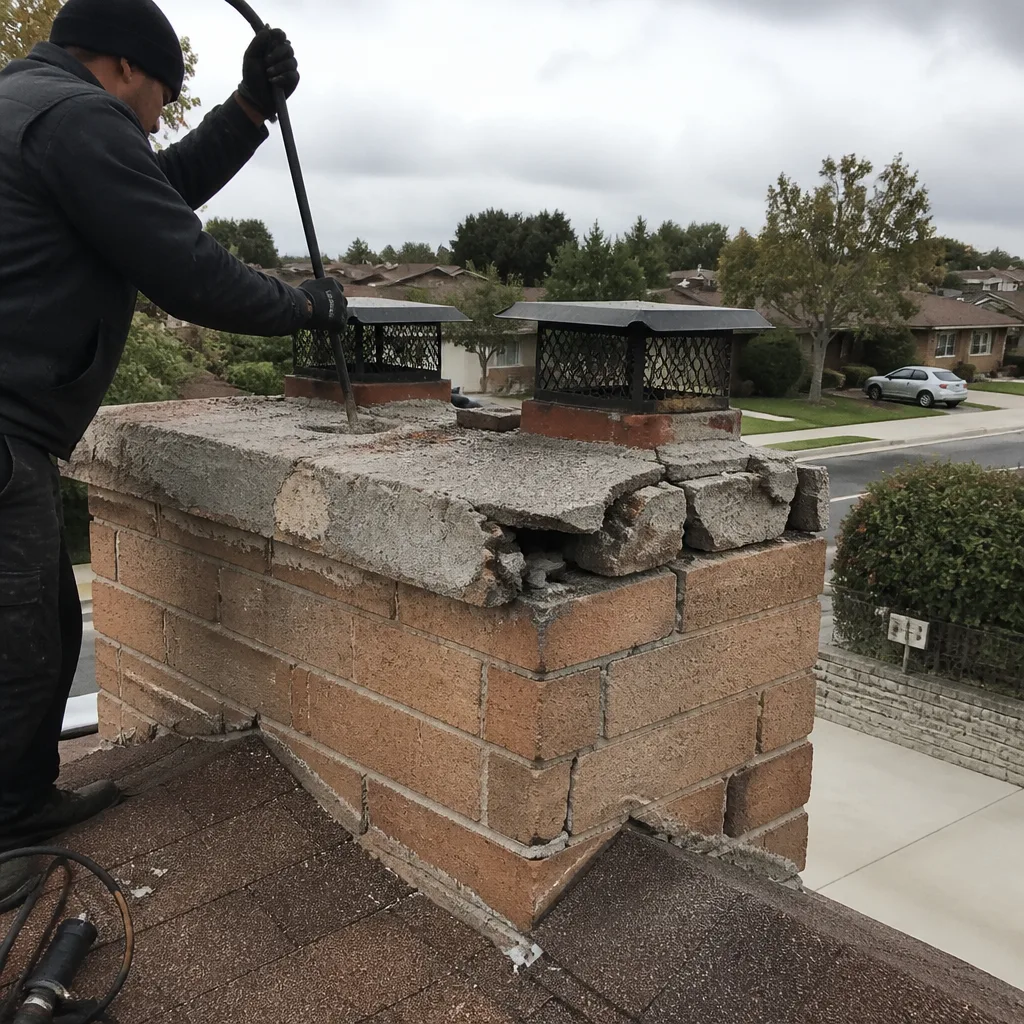 Before
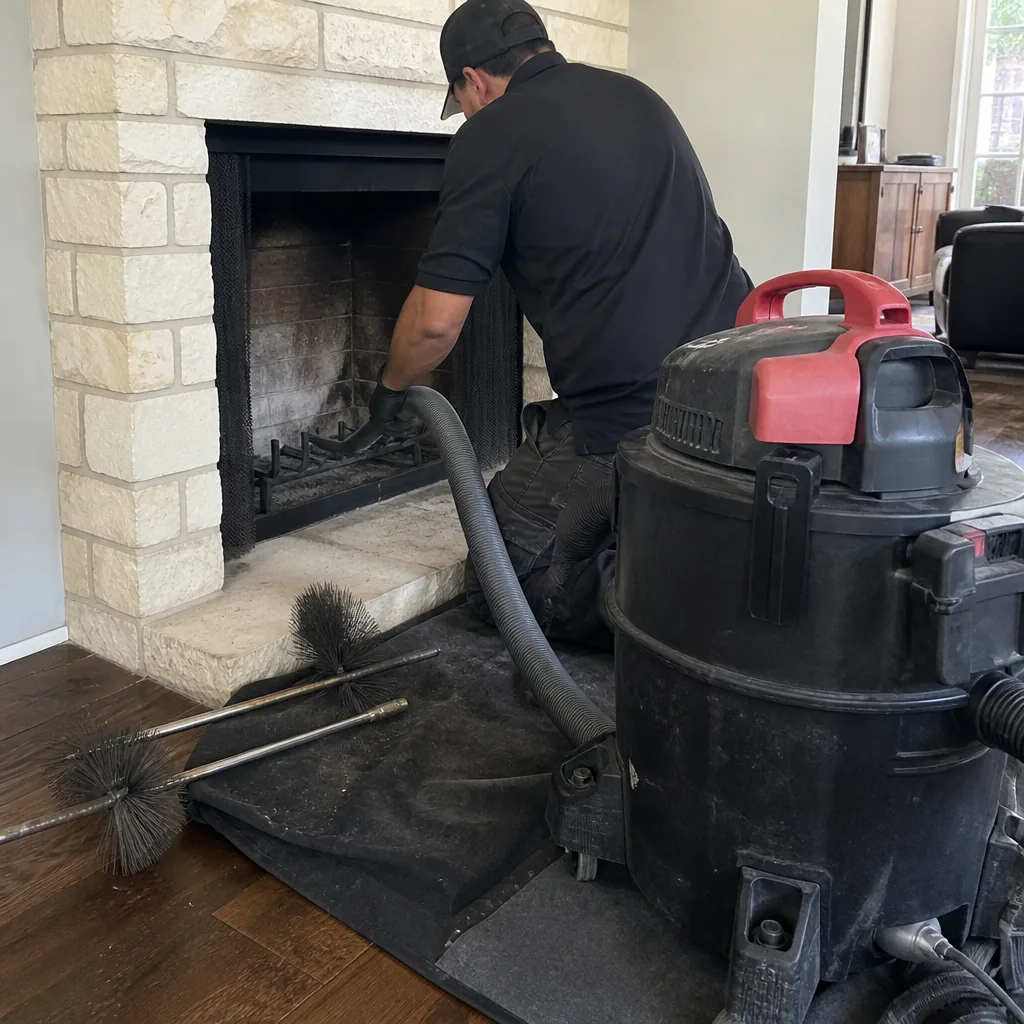 After
 Before
 After
 Before
 After