
Last updated November 2, 2026
 Sweep & inspection
 Caps & crowns
 Flue relining
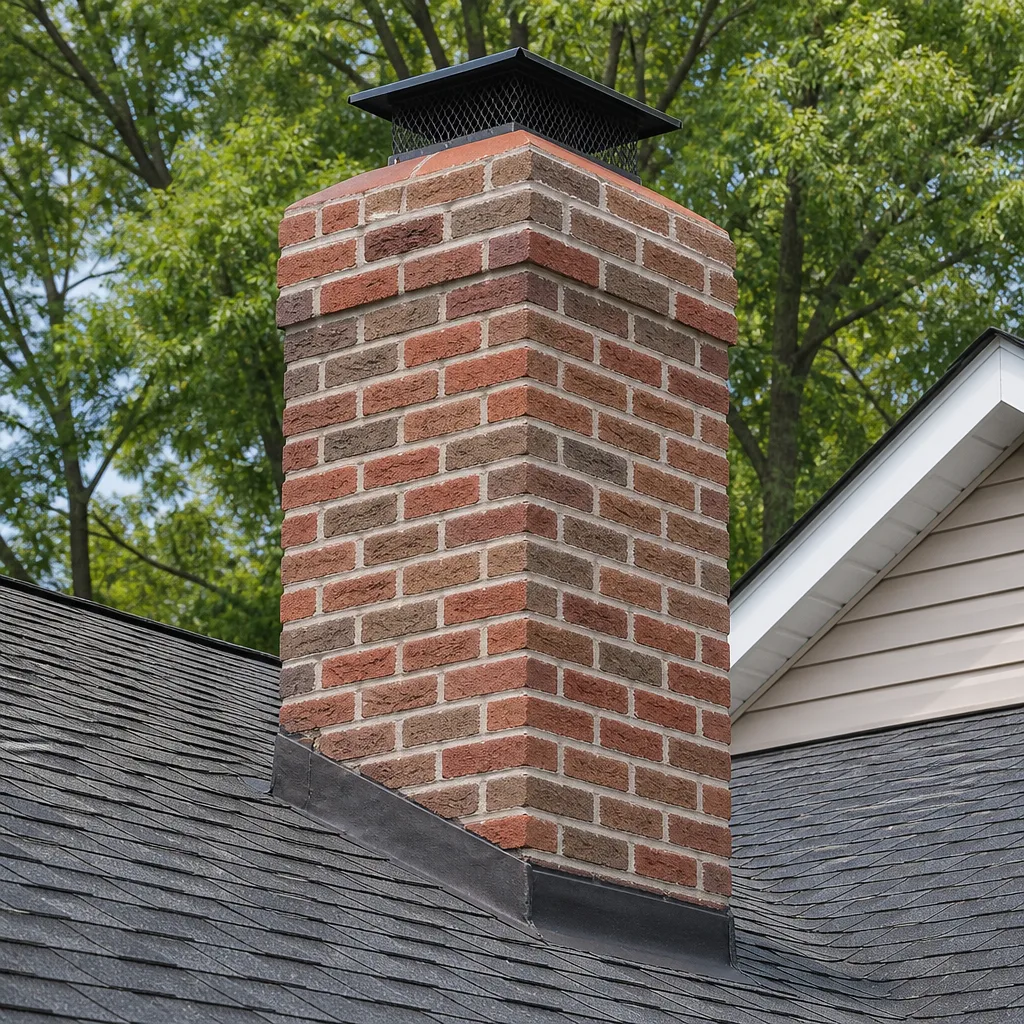 Masonry repair
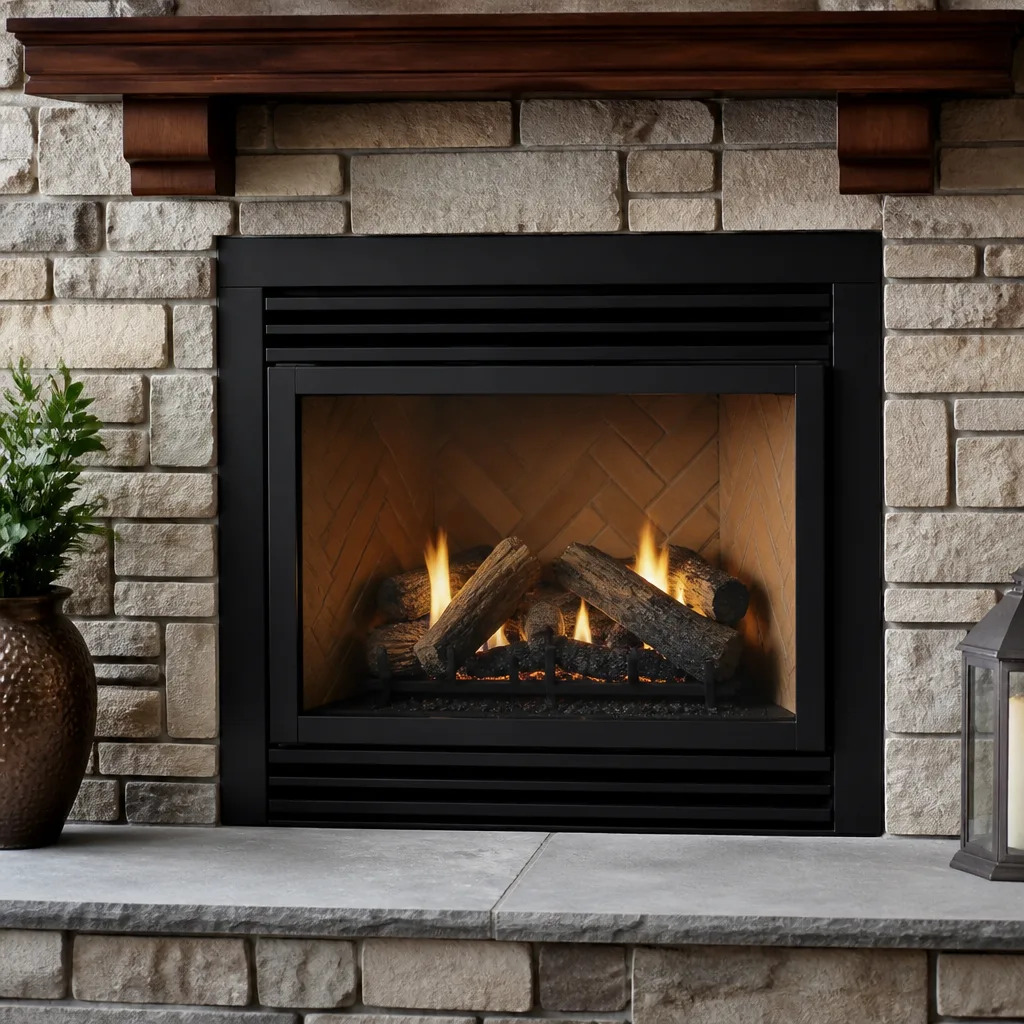 Gas fireplace service
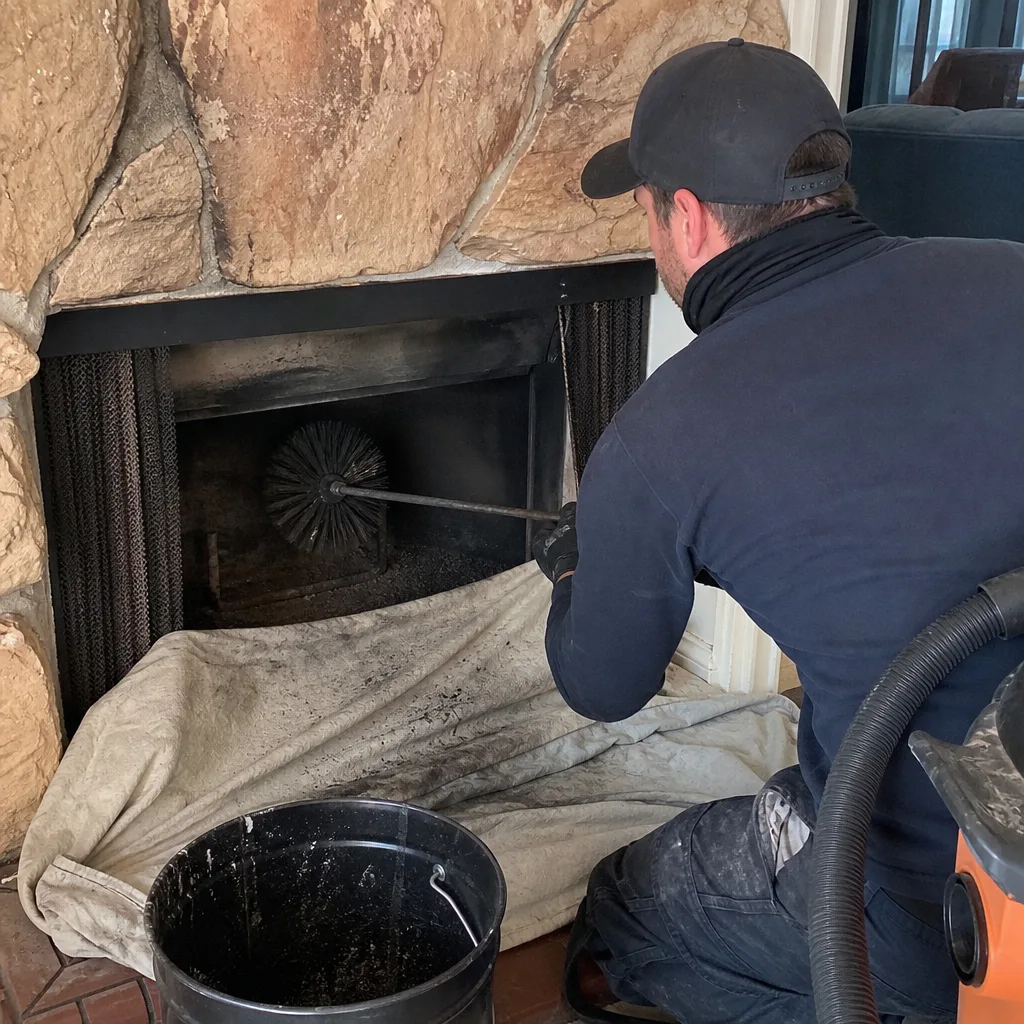
Level 1 sweep and inspection to the NFPA 211 annual standard - flue, crown, cap, and flashing checked and photographed
Chimney sweep logs do not sweep chimneys. They loosen some creosote - which then falls where a brush and vacuum still have to collect it.
Chimney Sweep Maintenance Checklist for Bay Terraces Homeowners
The most expensive chimney repairs we see weren’t caused by one catastrophic event – they were caused by a dozen small items that sat unchecked for two or three seasons because nobody explained what those items actually meant. A hairline crack in a crown, a damper that doesn’t fully seat, a section of mortar that’s lost its bond: each one is quiet on its own, but together they become a liner replacement or a rebuild. This guide walks Bay Terraces homeowners through a working chimney maintenance checklist – not the fridge-magnet kind, but a reference that tells you what you’re actually looking at, why it matters, and what happens if it goes unaddressed.
Quick Answer
A proper chimney maintenance checklist for Bay Terraces homeowners covers the exterior (cap, crown, flashing, brick), the interior (firebox, damper, smoke shelf, liner), and a year-over-year documentation habit. The most critical action is an annual professional inspection with a camera, which you can schedule through our Chimney Sweep services – everything else on this list is what you do between inspections to catch problems before they become repairs.
Styles & brands we work with
- Sweep & inspection
- Caps & crowns
- Flue relining
- Masonry repair
- Gas fireplace service
Table of Contents
- The Exterior Checklist: What You Check From the Ground
- The Interior Checklist: Firebox, Damper, Smoke Shelf, Liner
- What You Can Assess Yourself vs. What Needs a Camera
- How Often to Inspect Based on Burn Frequency
- How to Document Findings Year Over Year
- Bay Terraces-Specific Considerations: Coastal Air and Chimney Wear
- Common Mistakes to Avoid
- When to Call a Professional
- Frequently Asked Questions
The Exterior Checklist: What You Check From the Ground
Most chimney problems announce themselves on the outside first. The good news for Bay Terraces homeowners is that a thorough exterior assessment takes about ten minutes with a pair of binoculars – you don’t need a ladder to spot the majority of early-warning signs. We recommend checking exterior elements after heavy rain, since water intrusion is the single most destructive force your chimney faces, and rainwater behaves differently on a damp surface than it does on a dry one. Here’s what you’re looking for and what each finding actually means.
Chimney Cap Condition
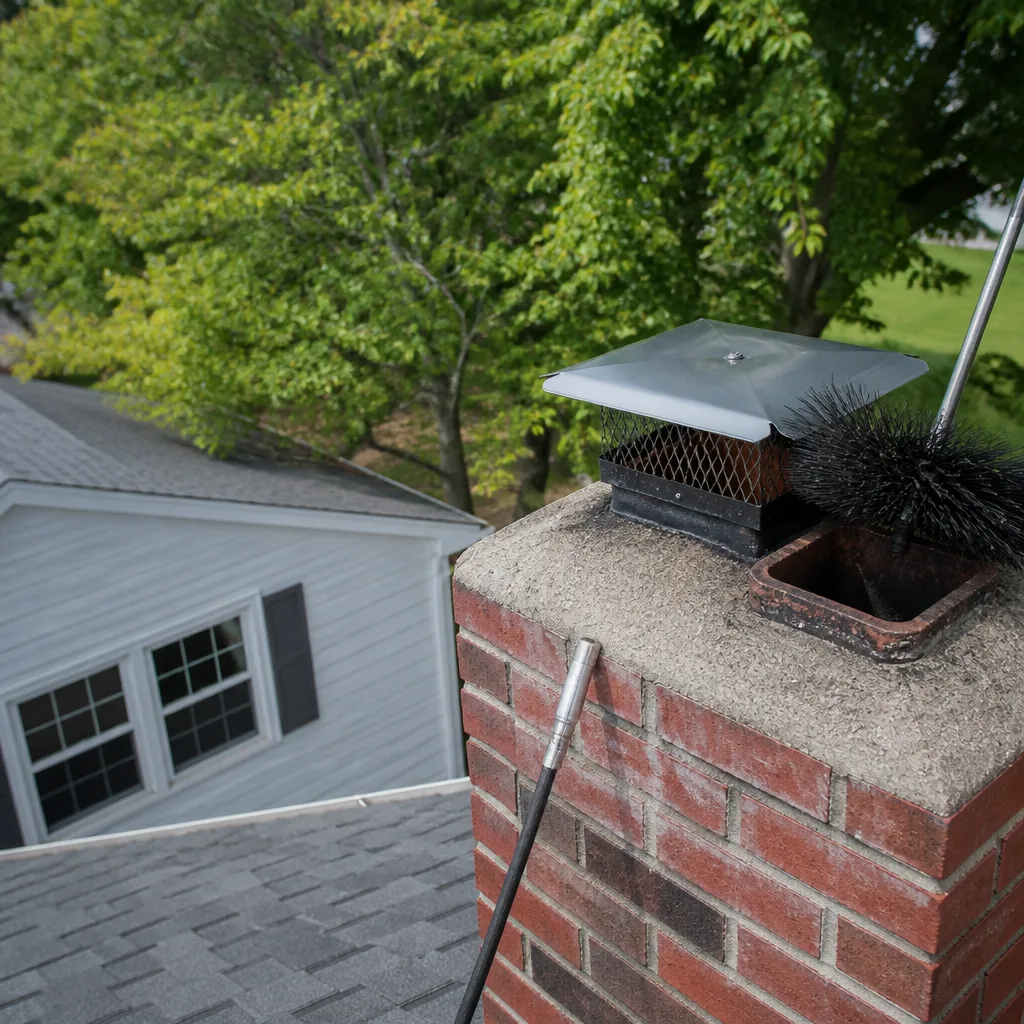
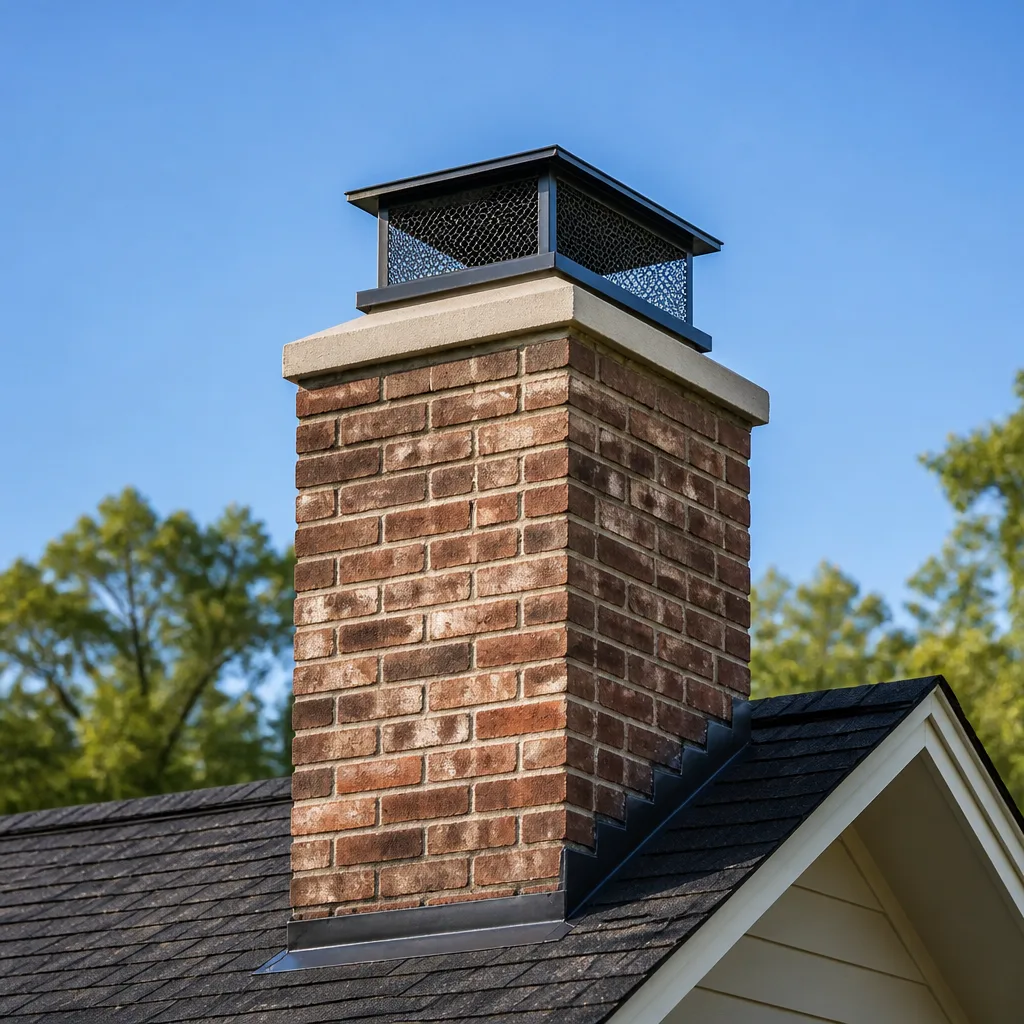
The cap is the metal or masonry lid at the very top of the flue. Its job is straightforward: keep rain, leaves, and animals out while allowing smoke to exit. If your cap is missing entirely, you’ve got an open pipe inviting water directly into the flue. If it’s rusted through or the mesh screen is torn, birds and squirrels will find their way in – and a nesting animal inside a flue is both a blockage risk and a fire risk when the nest material sits above an active firebox. From the ground, look for rust staining on the cap itself, a tilted cap, or visible gaps between the cap and the crown. In Bay Terraces, where marine air carries salt and moisture, we see rust accelerate on caps faster than homeowners expect. A standard galvanized cap might last five years near the coast; stainless steel holds up considerably longer.
Crown Coating and Cracks
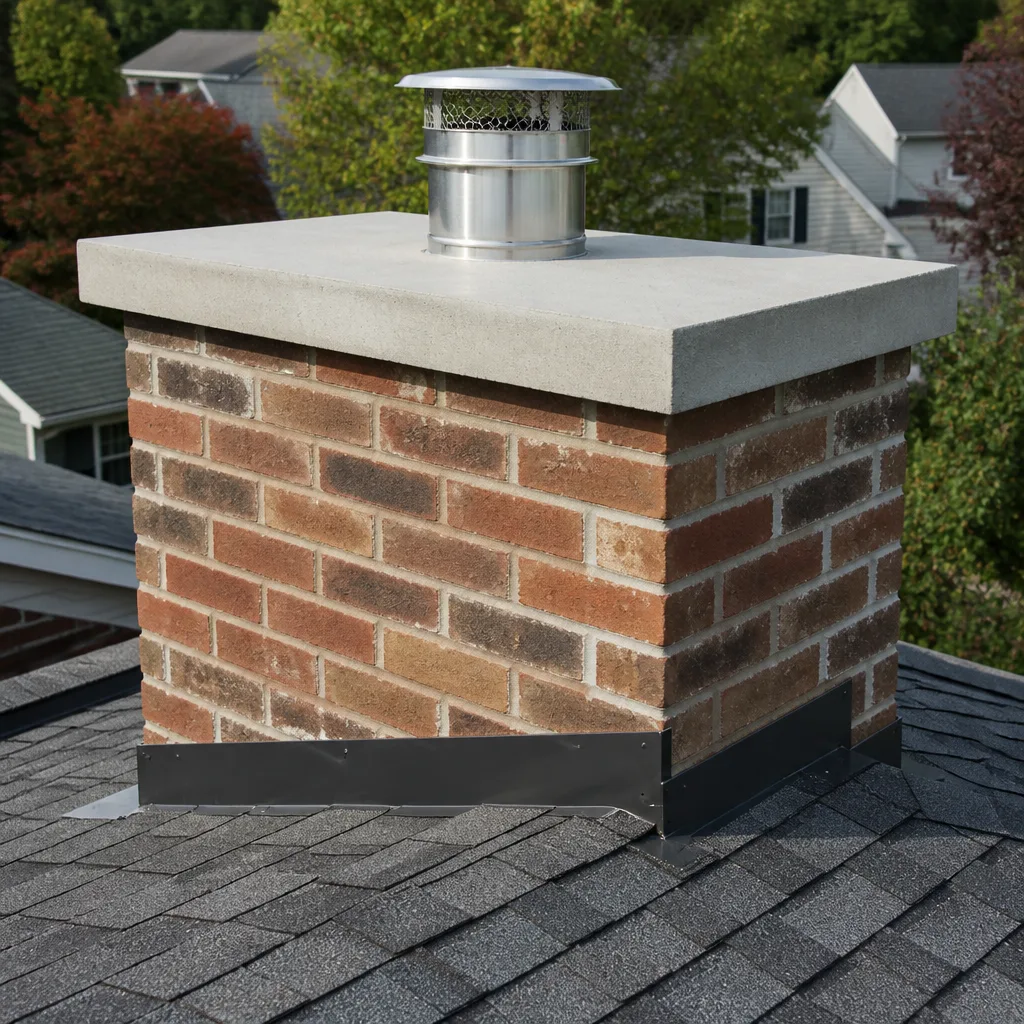
The crown is the concrete or mortar slab that caps the top of the chimney structure, surrounding the flue opening. Its entire function is to shed water away from the flue and off the chimney. A crown with hairline cracks isn’t a cosmetic issue – it’s a water delivery system. Water enters the crack, works its way down through freeze-thaw cycles and capillary action, and eventually attacks the mortar joints below. From the ground, look for visible cracking, flaking, or what looks like a “spalling” surface where the crown is breaking down in layers. Bay Terraces gets relatively mild winters, but the coastal moisture cycle alone is enough to degrade a cracked crown over a few seasons. If you see plants growing out of your crown, that’s a red flag that moisture and organic material have already colonized the structure.
Flashing Seal Integrity
Flashing is the metal weatherproofing where the chimney meets the roofline. It’s typically made of aluminum, galvanized steel, or copper, and it’s the most common leak point on any chimney. Flashing fails in predictable ways: nails back out, sealant degrades under UV and salt air, and the metal itself can crack at bend points. From the ground, look for lifted or separated flashing, missing pieces, visible gaps where the flashing meets the brick, or dark staining on the roof deck directly around the chimney base. That staining indicates active water penetration. If you can see daylight between the flashing and the chimney from the ground, it’s not sealing.
Spalling Brick and Mortar Joints
Spalling is what we call it when the brick face starts flaking, crumbling, or popping off in layers. It happens when water penetrates the brick and then degrades it from the inside out. The bricks lose their hard outer shell, and the softer interior material is exposed to the elements, accelerating further damage. Mortar joints show their own warning sign: when you can run a thumbnail along a joint and the mortar crumbles to powder, it’s called “soft mortar,” and it means the chimney’s structural integrity is compromised. Bay Terraces homes built in the 1960s and 70s – and there are many – tend to have chimneys at the age where spalling and mortar degradation become visible from the street. If you see brick flakes accumulating at the base of the chimney or in the gutter below it, that’s not normal aging; that’s active deterioration.
The Interior Checklist: Firebox, Damper, Smoke Shelf, Liner
The interior of your chimney is the part you can’t fully see without a camera. But that doesn’t mean there’s nothing to check from the firebox. In our experience, a homeowner who knows what to look for inside the fireplace catches problems earlier and communicates more useful information when they do call a sweep, and our Chimney Sweep Troubleshooting: Common Problems and How to Fix Them can help you prepare for that conversation. Here’s the interior checklist, organized from the firebox upward.
Firebox Joint Integrity
The firebox is the chamber where the fire actually burns. It’s lined with firebrick and refractory mortar, both of which are rated to withstand high temperatures. The joints between firebricks are the weakest point – they crack first, and once a joint cracks, heat and combustion gases escape through it into the masonry behind the firebox, where they don’t belong. Check the firebox visually: look for cracked bricks, missing bricks, gaps between bricks where the mortar has fallen out, or white efflorescence staining on the brick surface. Efflorescence is a mineral deposit left behind when water moves through masonry – if you see it inside your firebox, water is finding its way in from somewhere. If you can fit a quarter into any joint, that joint needs repair before you burn again.
Damper Operation
The damper is the metal plate at the top of the firebox that opens to allow smoke to escape and closes to prevent heated air from escaping up the flue when the fireplace isn’t in use. A damper that’s rusted open means you’re losing conditioned air up the chimney every day, whether the AC is running or the heat is on. A damper that’s rusted shut means you can’t burn at all – smoke backs up into the room. Test your damper by opening and closing it fully. It should move smoothly without grinding, and when closed, it should seat snugly against the frame. If it doesn’t close fully or you see daylight around the edges when it’s closed, that’s a leak. In Bay Terraces, where homes run AC during warm months, a leaky damper is quietly expensive.
Smoke Shelf Debris Accumulation
The smoke shelf is the ledge located just above the damper, designed to catch falling debris and prevent downdrafts from pushing smoke back into the living space. It’s also a collection point for creosote, leaves, animal droppings, and dead insects. Over time, this debris accumulates, and because the smoke shelf sits directly in the flow path of exhaust gases, that accumulation becomes a fire risk and a smoke-flow restriction. You can’t see the smoke shelf from below with the naked eye – it’s hidden above the damper plate – but you can check for indirect signs: unexplained odors from the fireplace when it’s not in use, visible debris falling into the firebox when you open and close the damper, or smoke that doesn’t draft as cleanly as it used to. Any of those symptoms warrant a professional inspection of the smoke shelf.
Liner Condition Indicators
The flue liner is the critical component that protects the chimney structure from heat and corrosive flue gases. It runs the full height of the chimney, from the firebox to the cap. A compromised liner is the most serious issue a chimney can have – it’s a direct fire hazard and carbon monoxide risk. Without a camera, you can’t assess liner condition directly, but you can watch for indirect indicators: crumbling white or brown material collecting in the firebox (this is pieces of a clay tile liner spalling off), unusual drafting problems, or soot staining on interior walls above the fireplace that wasn’t there before. If a sweep tells you the liner needs replacement, you should always ask to see the camera footage. This is a core part of our process at Chimney Sweep in Bay Terraces – nothing gets recommended without visual evidence you can see yourself. When a liner is relined, we work with professional systems like DuraFlex and HeatShield rather than generic replacements.
What You Can Assess Yourself vs. What Needs a Camera
There’s a clear dividing line between what a homeowner can meaningfully inspect and what requires a professional sweep with a video inspection system. Understanding this line saves you time, gives you realistic expectations, and prevents false confidence. Here’s the breakdown.
Homeowner Self-Assessment: Realistic Scope
- Exterior visual sweep – cap condition, crown cracks, flashing separation, spalling brick, and mortar joint condition are all visible from the ground with binoculars.
- Firebox and damper check – firebrick condition, joint gaps, efflorescence, damper movement and seating, and visual debris in the firebox are all accessible from inside the home.
- Draft test – on a cold day, light a rolled newspaper in the firebox and watch the smoke. Clean, upward flow is good. Lazy, curling smoke that spills into the room indicates a blockage or draft problem.
- Odor check – a strong fireplace odor when the unit is not in use, especially during humid Bay Terraces days, indicates moisture somewhere in the system.
Professional Camera Inspection: Required For
- Full liner condition – the entire flue interior is not visible without a camera. Degradation, cracking, gaps, or a failed previous liner installation are only detectable with video.
- Smoke shelf and upper firebox – debris accumulation and cracked refractory panels above the damper are camera-only areas.
- Creosote thickness and stage – the difference between a simple sweep and a dangerous creosote glaze is measurable with a camera and probe, not by looking up from the firebox.
- Prior repair verification – if you’ve had previous liner work, crown work, or masonry repair, only a camera confirms the work is holding.
We’ve seen Bay Terraces homeowners who’ve done their own inspections for years and believe everything is fine, only to see camera footage showing a liner with visible cracks at the flue throat. The camera doesn’t lie, and it’s the difference between catching a $400 repair and a $4,000 replacement. For professional Chimney Repair in Bay Terraces, we bring the camera on every inspection – it’s standard equipment, not an upsell.
How Often to Inspect Based on Burn Frequency
Frequency recommendations that apply to every fireplace are wrong by definition. A household that burns three cords of wood per season has a different maintenance schedule than one that lights the gas fireplace on Christmas Eve and New Year’s. Here’s how to think about it.
Heavy Wood Burners: 2+ Cords Per Season
- Sweep at mid-season and end of season. Creosote accumulates rapidly with heavy use, especially if any wood is less than perfectly seasoned. Two sweeps per season is the floor, not the ceiling.
- Professional camera inspection annually, at season start. This is the group most likely to develop glazed creosote, cracked tiles, and excessive smoke shelf debris.
- Exterior self-check monthly during burn season. Look for cap damage, visible smoke issues, or spalling acceleration.
Moderate Wood Burners: Weekend Fires, 1 Cord Per Season
- Professional sweep and camera inspection once per year, before burn season. Bay Terraces homeowners typically schedule this in September or October, before the first fire of the season.
- Exterior self-check quarterly. Focus on the cap, crown, and flashing.
- Mid-season firebox check. Look for new joint cracks or efflorescence.
Occasional and Gas Fireplace Users
- Professional inspection every 18-24 months. Gas fireplaces still produce acidic condensate and still accumulate debris. The liner needs inspection at least every other year.
- Annual exterior self-check. Gas chimneys face the same coastal moisture exposure as wood chimneys.
- Annual damper operation check. Gas logs with a permanently open damper are a year-round energy leak.
Bay Terraces coastal air shifts these recommendations slightly toward more frequent attention on the exterior. Salt and moisture amplify rust on caps, flashing, and dampers regardless of how much you burn.
How to Document Findings Year Over Year
Most homeowners don’t document anything, which means every inspection starts from scratch. You can’t track degradation if you have no record of what the chimney looked like last year. Here’s a documentation system that takes five minutes per check and pays for itself over time.
What to Record
- Date of observation. Always note when you checked.
- Location of any finding – north face, cap lip, flashing seam, firebox right wall.
- Description in plain language. “Hairline crack running vertically on crown north edge, about 2 inches long.”
- Photo from a consistent angle. Same spot, same viewpoint, every time. Your phone camera is fine.
- Action taken or deferred. “Scheduled sweep for November” or “Monitoring – no change from last check.”
How to Use the Record
When a crack grows from 2 inches to 4 inches over two seasons, you know it’s active. When a rust patch on the cap spreads, you know replacement is approaching. When the same joint keeps losing mortar, you know there’s a moisture source behind it that hasn’t been addressed. This is how you catch problems before they become repairs – and it gives your sweep useful information when you do call. A homeowner who says “the crown crack has doubled since last spring” is providing diagnostic gold. If you’re due for professional service, contact Chimney Sweep Bay Terraces home and mention your documentation – we’ll incorporate it into the inspection.
Bay Terraces-Specific Considerations: Coastal Air and Chimney Wear
Bay Terraces sits close enough to the Pacific that the air carries salt and consistent moisture. That has direct, measurable effects on every chimney in the neighborhood. We’ve worked on fireplaces throughout Bay Terraces, and the pattern is consistent: metal components fail faster here than they would ten miles inland, and masonry surfaces stay perpetually damp enough that freeze-thaw damage can occur even during mild Bay Terraces winters.
The salt load in coastal air accelerates galvanic corrosion on caps, dampers, and flashing. A galvanized cap that would survive eight years in inland San Diego County might make it five in Bay Terraces. Aluminum flashing develops pinhole corrosion, and steel dampers rust through at the hinge point. This is why Bay Terraces homeowners need to check metal components more frequently than the generic recommendations suggest, and why we recommend stainless steel replacements when metal work is needed.
Masonry also behaves differently here. Chimney brick in Bay Terraces stays damp through much of the year, which means spalling occurs gradually rather than in dramatic seasonal bursts. By the time it’s visible from the street, the damage has typically been progressing for several seasons. The continuous damp cycle also accelerates soft mortar, since water never fully leaves the joints. If your Bay Terraces home has a chimney that’s seen 40 or more years of coastal air, an annual professional inspection isn’t optional – it’s the minimum.
Dryer vents face a related set of problems in Bay Terraces. High humidity means lint binds to moisture inside the duct more readily, reducing flow and increasing fire risk faster than the national average. We handle Dryer Vent Cleaning in Bay Terraces as a core service for this reason – it’s not an add-on, and it’s a fire hazard most chimney-only companies never address.
Common Mistakes to Avoid
- Burning unseasoned wood. Green wood produces creosote at several times the rate of seasoned wood. Wood needs 6-12 months of drying after splitting. If you hear hissing from the fire and see dark smoke, you’re burning wet wood, and that creosote is accumulating on your liner today.
- Ignoring a slightly sticky damper. A damper that doesn’t seat fully costs you heated or cooled air every single day, year-round. The rust that’s making it sticky will only get worse, and the repair gets more expensive the longer it’s deferred.
- Using the fireplace as a trash incinerator. Burning paper, cardboard, wrappers, or anything other than firewood creates burning embers that can reach the flue and ignite creosote. Only seasoned firewood belongs in your firebox.
- Painting the brick without checking mortar first. Paint traps moisture inside the brick, accelerating spalling and hiding the visual evidence. If you want a painted chimney in Bay Terraces, have the mortar joints pointed and any water intrusion addressed first.
- Assuming an unused fireplace needs no maintenance. Even a dormant chimney is exposed to rain, coastal moisture, animal activity, and corroding metal. Skipping inspections on an unused fireplace leads to surprises when you eventually want to sell the home or light a fire again.
- Ignoring the dryer vent because the chimney “seems fine.” Lint-clogged dryer vents cause thousands of residential fires annually. The two systems are independent, but both need attention from a specialist who understands venting – not a general handyman.
When to Call a Professional
Call a chimney sweep immediately if you see spalling brick or crumbling mortar, if you spot water staining on interior walls or ceilings near the chimney, if your fireplace has developed a visible smoke-drafting problem, or if you’ve just moved into a Bay Terraces home and have no maintenance history for the chimney. Any of these conditions means something is actively degrading, and waiting rarely reduces the cost. Chimney Sweep Bay Terraces offers free estimates throughout Bay Terraces – call (833) 756-1092 and we’ll assess what’s happening before you commit to any work.
Frequently Asked Questions
Most Bay Terraces homeowners should have a professional sweep and camera inspection once per year, ideally before burn season. Households that burn more than two cords of wood per season should schedule two sweeps per year. Gas fireplace users can extend intervals to 18-24 months, but exterior components still need annual attention due to coastal salt and moisture. Call (833) 756-1092 to schedule a sweep with a camera inspection included.
Visible cracks in the crown, spalling brick, soft or crumbling mortar joints, a damper that won’t seat, water staining near the chimney, or debris falling into the firebox all indicate repair needs. The only way to confirm liner damage is with a camera inspection. If you’re seeing any of these signs in Bay Terraces, call (833) 756-1092 for an assessment – we don’t recommend repairs without visual evidence you can see yourself.
Yes, you can complete a meaningful exterior and firebox inspection from the ground and from inside the home. Binoculars will show you cap condition, crown cracks, flashing separation, and spalling brick. The firebox, damper, and visible joints are accessible from the fireplace opening. What you cannot see without a camera is the liner, the smoke shelf, and creosote accumulation inside the flue. Those require professional video inspection.
Skipping maintenance doesn’t cause one dramatic failure – it compounds. Creosote builds to a combustible thickness, a small crown crack admits water for several seasons, and mortar joints degrade until structural repair is required. The cost of annual sweeping is a fraction of the cost of a liner replacement or a chimney rebuild. The chimney doesn’t fail all at once; it fails in stages, and early intervention stops the progression.
We work with professional-grade product lines including DuraFlex, HeatShield, Gelco, and Copperfield. These are the same materials chimney professionals specify for liner installation and resurfacing – not generic substitutes. The brand matters because liner performance is a safety issue. We’ll show you the options and explain the differences before any work begins.
Yes. Dryer vent cleaning is a core part of what we do, and your dryer vent is a fire risk most chimney-only companies never address. Lint accumulation inside a dryer duct is a leading cause of residential fires, and in Bay Terraces, our humid coastal air makes lint bind faster. We handle chimney sweeping, chimney repair, and dryer vent cleaning under one roof. Call (833) 756-1092 for a free estimate on any of the three.
The Bottom Line
Chimney maintenance in Bay Terraces isn’t a once-a-decade event. It’s a rhythm: monthly exterior checks, seasonal firebox checks, and annual professional inspections with a camera. The checklist works because each item tells you something specific about what’s happening inside the structure, and because you document what you find, season after season. Coastal air in Bay Terraces accelerates corrosion and spalling enough that even a dormant chimney needs attention. For more guides & resources on chimney care, explore our blog, or when you need a specialist who handles cleaning, repair, and dryer vents as one scope of work, call (833) 756-1092. We’ll show you what we find, explain what it means, and fix what needs fixing – no referrals, no runaround.
Written by the team at Chimney Sweep Bay Terraces, serving Bay Terraces since 2011.
See the difference
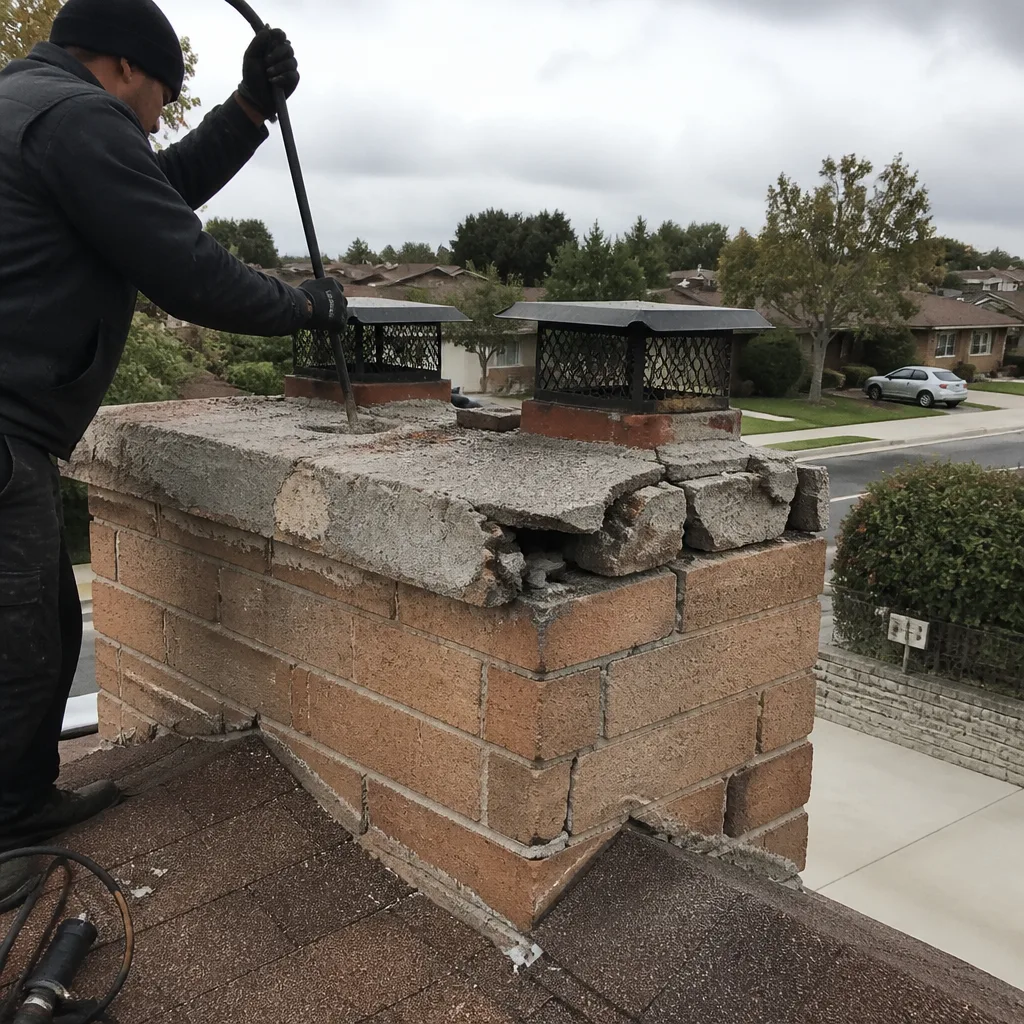 Before
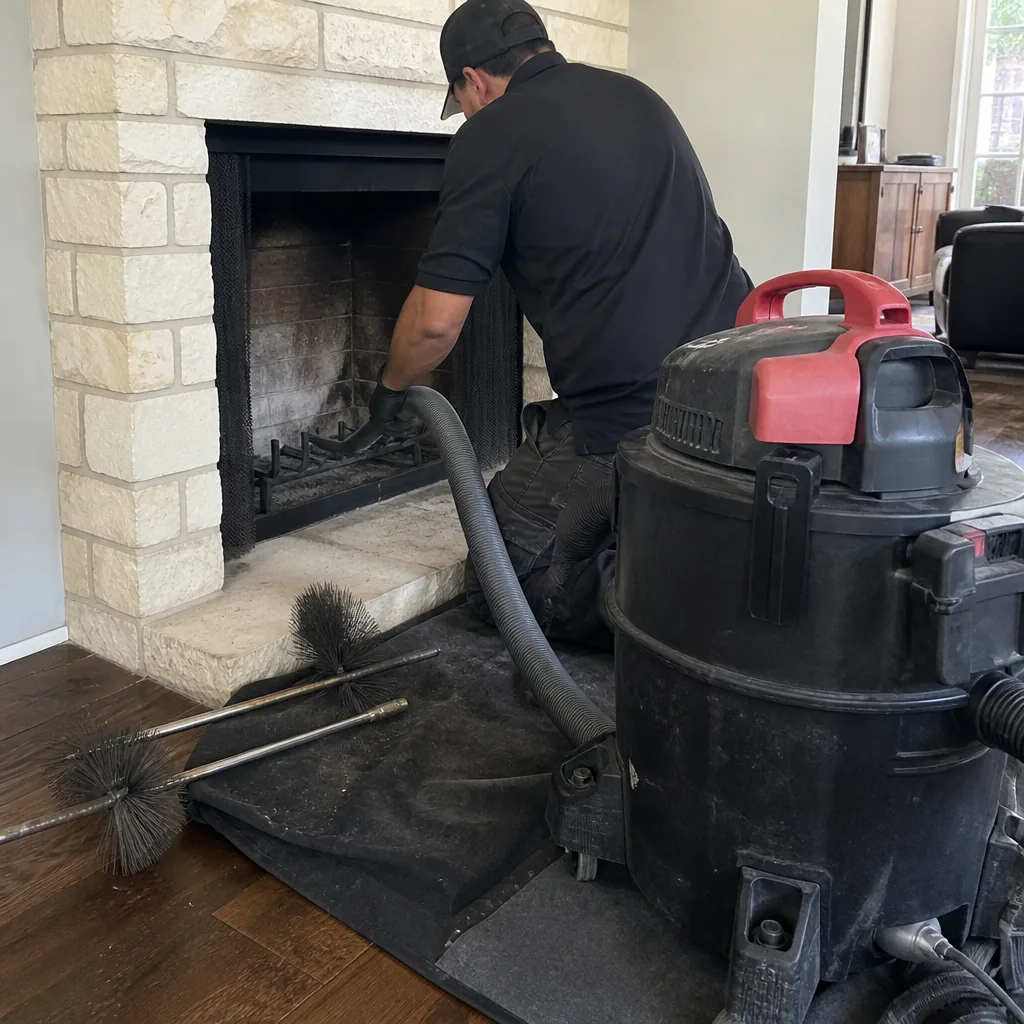 After
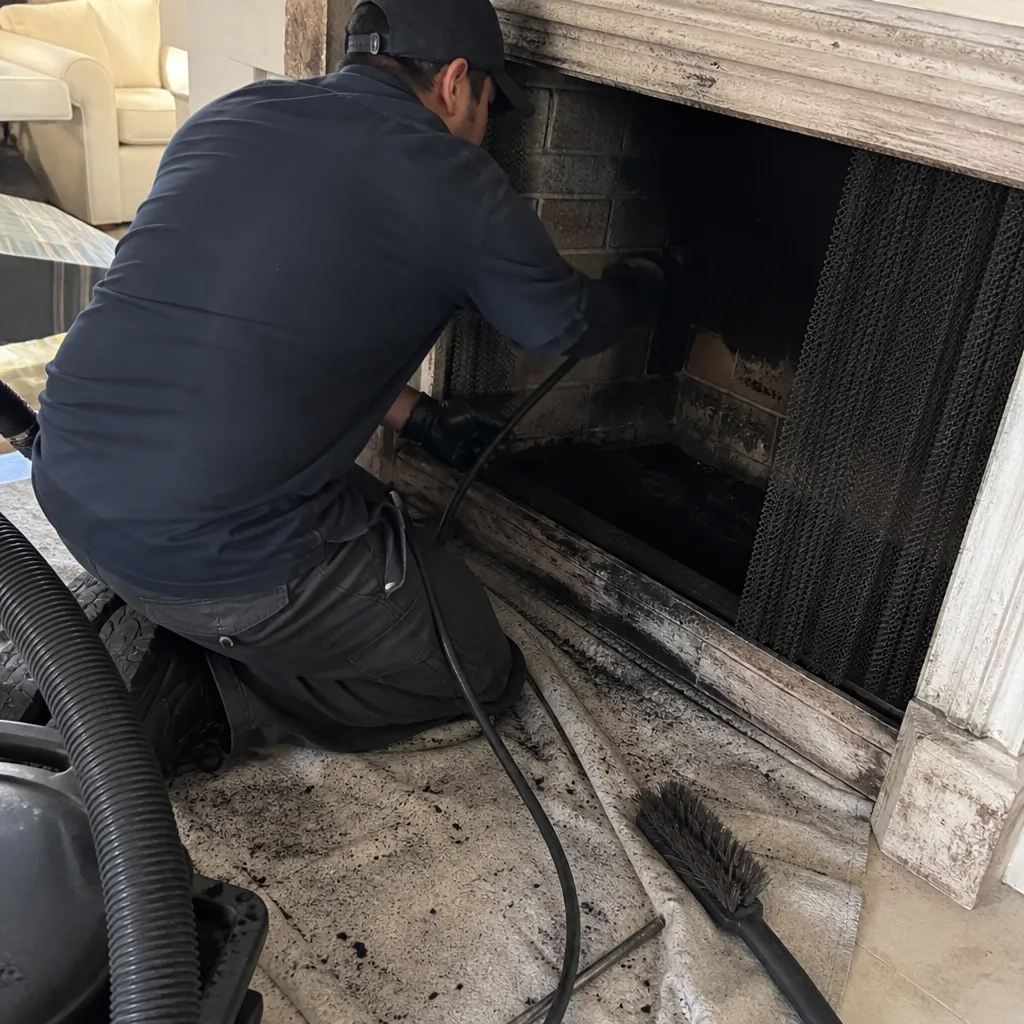 Before
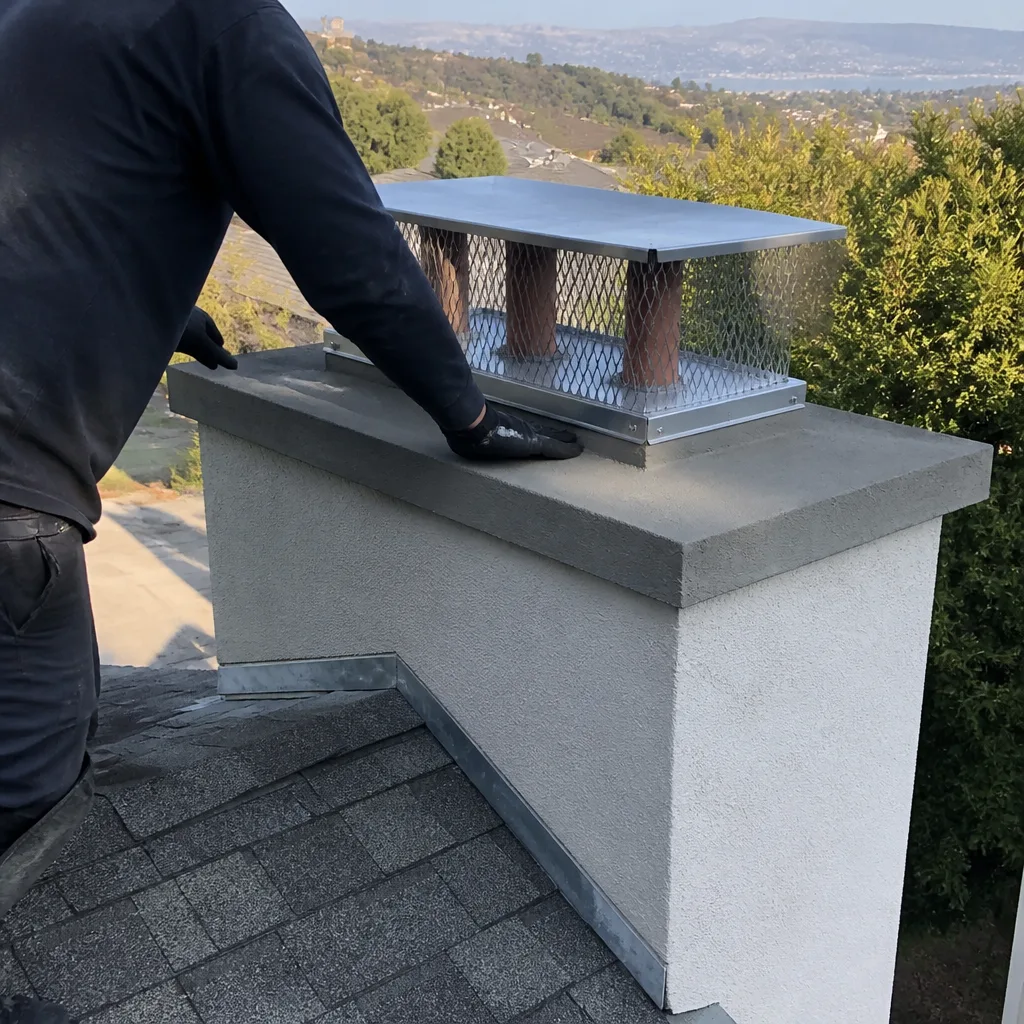 After
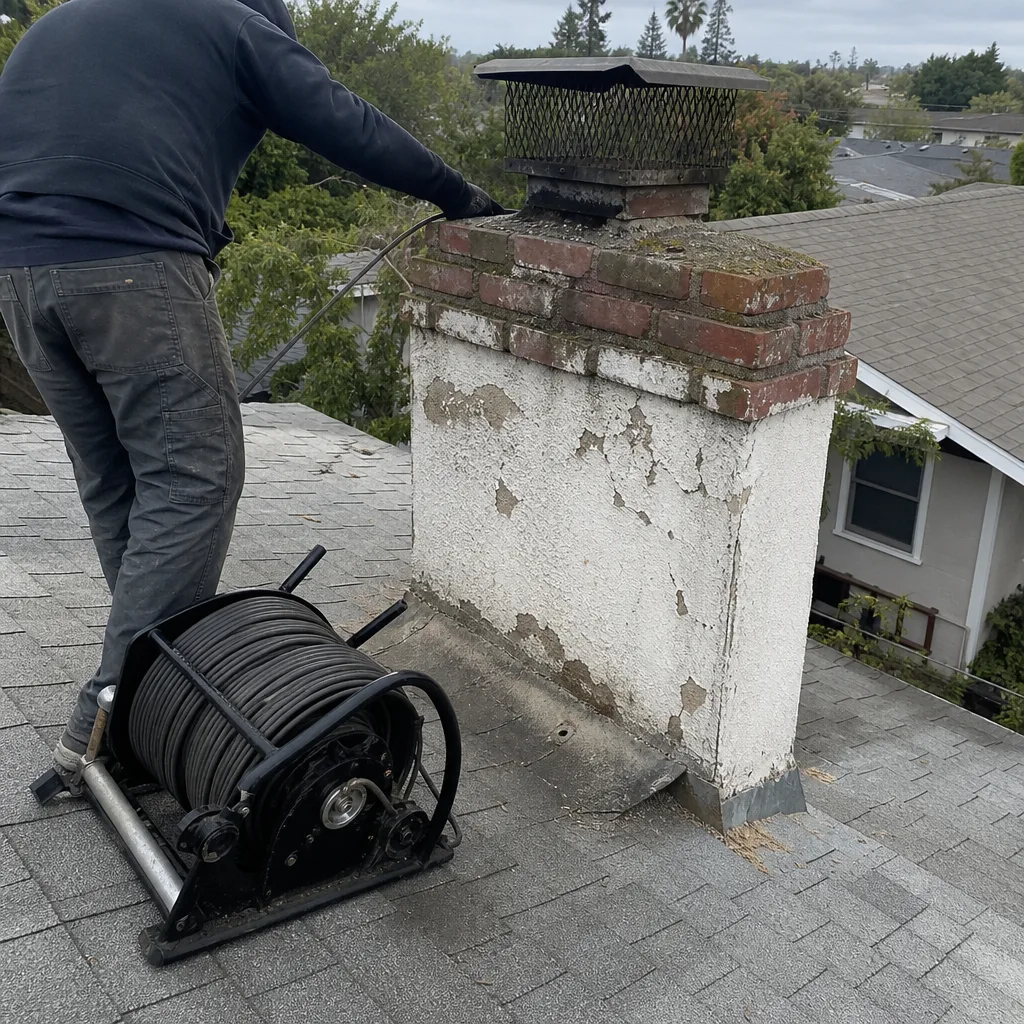 Before
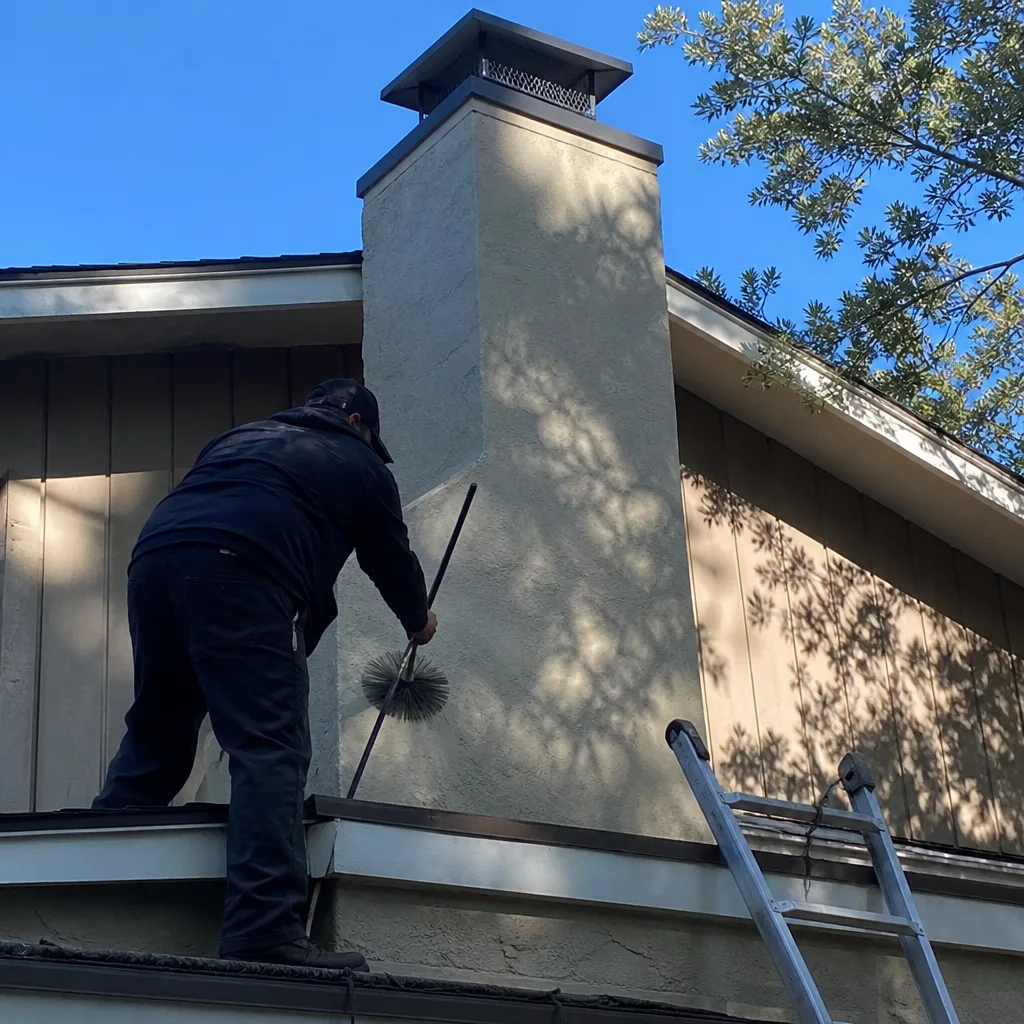 After