
Last updated November 2, 2026
 Sweep & inspection
 Caps & crowns
 Flue relining
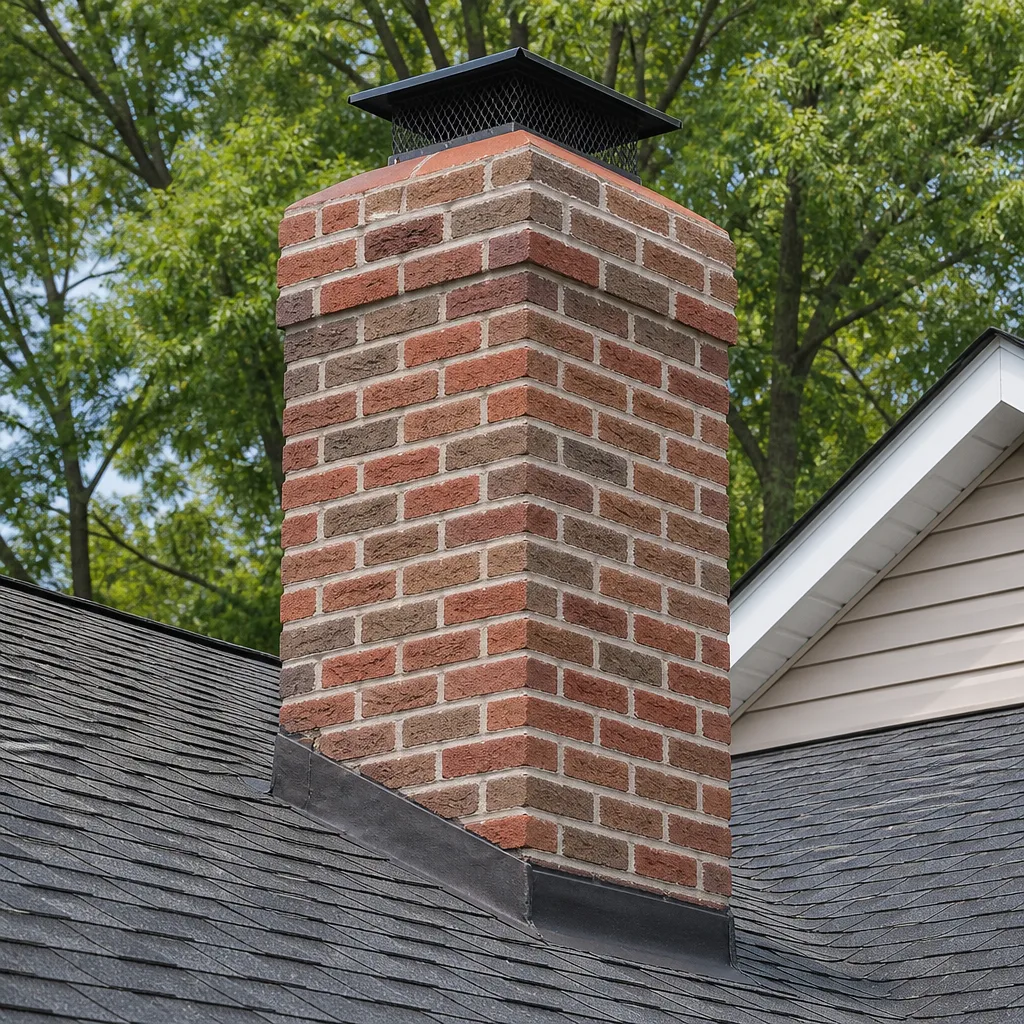 Masonry repair
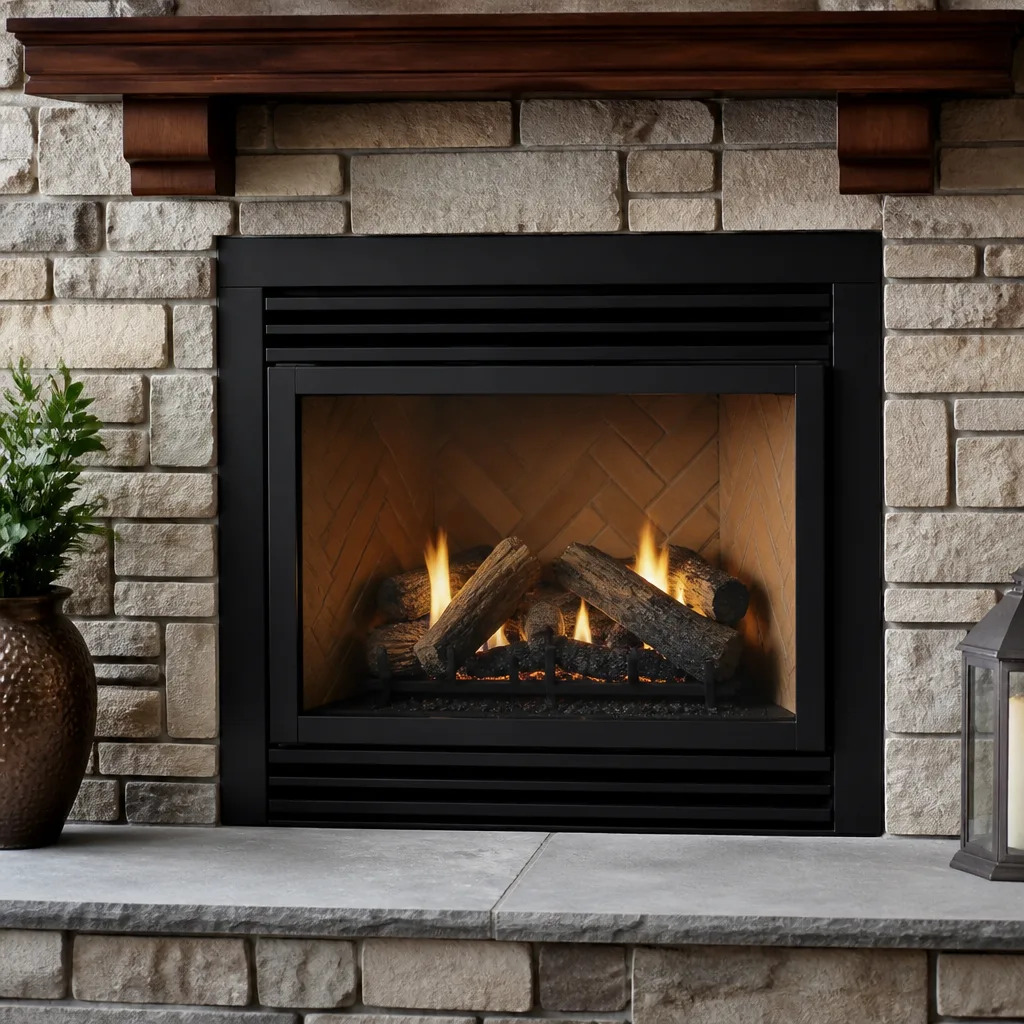 Gas fireplace service
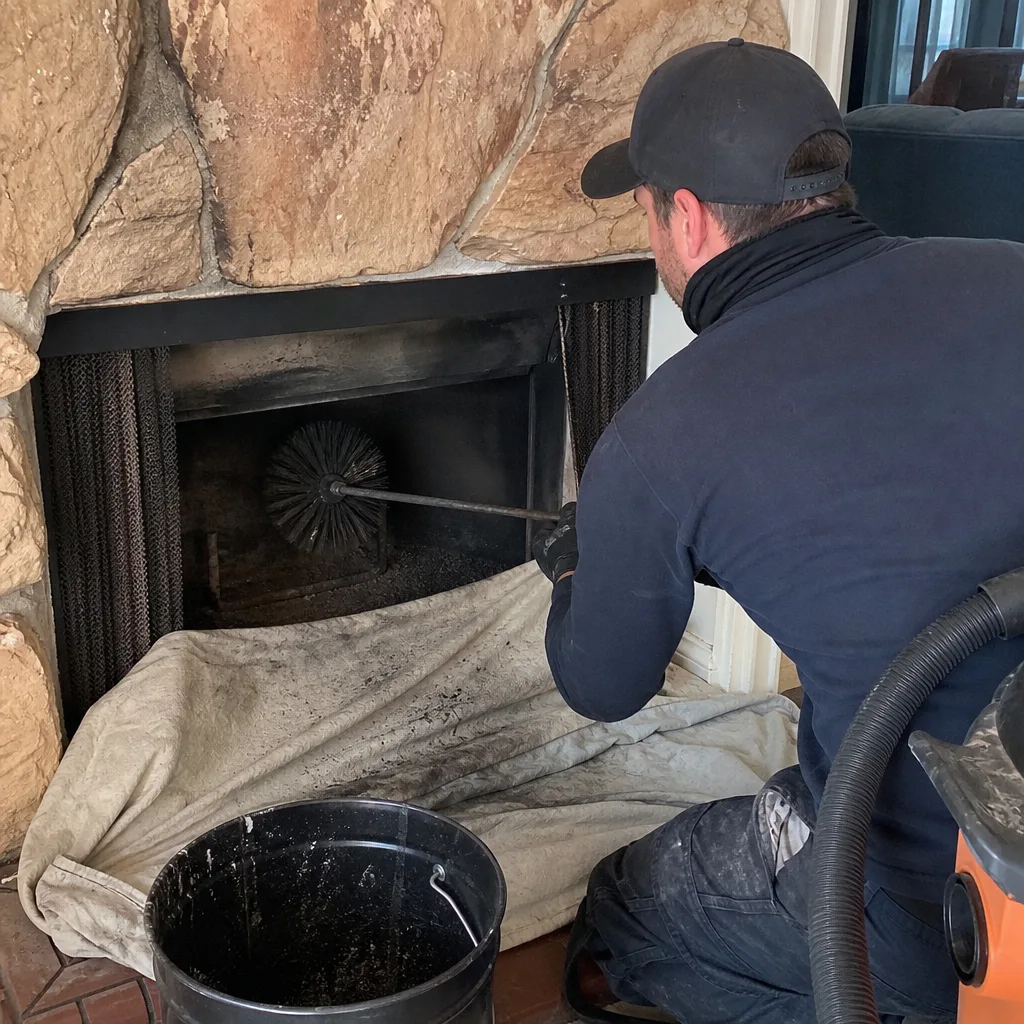
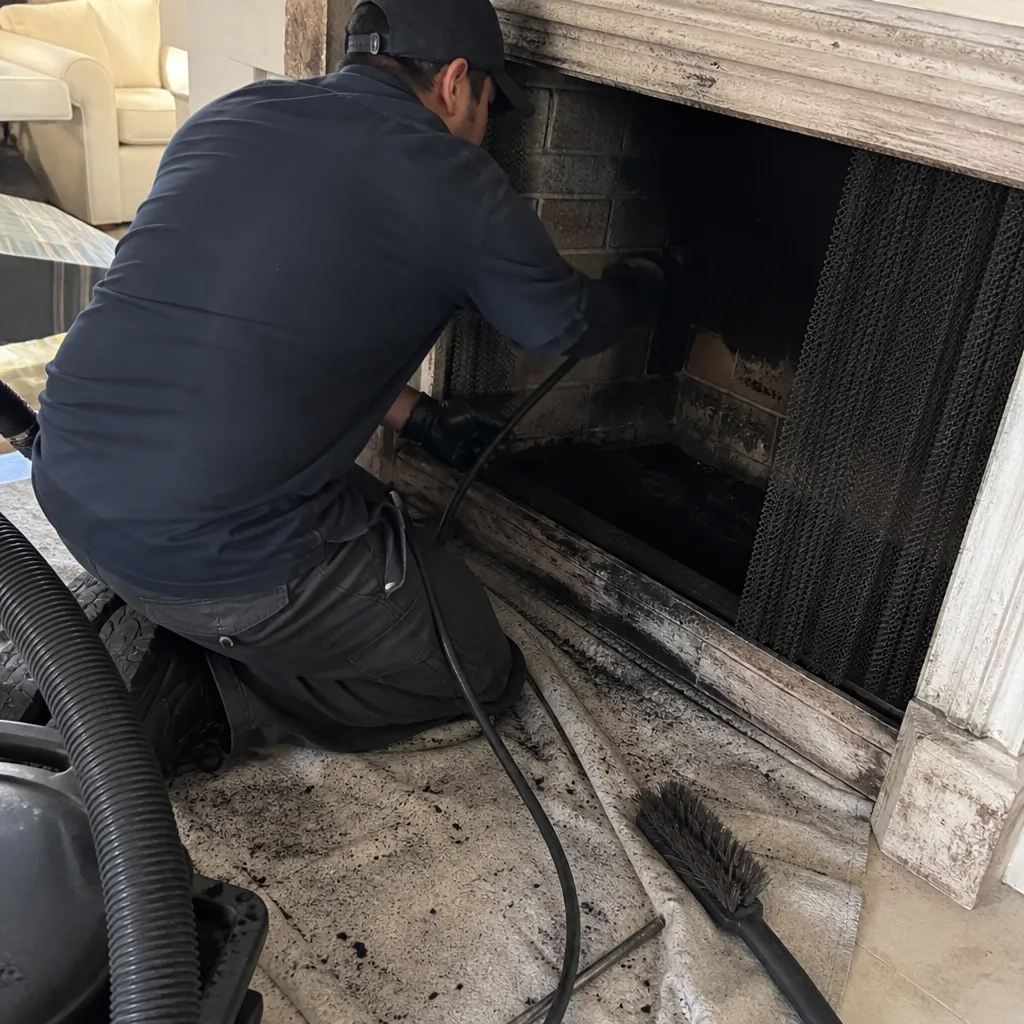
Level 1 sweep and inspection to the NFPA 211 annual standard - flue, crown, cap, and flashing checked and photographed
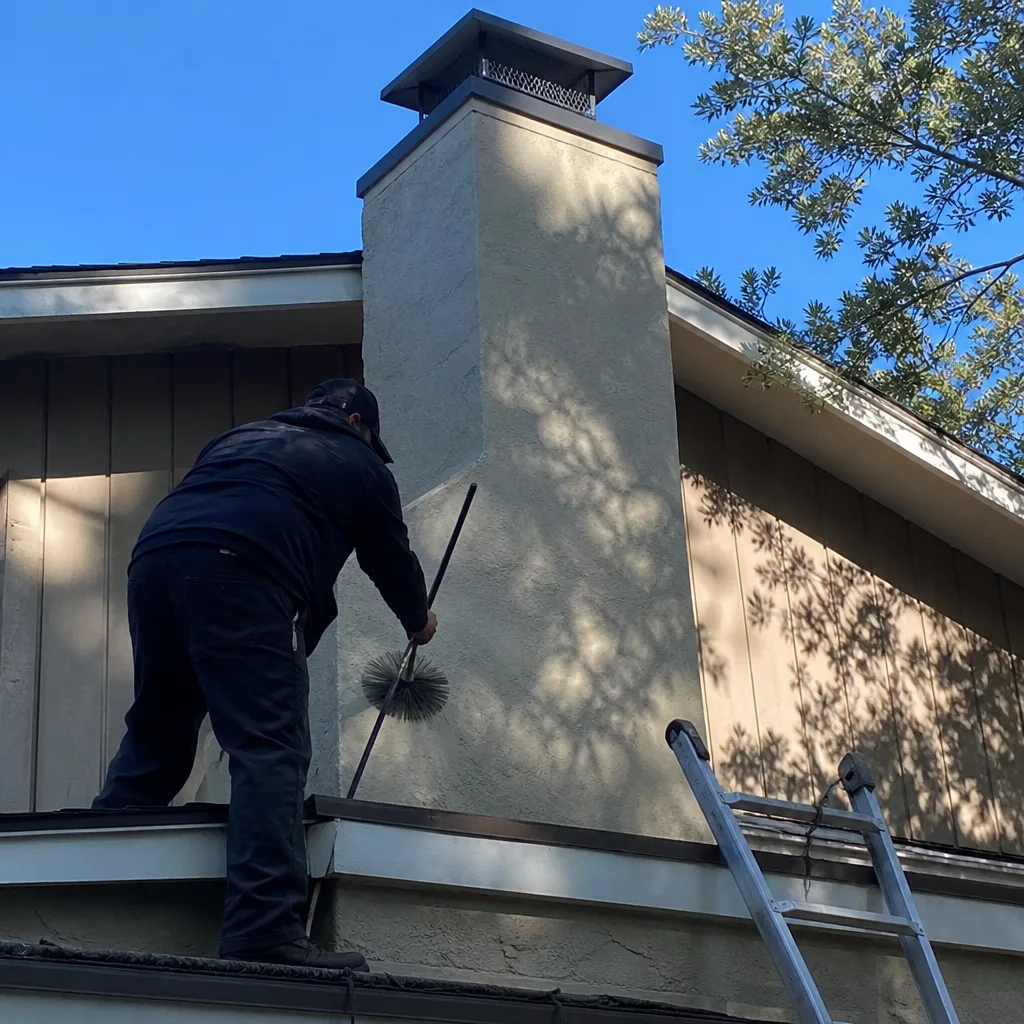
Chimney sweep logs do not sweep chimneys. They loosen some creosote - which then falls where a brush and vacuum still have to collect it.
Chimney Sweep Troubleshooting: Common Problems and How to Fix Them
Most homeowners searching for chimney troubleshooting advice are actually looking at a symptom, not a cause. Smoke backing into the living room, a smell that won’t quit, a fire that struggles to catch – these all point somewhere, but rarely where people assume. Here’s the thing we’ve learned from years of servicing fireplaces across Bay Terraces: at least six completely different conditions can cause smoke to roll back into a house, and only one of them is a dirty flue. If you fix the wrong one, you don’t just waste money. You can make the real problem worse, sometimes dangerously so. This guide walks through the diagnostic logic a trained chimney technician uses, so you can identify what you’re actually dealing with before you pick up the phone.
Styles & brands we work with
- Sweep & inspection
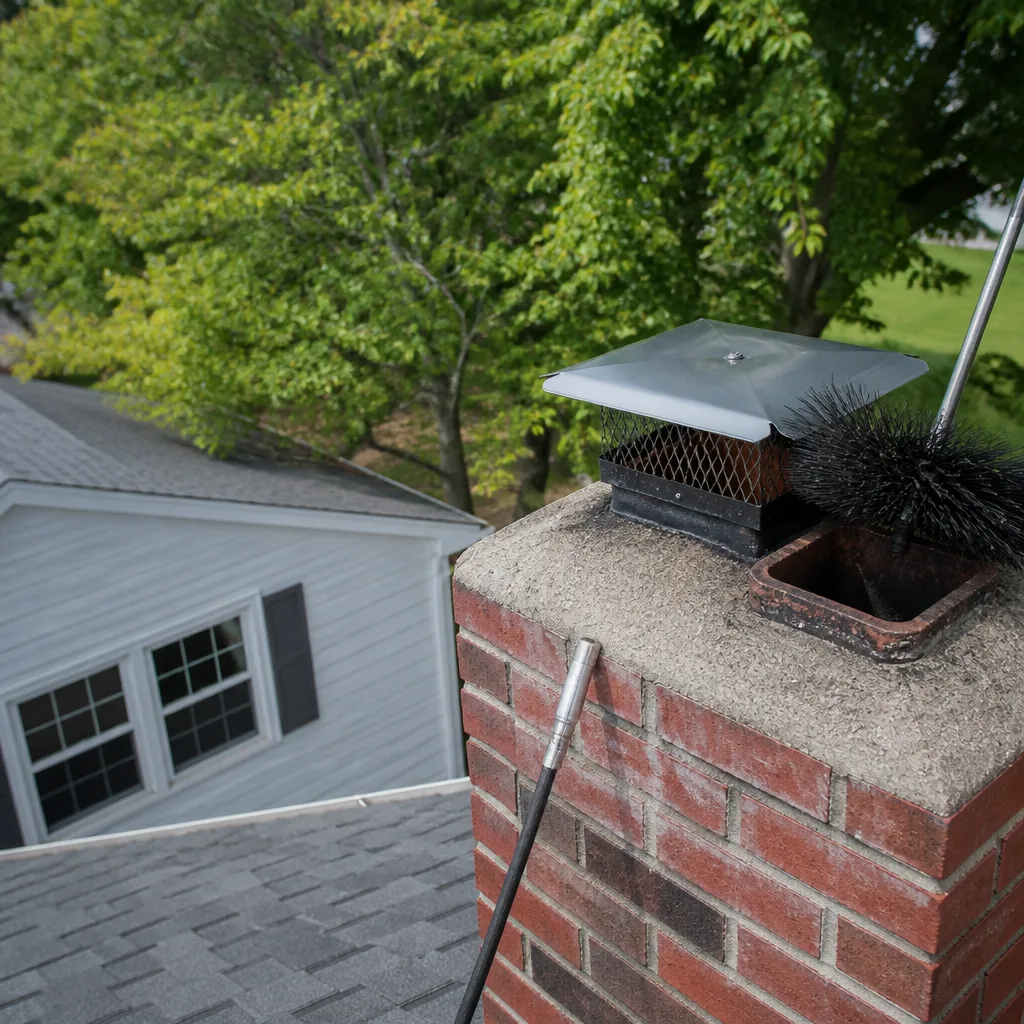
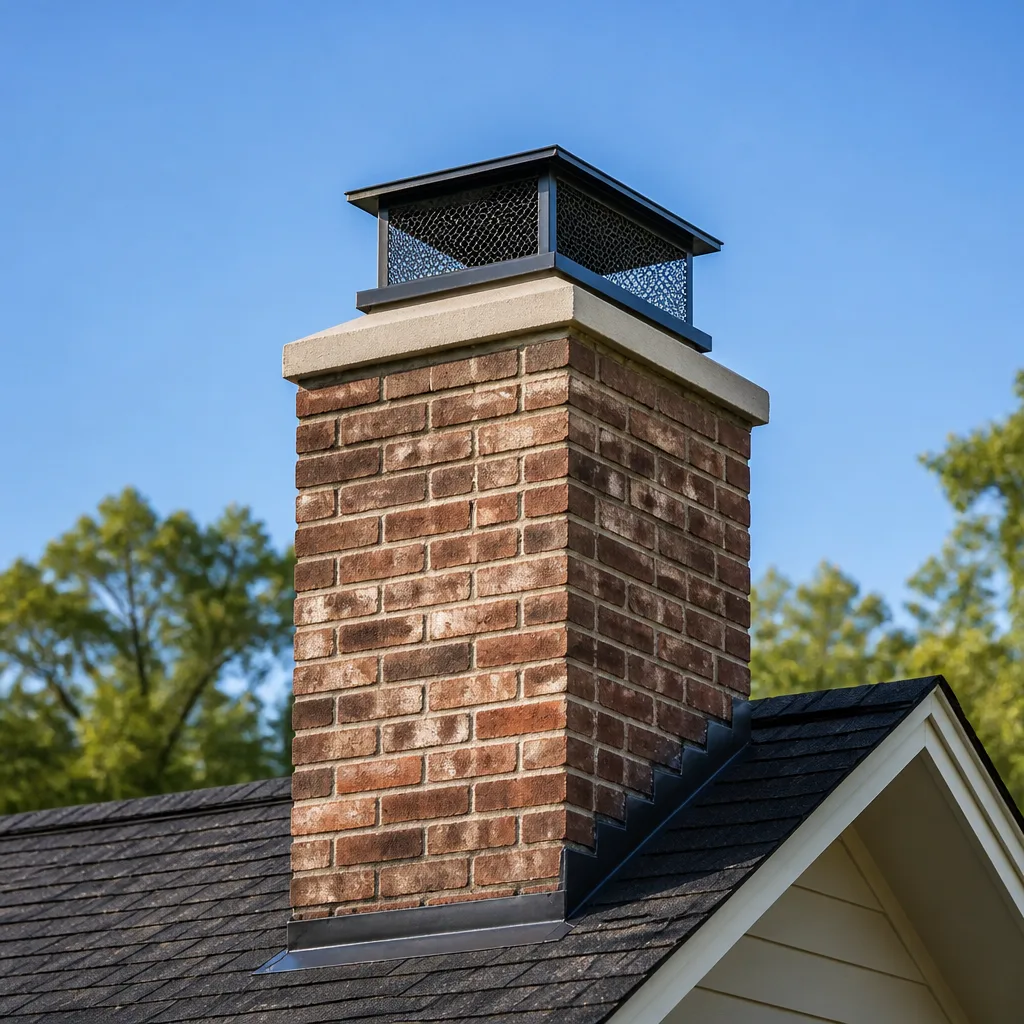
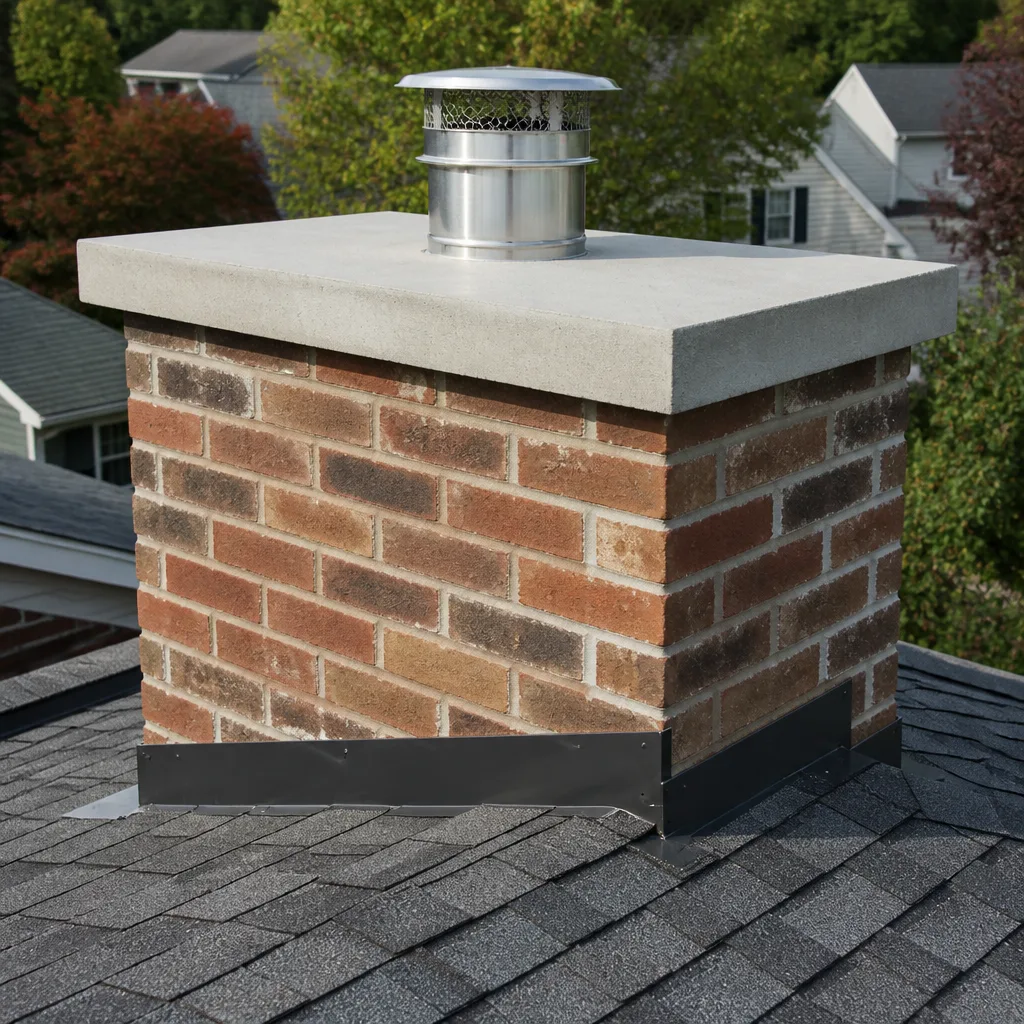
- Caps & crowns
- Flue relining
- Masonry repair
- Gas fireplace service
Quick Answer
Chimney problems fall into a handful of root categories: airflow, blockage, structural damage, moisture, animal intrusion, and mechanical failure in the damper or cap. Most smoke and odor issues trace back to one of these, and the correct fix depends entirely on which one you have. A professional chimney sweep in Bay Terraces can diagnose the difference in a single visit, usually with a camera inspection that shows you exactly what’s going on inside your flue.
Table of Contents
- Smoke Rollback: Six Causes, One Symptom
- Chimney Smells: Creosote, Animals, Moisture, or a Failed Damper
- Slow Draw: Why It Usually Points to a Liner Problem
- When to Stop Using Your Fireplace Immediately
- Safe Troubleshooting Steps Before the Technician Arrives
- Chimney Anatomy 101: The Parts That Fail
- The Overlooked Fire Hazard: Dryer Vent Troubleshooting
- Common Mistakes to Avoid
- When to Call a Professional
- Frequently Asked Questions
- The Bottom Line
Smoke Rollback: Six Causes, One Symptom
Smoke entering the room instead of rising up the chimney is the number one complaint we hear from homeowners in Bay Terraces. The instinct is to assume the chimney needs sweeping, and sometimes that’s true. But smoke rollback has at least six distinct causes, each requiring a different fix. Here’s the diagnostic tree we work through:
- Blocked flue. Creosote buildup, a fallen bird’s nest, a dead animal, or even a collapsed section of liner can physically obstruct the flue. The smoke has nowhere to go but back into the room. A sweep resolves creosote; an animal requires removal and a cap installation; a collapsed liner requires repair or relining.
- Draft failure. A chimney works because warm air rises, creating negative pressure that pulls smoke upward. If the flue is cold on startup, or outdoor conditions create pressure inversion, the draft can fail entirely. This is common in Bay Terraces on cool mornings when the air outside is denser than the air inside the chimney.
- Flue sizing mismatch. If the fireplace opening is large relative to the flue diameter, the chimney simply can’t move enough air volume. This is a structural ratio problem, not a cleaning issue. Fixing it usually means a liner system sized correctly for the firebox.
- Negative house pressure. Modern homes in Bay Terraces are sealed tighter than older construction. When you run a kitchen exhaust fan, bathroom vent, or even a furnace, the house can become negative pressure relative to outside. The chimney, which is supposed to exhaust, becomes an intake. Smoke reverses direction. Opening a window near the fireplace often solves this immediately, which tells you it’s a pressure problem, not a chimney problem.
- Damper malfunction. A damper that’s rusted open, disconnected from its cable, or warped by heat can restrict the throat opening and choke airflow. A damper that’s stuck partially closed acts like a valve that’s mostly shut. The fire burns, but the smoke has to squeeze past, and some of it doesn’t make it.
- Flue height violation. Building code requires the chimney cap to be a certain height above the roofline relative to anything within 10 horizontal feet. If a neighboring structure, an addition, or even a tall tree creates a wind wall that pushes smoke back down, the fix is often extending the flue or adding a specialized cap.
Each of these has a different remedy. A sweep fixes the creosote. A liner replacement fixes the flue sizing. A top-sealing damper fixes the mechanical failure. The mistake homeowners make is treating all smoke rollback as “chimney needs cleaning,” when the actual problem might be structural. At Chimney Sweep in Bay Terraces, we diagnose before we clean, because sweeping a chimney that needs a liner replacement just means a cleaner dangerous chimney.
Chimney Smells: Creosote, Animals, Moisture, or a Failed Damper
A chimney smell inside a house is never “just how fireplaces are.” It’s always traceable, and the smell itself tells you a lot about the cause. Here’s how to read what your nose is telling you:
- Acrid, tar-like, or bacony smell. This is creosote. It’s especially noticeable on humid days because creosote absorbs moisture from the air, releasing the odor into the living space. The fix is a professional sweep, and likely a moisture barrier if the creosote is glazed and heavy.
- Feces, urine, or decay smell. Something is living or has died in the chimney. Raccoons, birds, squirrels, and rodents all exploit uncapped chimneys in Bay Terraces. The fix is removal, sanitation, and a proper cap with a screened spark arrestor.
- Musty, damp, or moldy smell. Water is getting into the chimney. This could be a failed crown, cracked mortar joints, a missing rain cap, or flashing that’s separated from the roofline. Moisture doesn’t just smell bad, it breaks down the masonry and the flue liner over time.
- Smoky smell when there’s no fire. This is usually a failed damper seal. The damper doesn’t close completely, allowing the smoke-scented air inside the flue to drift back down into the room. The fix is either damper repair or a top-sealing damper that closes off the flue at the crown rather than at the throat.
We use professional-grade caps and dampers from brands like Copperfield and Olympia Chimney when addressing these issues, because the throat damper that came with most fireplaces is a cast-iron plate with poor sealing properties. A top-sealing damper from Copperfield, for instance, actually closes the top of the flue with a gasketed seal, which prevents odor and moisture migration far more effectively than a traditional throat damper. If you’re smelling a damp, smoky odor in a room you rarely use during Bay Terraces’ rainy season, the damper is the first thing we check.
Slow Draw: Why It Usually Points to a Liner Problem
A “slow draw” means the fire burns, but the smoke seems to linger at the firebox opening before reluctantly rising up the flue. It’s not full rollback, but it’s not right either. Homeowners often describe it as “the fire doesn’t seem to pull like it used to.” In our experience, a slow draw is more often structural than a matter of simple cleanliness.
Here’s why. A chimney’s draft strength is a function of flue cross-sectional area, flue height, temperature differential, and internal surface condition. Cleaning addresses only that last item, surface condition. If the flue is clean but still draws slowly, one of the other variables has changed. The most common culprit is liner degradation.
Over time, a clay tile liner cracks. Those cracks let flue gases escape into the chimney cavity, which both weakens the draft and creates a fire hazard, since the gases are hot and the chimney cavity was never designed to contain temperatures from direct flame contact. In an unlined chimney, or a chimney with a severely compromised liner, the draft can slow dramatically because the flue can no longer maintain a consistent pressure path.
The fix for a deteriorated liner is, in many cases, a stainless steel liner system like DuraFlex, which restores proper flue dimensions, improves draft, and separates the hot gases from the masonry. In other cases, a restoring treatment like HeatShield can repair cracks and voids in existing clay tiles without a full tear-out. Both are valid approaches, and the right one depends on the extent of the damage. What’s not valid is ignoring a slow draw and assuming the chimney “just needs a good sweep.” A sweep will clear the visible creosote, but it won’t fix a liner that’s threatening the structure.
When to Stop Using Your Fireplace Immediately
There are a handful of conditions that mean you should stop burning until a professional has evaluated the chimney. This isn’t alarmism. These are the warning signs that the chimney has failed in a way that puts the house at risk. The physical indicators:
- Chunks of clay tile at the bottom of the firebox. This means the liner is actively disintegrating. Continuing to burn can expose combustible framing to flue gas temperatures.
- White staining on exterior brick (efflorescence). This indicates water is moving through the masonry. Wet masonry combined with heat creates spalling and structural weakening.
- Visible cracks in the chimney crown or mortar joints. Water entry accelerates all other damage. The crack that lets water in also lets heat escape where it shouldn’t.
- A burning smell that’s sweet or chemical. This can indicate a Creosote glaze is igniting slowly inside the flue, or that building materials adjacent to the chimney are being heated to the point of off-gassing.
- Smoke entering walls or other rooms. This means flue gases are escaping the chimney structure, not just failing to exit the top. This is a carbon monoxide risk.
The one problem homeowners should never attempt to fix themselves is any issue involving the liner, the masonry structure, or the crown. The reason is simple: the chimney is only safe if it contains high-temperature gases from the firebox to the cap, and any breach in that containment is invisible until it’s not. By the time you see evidence of a breach, the issue may already be advanced. A camera inspection, which we perform on every Chimney Repair in Bay Terraces diagnostic, shows exactly what’s happening inside the flue, including cracks, voids, and blockages that would otherwise remain invisible.
If you’re seeing any of the signs above, stop burning and call for an inspection. The fireplace can wait. The house can’t.
Safe Troubleshooting Steps Before the Technician Arrives
You can do several things safely before a technician arrives to help speed up diagnosis. These steps won’t fix the problem, but they’ll tell you what you’re dealing with, and they’ll help the technician zero in on the issue faster. None of these require tools, ladders, or access to the roof.
- Test for negative house pressure. Open a window near the fireplace about an inch, then light the fire. If the smoke starts drawing properly, you’ve identified a house pressure problem, not a chimney problem. That’s useful information for the technician.
- Document when the problem occurs. Does smoke roll back only when the furnace kicks on? Only when the bathroom fan runs? Only on windy days? That pattern tells a lot. Write it down.
- Check the damper operation. Look up into the firebox with a flashlight. Is the damper fully open? Does the handle or chain move freely? A damper that’s hard to operate or won’t stay open is a mechanical problem worth noting.
- Inspect the firebox for debris. Look for fallen material, animal droppings, or unusual staining. Don’t reach up into the chimney, but noting what you see from below helps the technician prepare.
- Note any recent changes to the house. New windows, a new roof, a kitchen renovation with a stronger exhaust fan, even a large new fence or tree line – all of these can change airflow and pressure dynamics. The chimney didn’t change, the house did.
These steps are safe and useful. The diagnostic is faster, the inspection is more focused, and you avoid paying for a technician to spend time identifying a problem you’ve already narrowed down. When you call Chimney Sweep Bay Terraces, share what you observed. It genuinely helps. For more guides & resources, visit our blog.
Chimney Anatomy 101: The Parts That Fail
Most homeowners think of a chimney as a solid vertical tube, but it’s a system of components, and each one fails in a predictable way. Knowing the parts helps you understand the diagnosis you receive.
- Firebox. The chamber where the fire burns. It’s lined with firebrick and refractory mortar. Failure looks like crumbling mortar joints, cracks in the firebrick, or a firebox floor that’s eroded away.
- Smoke shelf. The flat area just above the damper that deflects downdrafts and collects debris. It’s also the number one location for animal nesting, because it’s accessible and sheltered.
- Damper. The metal plate or top-mounted seal that closes the chimney when not in use. Throat dampers fail through rust, warping, or cable failure. Top dampers fail through gasket wear.
- Flue liner. The final line of defense. Clay tile liners crack and separate under repeated thermal stress. Stainless steel liners like DuraFlex resist this, but older installations may have gaps or poor insulation.
- Smoke chamber. The sloped section between the damper and the flue that funnels gases upward. It’s rarely inspected, frequently doesn’t have a proper liner, and in older homes in Bay Terraces, it’s often the source of hidden heat transfer to framing.
- Chimney crown. The concrete slab at the top that sheds water. Cracks here let water into the masonry, which freezes and thaws through Bay Terraces winter mornings, expanding the damage.
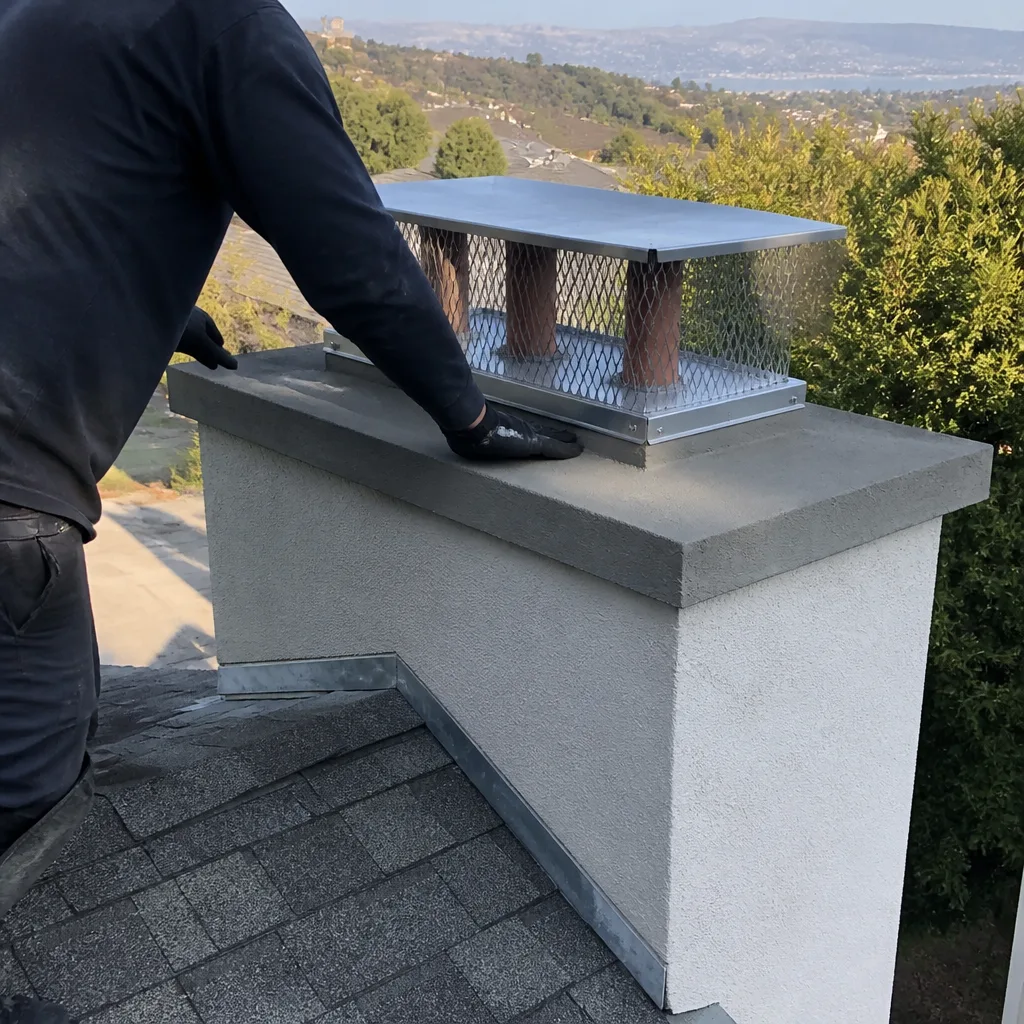
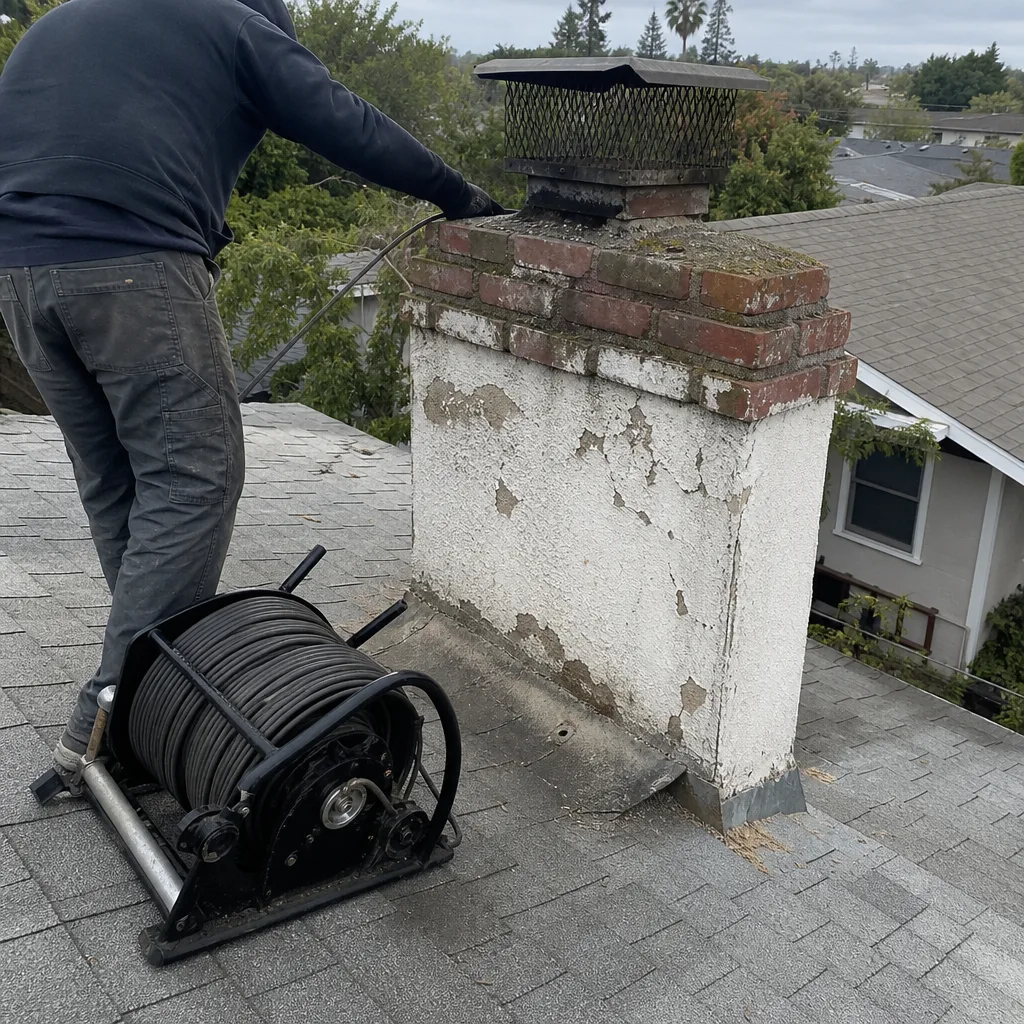
- Chimney cap. The metal cover with spark arrestor mesh that keeps rain, animals, and sparks where they belong. A missing or damaged cap invites all three.
Each component is simple. The system as a whole is only as good as its weakest point. A full chimney inspection checks every one of these parts, because a fire that starts in a degraded smoke chamber is just as dangerous as one that starts in a cracked liner. We’d rather find the problem in every component than stop at the first issue and call the rest “good enough.”
The Overlooked Fire Hazard: Dryer Vent Troubleshooting
While you’re thinking about chimney problems, your dryer vent may be the more immediate fire risk in your home. We bring this up because we handle Dryer Vent Cleaning in Bay Terraces, and we see the same pattern in house after house: the dryer is pushed tight against the wall, the vent flex hose is kinked behind it, and the exterior vent flap is clogged with lint. It’s a fire that hasn’t happened yet.
Here’s what to check:
- Dryer takes longer than 45 minutes to dry a normal load. That’s the single most reliable sign of vent restriction. The dryer is working, but the moisture has nowhere to go.
- The exterior vent flap doesn’t open when the dryer runs. That means airflow is restricted enough that the flap stays closed. The dryer is venting into the room or not at all.
- Lint is visible at the exterior vent opening. If you can see lint from the ground, the duct is packed. The accumulated lint inside the duct is dry fuel waiting for a spark.
- The laundry room gets hot and humid during a cycle. The dryer is pushing warm, moist air into the room instead of outside, which means the vent path is blocked somewhere.
Dryer vents collect highly combustible lint. The National Fire Protection Association lists clothes dryers as a leading cause of residential fires annually, and the most common contributing factor is failure to clean the vent. A chimney sweep who also handles dryer vent cleaning is unusual, which is exactly the point. We see the risk in both systems, and we treat both with the same seriousness.
Common Mistakes to Avoid
- Chimney sweeping logs as a substitute for a professional sweep. These products can loosen light creosote deposits, but they don’t remove the hardened, glazed creosote that actually creates fire risk. If the firebox looks clean but the flue is glazed, you’re looking at a false sense of security.
- Closing the damper on a fire to “keep the heat in.” A fire needs oxygen, and the damper is the exhaust. Closing it partially doesn’t capture heat, it sends carbon monoxide into the living space. The damper should be open whenever a fire is burning.
- Burning unseasoned wood. Wet or green wood smolders at low temperature, producing creosote far faster than dry wood. In Bay Terraces, where firewood often sits outside through the rainy season, a moisture meter is a worthwhile purchase.
- Ignoring exterior chimney damage because “it’s outside.” A cracked crown doesn’t stay outside. It lets water in, and water migrates downward through the masonry until it reaches the firebox and the walls around it.
- Using a chimney that hasn’t been inspected in years because “it worked last winter.” The failure mechanism in a chimney is progressive. It worked until the moment it didn’t, and “didn’t” often means a fire in the flue or carbon monoxide in the house.
- DIYing a liner repair. The liner is the only thing between fire and framing. If it’s compromised, the fix is professional-grade materials installed to code, not paint-on patch compounds from a hardware store.
- Pushing the dryer back against the wall without checking the flex hose. The kink behind the dryer is the single most common finding in dryer vent inspections we perform. It’s a free fix that most homeowners miss for years.
When to Call a Professional
Call a professional when the problem involves the flue interior, the liner, the masonry, the crown, or any condition where you see smoke, smell combustion odors, or find animal activity inside the chimney. These are not armchair fixes. They’re not YouTube fixes. The physical stakes are too high to experiment. A professional chimney sweep in Bay Terraces diagnoses the actual root cause, not the symptom, and a camera inspection gives you verifiable evidence of what’s actually happening inside your flue. Chimney Sweep Bay Terraces home offers free estimates in Bay Terraces. Call (833) 756-1092 and we’ll help you identify what you’re dealing with before it becomes a bigger problem.
Frequently Asked Questions
A standard chimney sweep and inspection in the Bay Terraces area typically falls between $180 and $340 depending on the flue’s condition and accessibility. See our guide on Choosing the Right Chimney Cleaning Brand: A Buyer’s Guide for Bay Terraces to understand what goes into that cost. If the chimney hasn’t been cleaned in years, has glazed creosote, or shows signs of animal activity, the job may require additional labor. Call (833) 756-1092 for an exact quote.
Sometimes you do. The determining factor is whether the existing liner has cracks, voids, or separation that exposes the masonry or framing to flue gases. A camera inspection shows these defects directly, and we make a point of showing you the footage. If your liner is intact, we’ll tell you that too. Nothing about our Chimney Repair in Bay Terraces process relies on you taking our word without evidence.
The National Fire Protection Association recommends an annual inspection, and sweeping whenever creosote buildup reaches 1/8 inch or more, regardless of time since the last cleaning. For homeowners who burn wood more than twice a week during the Bay Terraces winter, that usually means an annual sweep. Our Complete Chimney Sweep Guide for Bay Terraces Homeowners explains what to expect.
Creosote accumulates in layers. The first layer is light soot that’s easy to remove. The next stage is flaky creosote that can ignite. The final stage is glazed creosote, which burns like a candle and can reach temperatures over 2,000 degrees Fahrenheit inside the flue. A chimney fire at that temperature can crack the liner, ignite framing, and spread to the house. The sweep removes the fuel before the fire finds it.
You can purchase chimney sweeping equipment, but you shouldn’t. The risk is less about falling off the roof and more about the limitations of homeowner-grade equipment. A rotary brush attached to a drill cannot remove glazed creosote, cannot address a liner crack, and cannot tell you whether the system is safe to burn. What you save on the sweep you risk on the repair you could have prevented.
Heat rises. During the summer, warm air inside the chimney creates a reverse draft that pushes chimney odor down into the house. The smell is usually creosote, animal debris, or accumulated moisture in the flue. A professional sweep removes the odor source, and a top-sealing damper prevents the seasonal reverse draft from repeating the problem every year.
The Bottom Line
Chimney problems are never the symptom you notice first. The smoke rollback, the smell, the slow draw – these are the end of a process that started years earlier, usually with moisture, creosote buildup, or a component that was failing quietly. The right fix depends on identifying the actual root cause, and that requires looking inside the flue, not guessing from the firebox. In Bay Terraces, where fireplaces get heavy use through the winter and heavy rain through the spring, the margin for error is thinner than most homes realize. A professional inspection with camera documentation costs less than a single avoided repair. And if nothing else, it tells you what you’re actually dealing with, which is more than any troubleshooting guide can do from a distance.
Written by the team at Chimney Sweep Bay Terraces, serving Bay Terraces since 2011.
See the difference
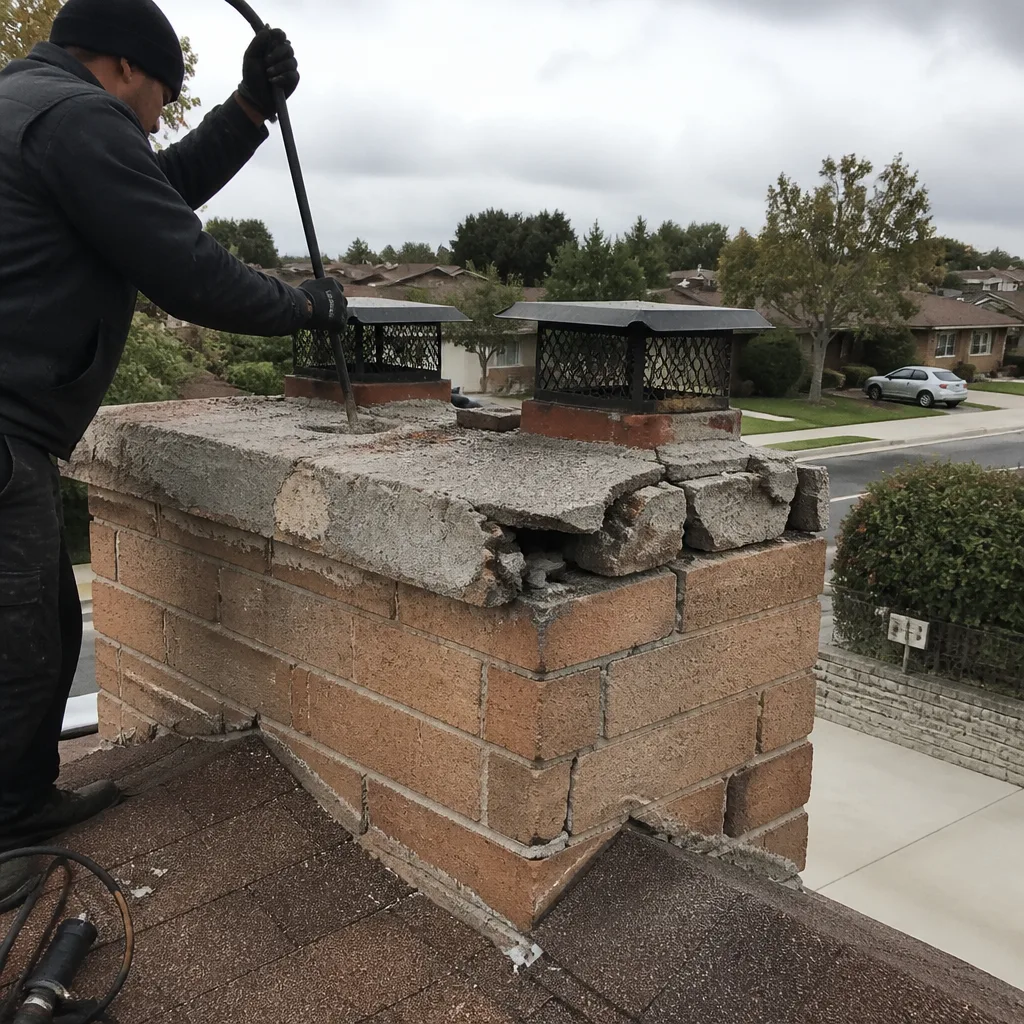 Before
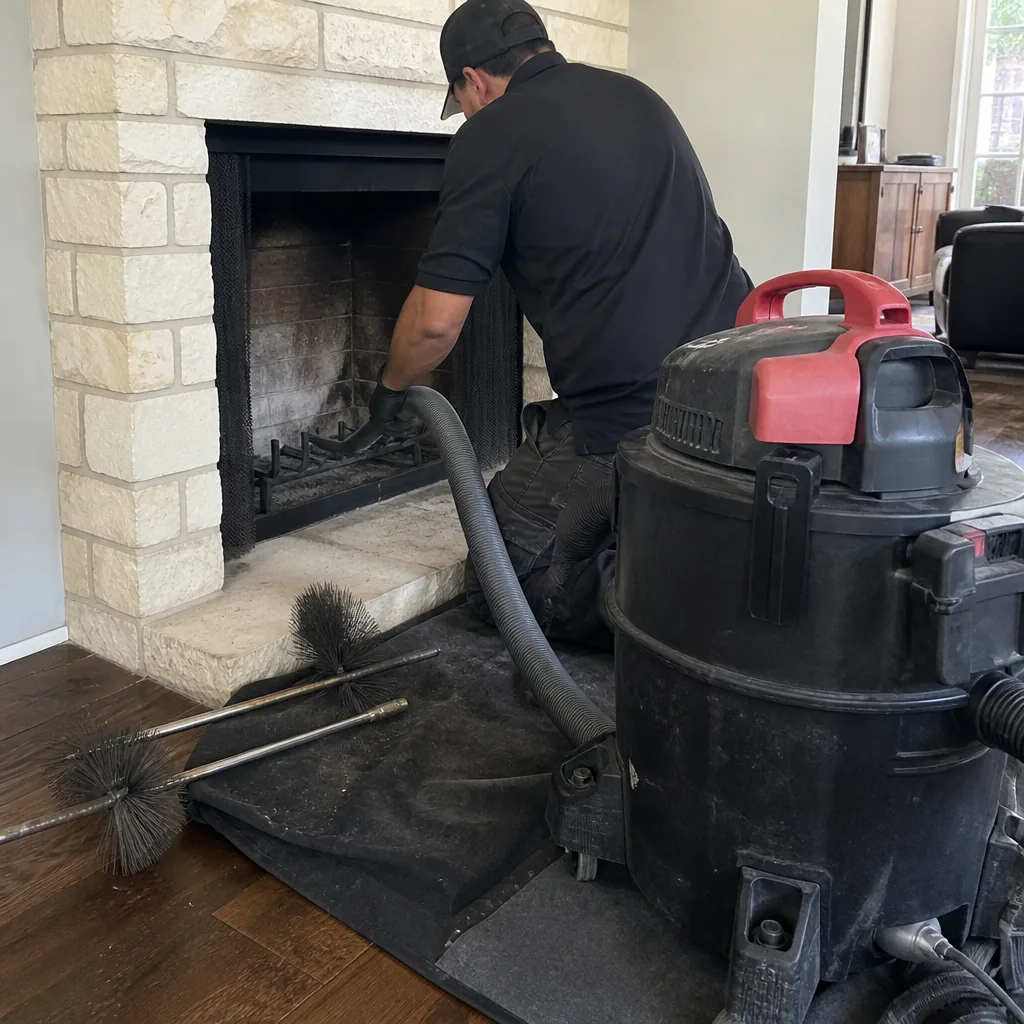 After
 Before
 After
 Before
 After